
What is an AI second brain for a business?
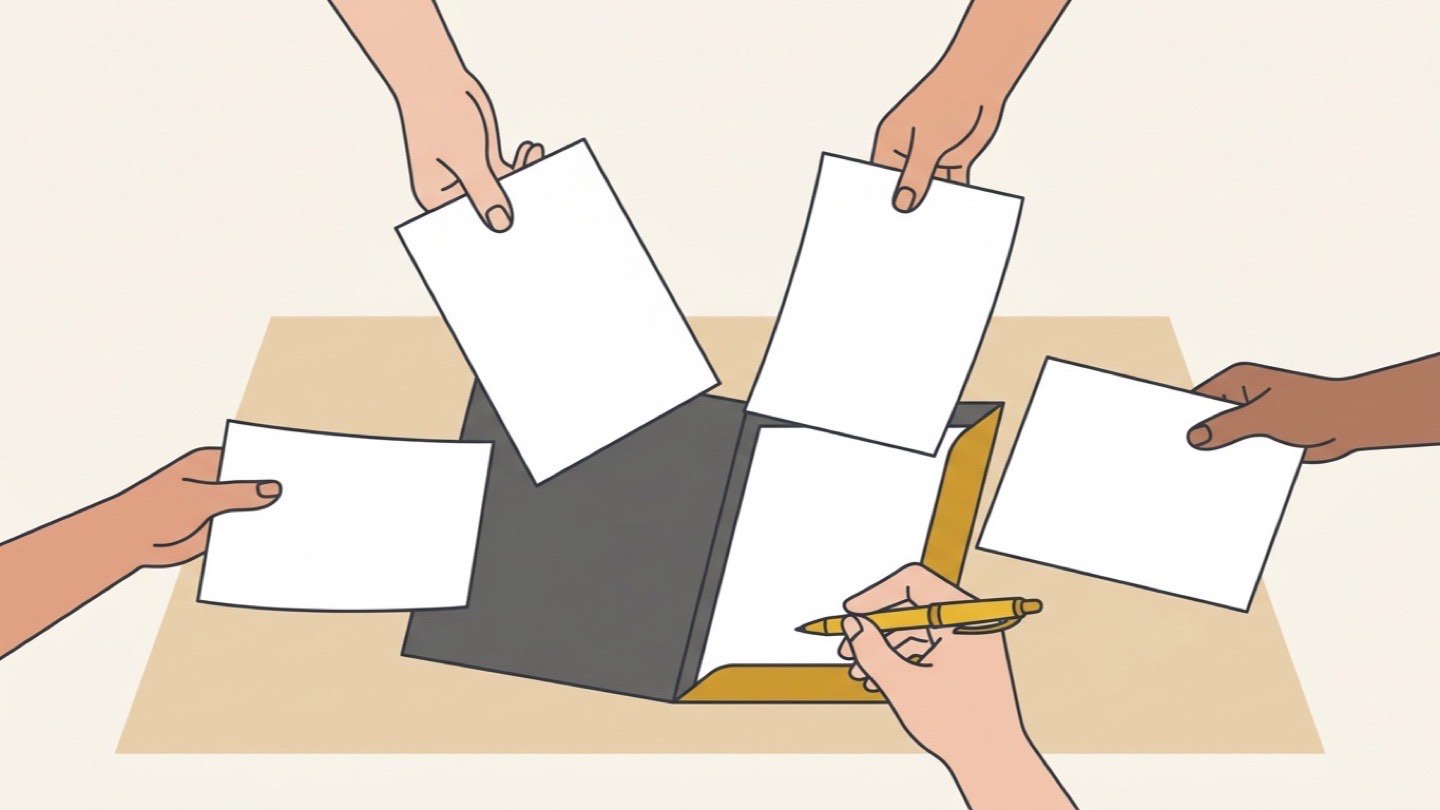
An AI second brain is a set of written files that tells AI who your company is, how each of you sounds, what is true this week, what you decided and why, and what went wrong. It loads itself into every AI session, so every session starts from what your company already knows. Claude, ChatGPT, Copilot and Gemini now give each employee a personal memory; none gives the company a memory it owns.
The second brain holds the judgments your team has already made. Your people make the next one.

Questions as you read? Ask, or take the context files with you.
Where should we send it?
Sent ✓ Download it now →
The second brain began as a personal method. Tiago Forte, the productivity author behind the book Building a Second Brain, taught people to keep what they read and think in a trusted system outside their own heads, so the head is free to do the thinking. In March 2026 he introduced an AI version of the method, written for individuals and naming Claude Code and Codex as its tools.
That version works. It remembers what one person saw.
Inside a company the question changes. It is no longer what one person saw. It is what the firm knows and has already decided: how it prices, what it will not do for a client, how each of its people writes, which mistakes it has already paid for once. That knowledge sits with the people who do the work, owner and staff alike, and much of it is written nowhere an AI can read.
Meanwhile, the AI tools your people use have learned to remember. Each one keeps a memory of the person using it. A company second brain is a different object: plain files that hold the judgments your team has already made, loaded into every AI session, so every session starts from what your company already knows and has decided.
Your AI already remembers each of you. Nothing has told it what your company decided.
That is the starting point in most firms. MIT’s NANDA initiative found workers at over 90 percent of the companies it studied using personal AI tools for work, while only 40 percent of those companies had bought an official subscription. KPMG and the University of Melbourne found 57 percent of employees hiding their AI use. Every one of those private tools is learning something about your business. Very little of what it learns reaches anyone else in the firm.
What an AI second brain is, and what changes when a company has one
An AI second brain for a business is a small set of plain written files that holds what the company knows and has decided, in a form any AI model can read. It covers who the company is and what it will not trade, how each person sounds, what is true this week, which decisions were made and why, and which mistakes became rules. It loads itself into every AI session, it outlives any one employee, and the company owns it.
The personal version and the company version share a name and very little else.
| Personal second brain | Company second brain | |
|---|---|---|
| What it holds | What one person read, saw and noted | What the firm knows and has decided, with the reasons |
| Who writes it | One person | Anyone on the team, with their name on it |
| Who decides what is true | Whoever owns the notes | A named person for each area of the business |
| Who owns it | The individual | The company |
| When someone leaves | It leaves with them | It stays, and so does their name on what they added |
The five context files.
Fill-in templates for what your AI should know, and the page that says where each one loads.
On its way. Check your inbox, or download it now →
The ownership row matters most to a business. Brian Madden, writing for Citrix in February 2026, described company information landing in workers’ personal AI second brains, and pointed out that the data-loss controls companies rely on were not built for that. When the second brain is personal, the know-how sits in an account the company does not control.
The largest public example of the company version comes from Meta. In September 2026 its engineering team described an organizational second brain that keeps expert knowledge in version-controlled text files. When an expert corrects the system, the correction becomes a small edit that has to pass tests and is reviewed by a human expert before it lands. The stated aim is that expertise stops being “trapped in individuals.”
Meta built that at enormous scale. The shape holds for a firm of twenty or two hundred: written files, many contributors, and a person who signs before anything becomes the company’s answer.
A personal second brain remembers what one person saw. A company second brain holds what the firm has decided, and a named person signs what goes in.
How do I get AI to know our company?
We hear that question from owners in one wording or another, and it usually arrives with a second worry behind it: what happens when the people who know things leave.
In July 2026 the Arizona business publication AZ Big Media asked 18 business leaders how they keep knowledge when key people go, and the answers kept circling the same gap. Jill Clark, founder and CEO of ideasYOU, described departures where the knowledge is “still in their head.” Abdullah Shoaib of Energy Solutions named the risk of “losing the context behind their decisions.” Colin Bartlett of StatusGator said written handovers miss “the why and how.”
Two others in that roundup described their own habits. Jere Salmisto, founder of CalcFi, keeps a “what only I know” document. Jase Rodley of Dialed Labs asks what people would need to know if he “disappeared tomorrow.” Both are good instincts. Both put the weight on one person, and the knowledge in a company does not sit with one person.
Some of it sits with the owner. Much of it sits with everyone else: the person who knows which client needs a call before the invoice, the one who remembers why a supplier was dropped. There is a name for this, tribal knowledge, the know-how a team carries that no document holds. Every firm has it. The real question is whether any of it reaches the AI your people use every day.
Mostly it does not. MIT NANDA’s July 2025 report found that people like ChatGPT for simple tasks and drop it for mission-critical work, and the reason they give is its “lack of memory.” The same report found that most generative AI systems inside companies keep no feedback, do not adapt to context and do not improve over time.
And the use stays hidden. In Slack’s Workforce Index from fall 2024, 48 percent of desk workers said they would be uncomfortable telling their manager they had used AI. In KPMG’s 2025 study of US workers, 46 percent said they had uploaded sensitive company information or intellectual property to public AI platforms. Each of those tools builds its own picture of your business, and none of those pictures is shared.
People also move on. The Bureau of Labor Statistics reported that median tenure with a current employer was 4.1 years in January 2026, and it counted 3.1 million quits in August 2026 alone. Each departure takes a share of what the firm knows, unless it was written down somewhere the next person, and the next AI session, can read.
So the honest answer to “how do I get AI to know our company” has two halves. Connect it to what is already written, which the platforms now do well. Then write down what is not.
The AI Briefing
Tuesdays. 500+ leaders. No hype, just what works.
What goes inside one: the five parts
Across the second brains we have built for clients and the one our own firm runs on, the anatomy came out the same every time, in different industries, with different tools and on more than one AI vendor.
The soul comes first because everything else is checked against it. At SAF Productions, a commercial production company in Los Angeles and Santa Fe, the founder and executive producer David Safian wrote his own. Nobody else could have. A soul page drafted by a consultant or a model describes a company. One written by the person accountable for it can settle an argument.
Voice is per person. At VISUAL FACILITATORS, the Hamburg visual facilitation firm, each person has a voice file, and the founder’s file treats his recurring references and word choices as the voice itself, not decoration. A model left to itself sands those edges off. The file tells it not to.
The running document keeps the brain current. In the system we run our own firm on, a short script reads each message before the AI does and loads the status of every project the message names. Nobody has to remember to brief it, and nobody works from last month’s version of the truth.
Decisions carry their reasons. SAF’s system holds the studio’s markup and contingency logic and its union and non-union rate cards as settled decisions, so a bid starts from what the studio has already settled instead of from memory. The reason matters as much as the rule. When the reason stops holding, someone can see that the rule should go.
The failure log is how the brain improves. SAF’s case study records one plainly: an early edit of the wrap master, the document that closes out a production’s books, dropped backup pages. The failure became a permanent rule, so the page count and table of contents are checked after every change. The mistake happened once.
One rule sits under all five. A file nobody’s AI reads does not exist. The parts only work when they load themselves at the start of every session, on whichever tool your team opens, without anyone remembering to paste them in.
What Claude, ChatGPT, Microsoft and Google already do for you
Before building anything, look at what you already pay for. The four large platforms have moved quickly, and some of what this article describes now ships in the box.
Anthropic’s Claude has kept a memory of each user on Team and Enterprise plans since September 2025, with a separate memory for each project. Since August 2026 that memory is written during the conversation as topic files the user can read and edit. It is personal, and on Team and Enterprise plans an administrator decides whether it is on.
Claude’s enterprise search, also on Team and Enterprise, queries connected tools live, respects each person’s permissions and, according to Anthropic, indexes no company data on its side. Shared projects let teammates view or edit the same project knowledge.
OpenAI’s ChatGPT has offered company knowledge since October 2025 on its Business, Enterprise and Edu plans. It answers from connected apps such as Slack, SharePoint, Google Drive and GitHub, with citations, and OpenAI says it “only has access to what each user is already authorized to view.” Someone has to switch it on in each conversation. When a question has no settled answer, it can surface the differing views; it does not settle them.
ChatGPT’s shared projects hold up to 100 collaborators, according to OpenAI’s help pages, and use project-only memory that cannot reach any member’s personal memories.
Microsoft’s Copilot draws on Work IQ, a context layer built from Microsoft 365 and other business systems, and every action taken through Work IQ runs as a specific user. Copilot memory is still in preview. Microsoft’s documentation says it is stored in a hidden folder in each user’s mailbox, that Purview retention does not apply to it, that it produces no audit log entries and that administrators cannot restrict what goes into it.
For developers, Microsoft’s Foundry IQ builds permission-aware knowledge bases that several agents can share.
Google’s Gemini Enterprise, launched in October 2025, connects Workspace, Microsoft 365, SharePoint, Salesforce and SAP, and its Business edition covers companies of 1 to 500 users, according to Google’s documentation. Personal memory is on by default. On October 8, 2026, Google announced a Gemini agent with four kinds of memory and a Knowledge Catalog that maps business definitions once for every agent. It has no release date or price yet, and Google has not said whether that memory belongs to the user or the company.
Smaller vendors go further on one point. Notion’s verified pages carry an owner and an expiry date and prompt the owner to verify again. Slite ranks verified documents above stale ones and routes a drafted fix to a person to approve. Microsoft’s SharePoint Knowledge Agent, in public preview, flags outdated pages. Every one of these tools marks or flags. Each one hands the decision to a person.
The platforms find what is written and remember each person. Deciding which answer is the company’s answer is still a person’s job.
| Platform | What it does for you today | What your company still writes and signs |
|---|---|---|
| Claude (Team, Enterprise) | Memory per user and per project; permission-aware enterprise search; shared projects | The soul, the voice files, decisions with reasons, which answer is current |
| ChatGPT (Business, Enterprise) | Company knowledge across connected apps within each user’s permissions; shared projects with project-only memory | The same, and the step that moves what one person’s AI learned into the shared files |
| Microsoft 365 Copilot | Work IQ context across Microsoft 365; Copilot memory per user, in preview; Foundry IQ for developers | The same, and a record of what memory holds, since Purview retention does not cover it |
| Google Gemini Enterprise | Search across Workspace, Microsoft 365, Salesforce and SAP; personal memory; an agent announced, not shipped | The same, and a decision on who owns agent memory once it ships |
Here is when built-in is enough. If most of what your company knows is already written down, most of it lives in one suite, and most questions sound like “where is the document that says this,” buy the business plan your suite offers and switch on search. You get permission-aware answers across your files without building anything. For many firms that is the right first step, and sometimes the last one.
Where it stops is memory. In every one of these products, what a person teaches their AI stays with that person. Claude’s memory is personal. ChatGPT’s release notes from September 2026 say that sharing a Page “does not give other people access to your private chats or memory.” Copilot’s memory sits in each user’s mailbox. A company on any of these platforms runs as many private brains as it has people, each learning something, none of them adding up.
None of them gives the firm a memory it owns and can move, either. Claude’s memory export works per user, and Google’s documentation says NotebookLM Enterprise notebooks cannot move between Google Cloud organizations without an export and an import. We mapped the same limits for standing work in our piece on the AI chief of staff. Search across your files is largely solved. Deciding which answer is the company’s answer, and keeping it when you change vendors, is not.
The five context files.
Fill-in templates for what your AI should know, and the page that says where each one loads.
On its way. Check your inbox, or download it now →
Obsidian, plain files and owning your brain
The builders’ answer to all of this is Obsidian, and it gets a lot right. Obsidian keeps notes as plain Markdown files on your own device and promises no lock-in.
In April 2026 the AI researcher Andrej Karpathy published a pattern he called an LLM wiki: a model writes and maintains a wiki of plain files, Obsidian serves as “the IDE,” and a rules file such as CLAUDE.md or AGENTS.md tells the model how to behave. He even sketched a team version fed by Slack and meeting transcripts. We have written about how an LLM knowledge base compiles what a company knows, and the pattern is sound.
A shared Obsidian vault is a harder fit for a team. According to Obsidian’s help pages, a shared vault holds at most 20 users, every collaborator needs Sync, collaborators get no fine-grained permissions and there is no real-time editing; changes merge when they sync. A confidential client folder is visible to everyone in the vault. And in Karpathy’s design the model writes the wiki, which leaves open the question this article keeps returning to: who decides what is true.
What Obsidian gets most right is ownership, and that principle holds even where the tool does not fit. One of the systems we built, for a nonprofit, runs on ChatGPT and Codex, with the same kind of files and the same five parts as the ones we build on Claude. The brain is a folder of text. The model reading it can change.
Keep the second brain in plain files the company owns, and let any model read them. The brain should outlive the vendor.
What stays human
A second brain stores judgments already made. It does not make new ones, and the design has to keep it that way.
We argued in why AI erodes executive judgment that checking an answer and judging it are different acts, and that only the first one speeds up when you add a machine. A second brain makes the checking far better. It can give the AI your rates, your voice, your rules and your past mistakes. What it cannot hold is the call nobody has made yet.
So the judgment has to be built into how the brain is written and used. In the systems we have built, it sits in six places.
At VISUAL FACILITATORS, anyone can add to the shared knowledge, and every addition carries their name. Writes to a person’s own working notes happen automatically. Writes to what everyone loads are deliberate and attributed, and the core files are built to move to propose-then-approve as the team grows.
In our own system, the weekly improvement pass proposes changes and never applies them on its own. In the nonprofit’s system, when the person who runs it asks for something the AI considers a bad idea, it is instructed to stop and say exactly why. That rule is the second brain’s version of the pause we wrote about, where “nobody signs until somebody has produced an objection.”
Meta’s engineers reached the same answer at far larger scale: a correction passes tests and a human expert reviews it before it lands. Forte’s AI version of the personal method keeps human judgment at the center too. The tools differ. The line between what the system holds and what a person decides sits in the same place.
It can learn every judgment your company has made. It can’t make the next one.
There is a harder question here, and it deserves a straight answer. Turning what people know into company files can feel like taking it from them. Some people will not want what their AI has learned about their work pooled with everyone else’s, and that is a reasonable position. Personal memory can stay personal. The company brain holds what the company agrees to hold.
The person whose know-how goes in should benefit, visibly. Their way of doing the work becomes the standard, with their name on it, and they stop answering the same question again and again. That is what we mean by Humans First AI: the system carries the record, and the people carry the judgment.
What we run ourselves
Our own firm runs on a second brain. Both of us write to it. When one of us corrects a draft or a decision, the correction becomes a rule with a date and a reason. Anything that leaves the building, an email, a published article, a client document, stops as a draft until one of us signs it. This article went through that gate.
It also taught us the rule we now put above the others. Our lessons file grew to 1,248 lines while sitting outside every path the AI loads at the start of a session. We wrote to it faithfully, and nothing read it. The fix was to move each rule to where it is read every time: the handful that apply everywhere into a short file loaded with every session, the rest into the instructions for the workflow they govern.
SAF Productions’ second brain holds the studio’s rate cards, vendor quotes, markup logic, bid history and the producer’s voice. By SAF’s account in its case study, the system built a 557-page wrap master covering 59 purchase orders in under an hour, work that had taken two people five to eight days, and the first round of numbers on a bid dropped from three days to hours. David Safian’s line about it: “It will give me a tremendous amount of freedom to be creative as opposed to doing busy work.”
VISUAL FACILITATORS consolidated about 40 scattered AI tools, skills and agents into one system the whole team shares, with each person’s own AI on top. In its case study, the firm reports a first proposal draft falling from 90 minutes to 30, and content output up about 50 percent, to 15 high-profile pieces a week, without new headcount. Mathias Weitbrecht, its founder, named what surprised him: “The part I did not expect is that it learns.”
Both are the clients’ own accounts of their engagements, not controlled measurements. What they show is the shape: written judgment, loaded every session, with people signing what matters.
Most firms can write the first two files on their own, and should. Outside help fits the part that is hard from the inside: settling which version is the company’s answer when the people who would settle it are the ones whose versions differ, and deciding who signs what before the system gets busy. That is the work in CompanyOS, the AI operating system your company runs on.
Whoever you work with, one test applies. When the engagement ends, can your own people add a rule, retire one and say who signed it, without calling the people who built it?
Where to start
Start with the soul page, and write it together. What the company is for, who it serves, and what it will not trade for a bigger invoice. The owner holds the pen. The team reads it and argues with it before it is final, because a soul page nobody has argued with is a brochure.
Then pick one domain where the same questions keep coming back: pricing, onboarding, a recurring client deliverable. Name the person who signs for that domain. Write its decisions with their reasons, then the voice files for the people who write in it.
Make it load itself. A brain your people have to remember to open will not be opened. Put the files where the AI tool your team already uses reads them at the start of every session. For the ownership questions that come with more people, our context engineering guide covers who owns each file as a team grows.
Then read what it got wrong. After the first month, go through the drafts the team had to fix, and turn each correction into a rule, a better reason or a deletion. A rule nobody needed is a cost. Take it out.
The platforms will keep getting better at remembering. That is good news, and it changes what is worth your team’s time. What they cannot do is decide what your company stands for, which answer is yours, and when an old rule should go. Write those down. Then keep making the next call yourselves.
Write the First Two Files of Your Company’s Second Brain
Paste this into the AI assistant you already use. It interviews you and drafts a soul page and a decisions file for one area of the business, each with a named owner.
Context: I want to start a second brain for my company: written files any AI can read, so its work follows the judgments we have already made. Interview me one question at a time and wait for my answer before asking the next. Draft only from what I tell you. When I describe what we aspire to, ask what we actually do.
Step 1. The soul page: Ask what the company is for, who it serves, what it will not do even for a good client, and how we choose when two good things conflict. Then draft one page in plain language, and ask me who on the team should read it and challenge it before it is final.
Step 2. One domain’s decisions: Ask me to pick the area where the same questions come back most often. For that area, ask for the decisions we have already made, and for each one, the reason, who made it and when. Flag any decision I cannot give a reason for, and ask who should sign for this area.
Output: Two files. A one-page soul page, and a decisions file for one domain where every entry reads: the decision, the reason, who signs for it, and the date. Mark any entry without a reason as open.
These two files are a start, not a system. Voice files, the running document and the failure log come next, and so does making the files load themselves into every session. See where you stand →
Sources
- The GenAI Divide: State of AI in Business 2025 (MIT NANDA, July 2025): personal AI use at over 90% of companies against 40% with official subscriptions; lack of memory; systems that do not learn
- AI at work is here. Now comes the hard part (Microsoft and LinkedIn Work Trend Index, May 2024): 78% bring their own AI tools
- The Fall 2024 Workforce Index (Slack, November 2024): 48% uncomfortable telling a manager they used AI
- Trust in AI remains a critical challenge (KPMG and University of Melbourne, April 2025): 57% hide their AI use
- Trust in AI 2025, US findings (KPMG, April 2025): 46% of US workers in the study uploaded sensitive company information to public AI
- Employee tenure news release and Job Openings and Labor Turnover news release (US Bureau of Labor Statistics, September 2026)
- 18 leaders share how they preserve knowledge when key employees leave (AZ Big Media, July 2026)
- Organizational second brain: AI that learns from experts (Meta Engineering, September 2026)
- Workers’ second brains break every assumption about how we secure knowledge work (Brian Madden, Citrix, February 2026)
- Introducing the AI Second Brain (Tiago Forte, Forte Labs, March 2026)
- LLM Wiki (Andrej Karpathy, April 2026)
- Anthropic: Claude memory (2025), Claude’s memory works everywhere (August 2026), Use enterprise search, Create and manage projects
- OpenAI: Introducing company knowledge (October 2025), Projects in ChatGPT, ChatGPT release notes (read October 2026)
- Microsoft: Copilot memory (September 2026), Work IQ (September 2026), Foundry IQ (July 2026), Knowledge Agent overview, Microsoft Ignite 2025 (November 2025)
- Google: Introducing Gemini Enterprise (October 2025), Gemini Enterprise editions, Gemini at Work 2026 (October 2026), NotebookLM Enterprise FAQ
- Notion, Slite and Obsidian: Wikis and verified pages, Slite, Obsidian, Collaborate on a shared vault (read October 2026)
Frequently Asked Questions
What is an AI second brain for a business?
It is a set of written files that holds what the company knows and has decided, kept in a form any AI model can read and loaded into each AI session. A typical one has five parts: the company’s purpose and limits, a voice file per person, a running document of what is true now, decisions with their reasons, and a failure log. Unlike a personal second brain, several people write to it, a named person signs what goes in, and the company owns it.
How do I train AI on our company data?
You usually do not need to train a model. Connecting your files through the enterprise search in Claude, ChatGPT, Copilot or Gemini gives the AI what is already written. What it still lacks is what was never written: decisions and their reasons, how each person sounds, what went wrong before. Write those as plain files, have one person sign for each area, and load them into every session.
Everyone on my team uses ChatGPT on their own. How do we get one shared brain?
Move the team onto a business plan first, so the work happens in accounts the company controls, and use shared projects for common knowledge. Then add the written layer those projects draw on: the soul page, decisions with reasons and voice files. ChatGPT’s shared projects cannot see members’ personal memories, so anything worth keeping has to be moved into the shared files on purpose, with a named person approving it.
Isn't ChatGPT company knowledge, Claude memory or Copilot already a second brain?
They are a strong half of one. Company knowledge and enterprise search find what is already written, within each person’s permissions, and memory remembers each user. None of them holds the firm’s decisions with their reasons, decides which version of an answer is the company’s, or gives the company a memory it owns and can take to another vendor. If your knowledge is mostly written and mostly in one suite, the built-in tools may be enough.
What happens to what we know when a key employee leaves?
Without a written layer, the judgment calls leave with them. The documents stay, and the reasons behind them usually go. A company second brain keeps their decisions, rules and corrections in files the company owns, with their name on each entry. Write it while they are still there, because recording why a decision was made is far easier than reconstructing it later.
Can we build a company second brain in Obsidian?
Yes, for a small or technical team. Obsidian’s plain files are a good foundation and work with any model. According to Obsidian’s help pages, a shared vault holds at most 20 users, gives collaborators no fine-grained permissions and has no real-time editing, so a larger team needs a layer on top for permissions and sign-off, or a shared folder in the tools it already uses.
Who should own and update it, and who signs off?
Everyone who does the work should be able to contribute, with their name on what they add. One named person signs for each area, usually whoever is accountable for the outcome there, and the owner or leadership team writes the soul page. The AI can propose additions and flag stale entries; a person decides what becomes the company’s answer.
Will the AI start making decisions for us?
Not if the brain is designed well. The second brain records judgments your team has already made, so the AI can apply them, while new calls and every change to the brain go back to a person. Put a gate in front of anything consequential, such as client emails, pricing and publishing, so the AI prepares and a person signs.