What is cognitive offloading, and what does it mean for a team that uses AI every day?
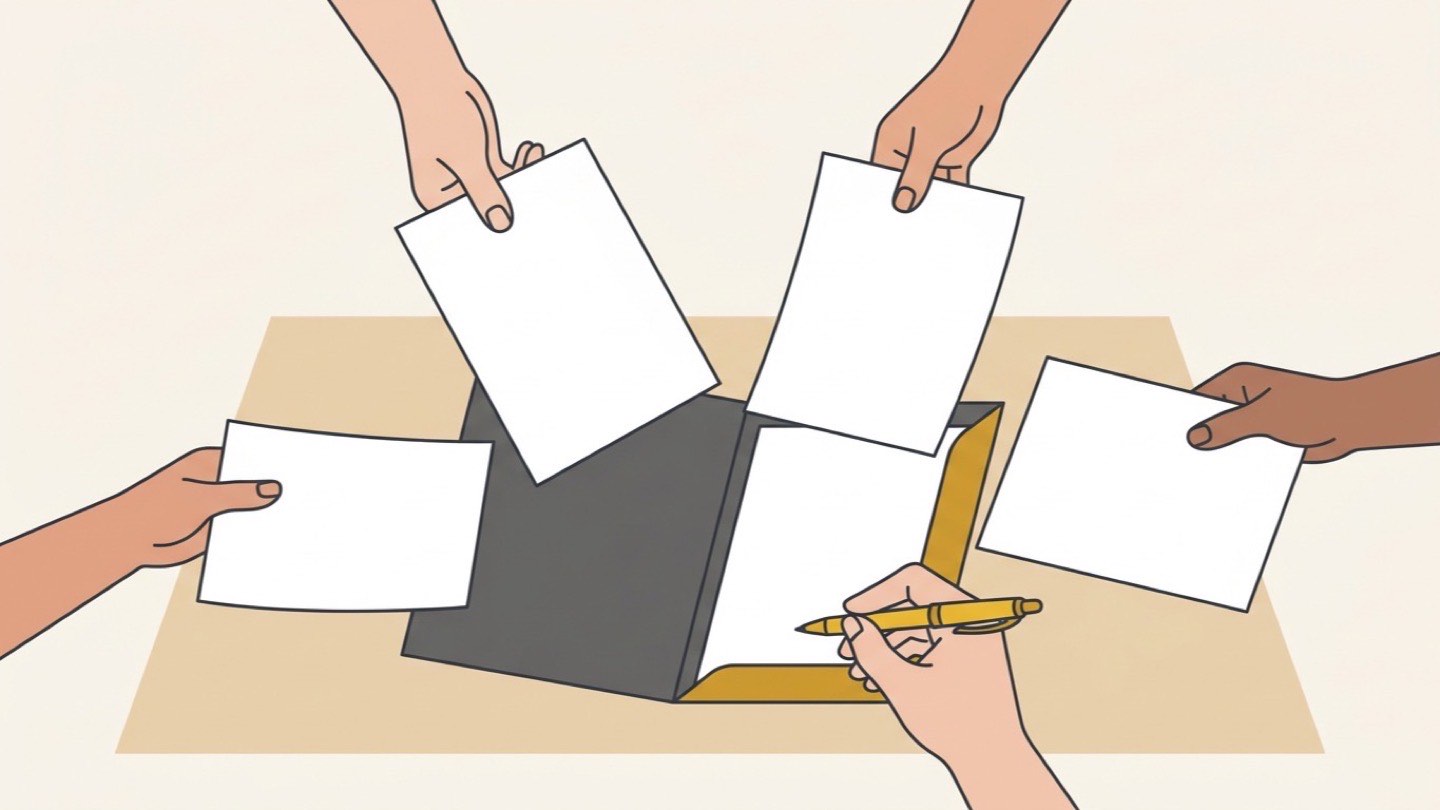
Cognitive offloading means handing part of a thinking job to something outside your head: a list, a calculator, GPS, and now AI. Every offload is a trade. To know whether it is a good one, ask three questions: does the tool work every time, do you have to take over when it fails, and what were you learning by doing the job yourself?
When AI is good but sometimes wrong and someone still signs off, that person has to keep practicing the skill that catches its mistakes.

Questions as you read? Ask, or take the assessment with you.
Where should we send it?
Sent ✓ Download it now →
Every offload is a trade
Offloading isn’t good or bad. It’s a trade, and you should know what you’re trading.
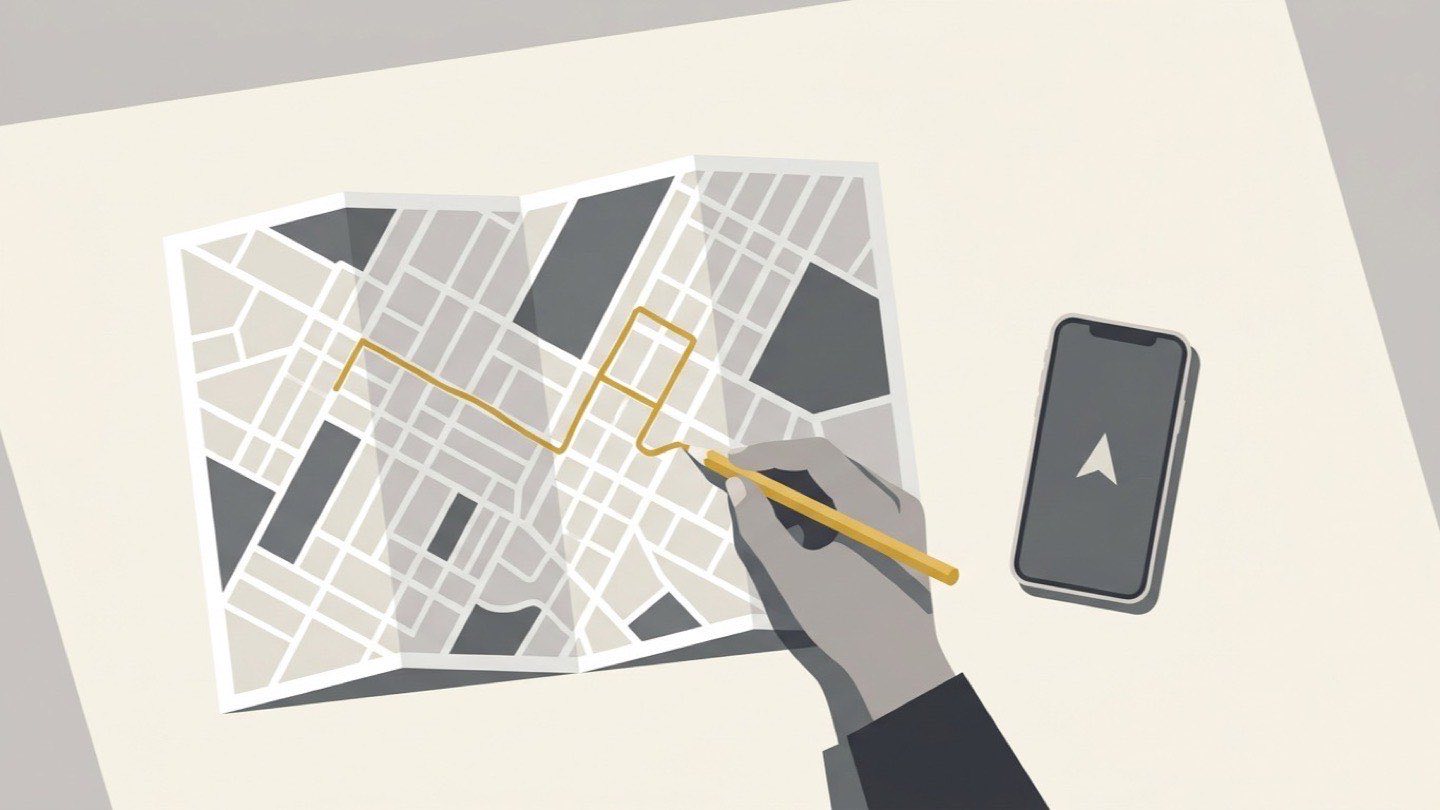
GPS is the easy example. It gets you there every time. But if all you do is follow the arrow, you never learn the city. People who find their own way, or simply look around while the app guides them, end up knowing where they are.
Be careful when the tool is good but not always right, and you still sign off on the result. That’s where people stop practicing the skill they need to catch its mistakes. It’s also where juniors sit by default, because they never built that skill in the first place.
Nobody handed the decision over. It moved one approval at a time.
AI can take far more than older tools. A calculator takes arithmetic. A phone takes phone numbers. AI can take the first draft, the summary, the analysis and the recommendation, which is most of what a junior used to learn on and much of what a senior is paid to check.
When a tool does the work, one of three things happens to the skill. It moves into the tool for good, and nobody misses it: nobody in a driverless taxi needs to drive. It fades in the person who still answers for the result, as with drivers who are supposed to take over. Or it never forms, as with the engineers who learned with AI doing the work.
What cognitive offloading means
Cognitive offloading is using something outside your head to do part of a thinking job for you. You write a shopping list so you don’t have to remember it. You set a reminder so you don’t have to hold the appointment in mind. You let the calculator do the long division.
With AI, the term covers a lot of ground. Asking ChatGPT to summarize a report is offloading. So is letting Claude draft the client email, asking Copilot to build the spreadsheet formula, or letting an AI agent decide which leads to follow up. The first one barely touches anyone’s skills. The last one touches a judgment someone used to make every week.
The AI Briefing
Tuesdays. 500+ leaders. No hype, just what works.
The offloading scale: three questions to ask before you hand a job to AI
Before you hand a job to AI, ask three questions. They are simple enough to run on a whiteboard with the team in the room.
If the answers are yes, no and not much, hand it over and don’t think twice. A task can pass the first two and still cost you something, and GPS is the clearest case.
Self-driving cars, from driverless to driving yourself
At the top sits a fully driverless car. Waymo reports more than 271 million miles driven with nobody in the driver’s seat, through June 2026. Nobody inside is expected to drive, so it does not matter whether the passenger still remembers how. The tool works, and nobody has to take over. Losing the skill costs the rider nothing.
In the middle sits the car that drives itself most of the time but needs the driver ready to take over at any moment. The US regulators call this driver assistance, and they describe it as “a driver assistance system that requires constant supervision by a human driver.” The car does the work. The person keeps the responsibility. And they have stopped practicing the skill they need when it goes wrong.
At the bottom, you drive yourself. The skill is the job.
When the National Highway Traffic Safety Administration closed its investigation into Tesla’s Autopilot in April 2024, it found that a “weak driver engagement system was not appropriate for Autopilot’s permissive operating capabilities.” In plain words: the car did enough of the driving that people relaxed, but not enough to make relaxing safe. Tesla had recalled about two million cars in December 2023.
That middle rung is where most AI work sits today. The AI drafts, and a person signs off. The AI analyzes, and a person forwards the numbers to the client. The work looks done, and the responsibility is still yours.
Four places a task can sit
| Where it sits | What it looks like | What to do |
|---|---|---|
| Offload freely | The tool works every time, nobody needs to step in, and doing it yourself teaches little | Hand it over and don’t think twice |
| Keep it light | The tool is reliable, but now and then you have to check or step in | Keep enough practice to notice when it’s wrong |
| The danger zone | The tool is good but sometimes wrong, and someone still signs off | Keep the skill practiced on purpose, and build it in people still learning |
| The job itself | The craft, reading the client, deciding what’s good | AI can assist; the person does the work |
The Human Domain.
The assessment, five scored dimensions, and the interval controls that keep judgment yours.
On its way. Check your inbox, or download it now →
Use as much AI as you like, as long as you know which row each task is in.
Offload freely: when losing the skill costs little
Most firms already have a long list of work that belongs here. Scheduling, meeting transcription, formatting, spell-check, converting files, pulling last quarter’s numbers into a template, writing the first version of a routine status update. The tools are reliable. When they slip, the slip is small and easy to see. And nobody on the team is getting better at their real work by doing these jobs by hand.
Hand this work over without guilt. The time it frees is real, and so is the energy. Our piece on AI brain fry found that people wear out when they spend the day watching AI. Handing it whole tasks helps.
Some skills we can decide to lose. Brooke Macnamara, a psychologist who studies skill and AI, told the APA’s Monitor that some skills AI weakens may be ones we are willing to lose, which is a fair answer to anyone who treats all offloading as decline. Nobody misses long division by hand. Most people don’t miss memorizing phone numbers.
GPS works every time, and still costs you something
GPS passes the first two questions. It works almost every time, and you rarely have to take over. It fails the third.
Finding your own way builds a picture of the place. You learn which streets connect, where the river is, how long the walk really takes. Following the arrow builds very little of that, because the app has done the part of the job that teaches you.
The research backs this up, with a modest effect. A study of 50 drivers by Louisa Dahmani and Véronique Bohbot at McGill found that people who had used GPS more over their lives had worse spatial memory when they had to navigate without it. A small follow-up three years later found the decline was steeper for those who had used GPS more in between.
A 2024 review that pooled the research found the same direction: more GPS use went with a weaker sense of direction and less knowledge of the surroundings, and it made no difference to getting where you were going.
The brain shows it too. London taxi drivers spend years learning the city’s streets by heart before they can get a license. Eleanor Maguire’s team at University College London scanned trainees before and after. Those who qualified grew more gray matter in the part of the brain that holds the map of the city. Those who gave up did not.
In a study on real city streets, people walked a route with a navigation app and then had to walk back without it. When the app left them free to look around and notice their surroundings, 82 percent found their way back. In the other groups, between 38 and 63 percent did. Everyone took about the same time to walk the route.
What fades is attention to where you are, and people who keep paying attention keep it. Use GPS if you like. Just know what it costs you, and decide whether the city is one you want to know.
A first draft works the same way. AI gets you a finished draft every time. Writing that draft is how people learn to think about the brief: what the client asked for, what they meant, what to leave out. When AI writes it, the draft arrives and the learning doesn’t.
Keep it light
Some work sits in between. The AI is reliable most of the time, but now and then someone has to check it or step in. A summary of a meeting you attended. First-pass research you will spot-check. A translation you can read well enough to catch a wrong tone.
Here the rule is simple. Keep enough practice to notice when it’s wrong. Read the summary against your own memory of the meeting every so often. Pull one source from the research yourself. Keep the check alive without redoing the work.
Most of the trouble starts when work quietly slides from this row into the next one. The tool is good, the checks get lighter, and one day nobody remembers how to do the work it replaced.
The danger zone: good but not reliable, and someone still signs off
This is the middle rung of the self-driving ladder. The tool is good. It is not right every time. And a person on your team is still responsible for the result.
In a creative or professional firm, the danger zone is full of ordinary work. The proposal AI drafted that a partner signs. The campaign analysis an account lead forwards to the client. The budget a producer builds from an AI first pass. The contract summary nobody reads against the contract. Each is a reasonable use of AI. Each depends on a person who can still tell when the AI is wrong.
Trusting AI more means less critical thinking
In 2025, researchers at Microsoft Research and Carnegie Mellon asked 319 knowledge workers about 936 real tasks they had done with AI. The more people trusted the AI, the less critical thinking they reported putting into its output. The more people trusted their own skill, the more they checked.
That finding is self-reported and comes from one survey, so treat it as a direction. As AI gets better, people check less, and the work shifts from doing to checking. Checking only works if you could still do the work. A reviewer who has stopped writing proposals slowly loses the feel for what a strong one looks like.
Unused skills fade
Lisanne Bainbridge, a psychologist, wrote about this in 1983, when factories automated their control rooms. Her paper, “Ironies of Automation,” still holds up. Skills “deteriorate when they are not used.” And the people expected to take over when the system fails are “riding on their skills,” built back when they did the work by hand. The next generation, who never did it by hand, cannot be expected to have them.
Driving studies find the same pattern. Across 129 studies, drivers took close to three seconds on average to take back control when an automated car handed it over. Most of those studies ran in driving simulators, and on a real test track the effects were smaller. In plain terms, attention and handling slip after a spell of automation, more in the lab than on the road. That is still a lot of slip for a moment when someone has to act.
Nobody notices
The output looks fine, so nobody looks.
Researchers including a team at Aalto University in Finland studied an accounting firm that relied on an automated system. When the system was removed, staff could no longer do core parts of their own job, and the erosion had been “acknowledged by neither workers nor managers.” That system was older software that followed fixed rules, not generative AI. The lesson travels anyway: the output kept looking right, so nobody looked at the people.
It happened to us. In June 2026 we published an article about AI shopping agents that said only 31 of 70 sites had passed a new Google audit. Our AI research step had stitched three real facts from three different places into one number that existed nowhere. The research notes carried a link next to it, and the review treated the link as proof.
The number went into the article, the newsletter and its subject line. I caught it two days later by checking the sources myself. We corrected the article and changed the process: no number ships until someone has read it in the original source. The check had become a signature. We made it a check again.
Our piece on AI deskilling and executive judgment makes the related case for leaders: checking an answer and judging whether it is the right answer are different acts, and years of fast decisions have trained many of us out of the second one.
People stop making the decision
Authority slips the same way. Deciding is a skill too. Every time someone accepts the AI’s recommendation without weighing it, they practice accepting. Do that often enough and the habit sets: the AI proposes, the person approves.
Nobody handed the decision over. It moved one approval at a time.
The regulator saw the same drift on the road. Autopilot, it found, “invited greater driver confidence via its higher control authority.” The more a tool does, the more people defer to it, and the Microsoft and Carnegie Mellon survey found the same pattern in offices.
For an owner this is the deepest part of the danger zone. The work still carries your name, or a partner’s, but the choice was made somewhere else. Keep making the decisions that matter yourself, out loud and with reasons, even when the AI’s answer looks right. When you agree with it, say why.
In the danger zone, the tool does the work and a person keeps the responsibility. Keep that person’s skill in practice, or the check becomes a signature.
The Human Domain.
The assessment, five scored dimensions, and the interval controls that keep judgment yours.
On its way. Check your inbox, or download it now →
Work that stays with people
Some work sits outside the scale. It is the work your clients pay you for: the craft, reading the client, deciding what is good enough to ship and what isn’t. AI can help here. It can show options, catch errors, speed up the slow parts. Hand the whole job over and you have handed over the business.
This is the line we draw in AI vs human judgment: AI has intelligence, and it is getting better at tasks every month, but judgment is not one more task on the list. A creative director’s call on which concept to show the client is judgment. So is a producer’s read on whether a director will deliver on the day.
That judgment was built doing the earlier, plainer work, years before anyone called it judgment.
The same task can be safe for one person and risky for another
The same task can sit in different rows for different people. Take the first draft of a client proposal. Someone who wrote proposals for years before AI can read the AI’s draft and see in a minute what is missing and what is wrong for this client. For them it sits in “keep it light.” Someone still learning the work can’t yet tell, and because the AI wrote the draft, the practice that would teach them never happens. For them it sits in the danger zone.
In January 2026, Anthropic, the company behind Claude, published a randomized trial with 52 mostly junior software engineers learning an unfamiliar coding library. Those who learned with an AI assistant scored 50 out of 100 on a quiz afterward, against 67 for those who learned without one, and they were not meaningfully faster.
Inside the AI group, people who handed it the work learned the least. People who asked it to explain kept most of their learning. It is one small study, in coding, run by a company that sells AI, and it points to how people use the tool as what decides whether the skill forms.
Macnamara and her colleagues put both sides in one line in 2024: AI assistants may “accelerate skill decay among experts and hinder skill acquisition among learners.” Experienced people forget. New people never learn.
How to sort your team’s work
Start with one team. List its recurring work. Twenty to thirty tasks is plenty: the things that happen every week or every project. Then ask the three questions for each task and put it in a row. Then go through the list again, once for experienced people and once for people still learning, because some tasks will move.
Most of the list will land in “offload freely” and “keep it light.” Hand those over. The work worth your attention is the short list in the danger zone, and the tasks that sit there only for people still learning.
For anything in the danger zone, five practices keep the skill alive.
This is a decision, task by task and person by person, about where AI does the work and where people keep doing it. That decision is the core of AI training for employees that lasts: training people to use the tool in a way that builds their skill.
Some owners do this sort on their own. Others want an outside view, because few owners can see their own firm’s habits from the inside, and fewer want to tell a senior partner that a task has slid into the danger zone. That is part of what our CEO AI program does with an owner. Whoever helps, at the end you should own the sort and be able to run it again without them.
How this fits with AI brain fry
AI brain fry is about load: people who spend the day watching AI wear out. The fix there is to hand AI whole tasks. Cognitive offloading is about practice: hand over the wrong tasks and the skill underneath fades. The two pull in different directions only if you treat all work the same. Hand AI whole tasks from the safe rows to protect people’s energy. Keep the reps in the danger zone that someone is still learning from.
How strong the evidence is
Much of the evidence on AI and skills is young. The International AI Safety Report 2026 calls the research on AI and critical thinking “nascent,” and it notes that offloading can also free people’s attention for other work. Many studies are about students, not employees. Several rely on people’s own reports. And no study we found has yet measured skill loss over years inside a workplace using today’s AI.
There is counter-evidence too. A randomized study of 250 employees, published in the Journal of Applied Psychology in 2025, found that ChatGPT raised their creativity as rated by supervisors and outside judges. The gain was largest for people who reflect on their own thinking. That fits the scale: the tool helps most in the hands of someone who stays engaged with the work.
Why act before the research is finished? Because the mechanism is old and well documented. Factories showed it in the 1980s, GPS showed it in the 2010s, and cars are showing it now. The cost of waiting falls on the people learning the work right now, and they are the people who will know the work in five years.
Common objections
“People panicked about calculators too.” Some of that panic was wrong, and some wasn’t. Calculators belong in “offload freely” for most people. GPS turned out to carry a real, modest price. The scale is how you tell them apart.
“The evidence is thin.” It is still forming, and we have tried to say exactly how strong each piece is. The core pattern is the oldest finding in this field: skills you stop using fade.
“It’s reallocation, not loss. People move from doing to checking.” That works when the skill underneath was built first. A senior who wrote a thousand drafts can steward the AI’s draft. A junior who never wrote one is checking with nothing to check against.
“Juniors are the AI-fluent ones.” Often true. Then the answer is to train them differently and keep them, rather than to cut the role.
How a company loses its know-how to AI
Everything above happens one person at a time. Add it up across a company and the loss is bigger than any one skill.
A company’s know-how lives in its people. It is the producer who knows which crew to call when a shoot goes sideways, the account lead who can tell from one email that a client is about to leave, the partner who remembers why the firm stopped taking a certain kind of job. Very little of it is written down. Researchers call this tacit knowledge: what people know how to do but can’t fully write down.
Most of it was learned by doing the work, and passed on by doing it next to someone.
That passing-on depends on the same practice AI now takes over. A 2025 paper by Enrique Ide models what happens when automation takes the entry-level work: a firm can produce more today and grow less over time, because new people lose the time next to experienced people where the unwritten skills pass from one to the next. It is a model, and nobody has measured it in real firms yet.
The accounting firm in the Aalto research is what the end looks like: the system ran, the output looked right, and when it went away, the people could no longer do the work.
Now add it up. Each person’s skill fades a little. Nobody learns next to anyone, because nobody is doing the work. Decisions drift to the tool, one approval at a time. The company keeps producing, and for a while nothing looks different. Then a client asks something the AI gets wrong, and nobody in the building can tell.
UK agencies are already moving this way. In the IPA’s 2025 census of its member agencies, 43.4 percent employed graduate trainees or apprentices, down from 56 percent a year earlier. Fewer people learning the work today means fewer people who know it in five years.
Writing things down helps. An AI second brain holds what your company has already decided and why. It can’t hold the feel for the work, the read on a client, the sense that something is off. That lives in the people who keep doing the work, and it fades when they stop.
So the owner’s real decision is what your company needs to keep knowing, and who will know it. Hand AI everything that passes the three questions. Keep your people doing the work that holds your know-how, and keep new people learning it next to them. That is what we mean by Humans First AI.
Your company’s know-how lives in the people who do the work. Keep them doing it, and hand AI the rest.
Sort One Team’s Work on the Offloading Scale
Paste this into Claude, ChatGPT or Copilot with a list of one team’s recurring tasks. You get the list sorted into the four rows, with the danger-zone tasks marked by seniority.
Context: I run a [size]-person [type of firm]. Below is a list of recurring tasks for one team, with who usually does each one (senior or junior). I want to decide which tasks to hand to AI and which skills my people should keep practicing.
Step 1. Ask three questions per task: For each task, answer: (1) Would an AI tool do this correctly every time, including unusual cases? (2) If the AI gets it wrong, is someone on my team responsible for catching it or signing off? (3) Does doing this task by hand teach the person something they need for their core work?
Step 2. Place each task: Put each task in one of four rows: Offload freely (works every time, nobody steps in, teaches little); Keep it light (reliable, occasional checks); Danger zone (good but sometimes wrong, and someone signs off); The job itself (the craft and judgment clients pay for). Then repeat the placement separately for a senior and a junior doing the task, and flag every task that moves.
Output: A table with task, row for a senior, row for a junior, and one sentence of reasoning, followed by a short list of the danger-zone tasks for juniors.
The prompt sorts your list. It can’t see how your people actually work, so treat the result as a first draft to argue with as a team. If you want help running the sort with your leadership, see where you stand →
Sources
- How AI assistance impacts the formation of coding skills (Anthropic, Shen and Tamkin, January 2026): randomized trial, 52 mostly junior engineers, 50 vs 67 quiz scores, usage patterns
- The Impact of Generative AI on Critical Thinking (Lee et al., Microsoft Research and Carnegie Mellon, CHI 2025): 319 knowledge workers, 936 tasks, trust and critical thinking
- Ironies of Automation (Lisanne Bainbridge, Automatica, 1983): skills deteriorate when not used; operators riding on earlier skills
- Does using artificial intelligence assistance accelerate skill decay and hinder skill development without performers’ awareness? (Macnamara et al., Cognitive Research: Principles and Implications, July 2024)
- Rinta-Kahila et al. on skill erosion in an accounting firm (Journal of the Association for Information Systems 24(5), 2023)
- Automation, AI, and the Intergenerational Transmission of Knowledge (Enrique Ide, arXiv, 2025 to 2026): theory model of entry-level automation and skill transmission
- EA22002 investigation close resume (NHTSA Office of Defects Investigation, April 2024): Autopilot driver engagement findings, Recall 23V838 covering 2,031,220 vehicles
- Waymo Safety Impact (Waymo, data through June 2026): rider-only miles
- Determinants of take-over time from automated driving: A meta-analysis of 129 studies (Zhang, de Winter, Varotto, Happee, Martens, Transportation Research Part F, 2019)
- Pipkorn, Victor, Dozza and Tivesten, automation aftereffects on a test track (IEEE Transactions on Intelligent Transportation Systems 23(5), 2022)
- Habitual use of GPS negatively impacts spatial memory during self-guided navigation (Dahmani and Bohbot, Scientific Reports, 2020)
- Miola et al., meta-analysis of GPS use and wayfinding (Journal of Environmental Psychology, 2024)
- Acquiring “the Knowledge” of London’s layout drives structural brain changes (Woollett and Maguire, Current Biology, 2011)
- How does navigation system behavior influence human behavior? (Brügger, Richter and Fabrikant, Cognitive Research: Principles and Implications, 2019)
- UK advertising industry headcount declines, finds IPA census (Research Live, reporting the IPA Agency Census 2025)
- International AI Safety Report 2026 (February 2026), section 2.3.2
- Sun et al., ChatGPT and employee creativity (Journal of Applied Psychology, 2025): randomized study, 250 employees
- APA Monitor on Psychology, AI, job skills and thinking (July/August 2026): Macnamara on skills we may be willing to lose
Frequently Asked Questions
What is cognitive offloading, in plain terms?
Cognitive offloading means using something outside your head to do part of a thinking job: a list, a calculator, GPS or an AI tool. It frees attention for other work, which is why everyone does it. The cost is that a skill you stop practicing can fade, and a skill you never practice never forms.
Is cognitive offloading good or bad?
It is a trade. Ask three questions: does the tool work every time, do you have to take over when it fails, and what were you learning by doing the job yourself? If the answers are yes, no and not much, offload freely. If the tool is sometimes wrong and someone still signs off, keep that person’s skill in practice.
Is AI making us dumber?
Researchers haven’t found AI lowering general intelligence. They have found narrower effects: people who trust AI more check its output less, and juniors who learn with AI doing the work learn less. The risk is narrow and real, and it depends on how your team uses the tools.
Which tasks should we hand to AI, and which should people keep doing?
Hand AI the work that it does reliably, that nobody needs to step into, and that teaches your people nothing: scheduling, transcription, formatting, routine updates. Keep people practicing the work where AI is good but sometimes wrong and someone signs off, such as proposals, budgets and client analysis. Keep the craft and the client judgment with people.
Will our juniors learn the craft if AI does the first draft?
Not if AI does the whole draft and they only tidy it. A 2026 Anthropic trial found juniors who handed AI the work learned the least, while those who asked it to explain kept most of their learning. Have juniors write their own version first, then compare it with the AI’s.
How would I know if skills are fading on my team?
Watch for signs of AI dependency: people who stall when the tool is down, reviews that only fix typos, and people who can’t explain why their draft is right. In one studied accounting firm, the skill loss went unnoticed by staff and managers until the automated system was removed.
Isn't this the same worry people had about calculators and GPS?
Partly. Calculators mostly took a skill few people need. GPS turned out to carry a modest, real cost: heavy users tend to have a weaker sense of direction. AI can take far more of the job than either, including the work people learn on, so the sorting matters more.
Can a company lose its know-how to AI?
Yes, slowly and without anyone noticing. Know-how lives in the people who do the work and passes on when new people work next to them. If AI takes that work everywhere, skills fade, new people never learn, and decisions drift to the tool. Keep the work that holds your know-how with people, and keep new people learning it.