Latest
Starting Points
Use cases, readiness and the roadmap, in the order that actually decides it.
 AI Adoption
AI Adoption Roadmap: The 5 Steps from Gated to AI-Native (2026)
The creator of Claude Code mapped AI adoption in five steps, from zero agents to a thousand. The map
 Sascha Bosio2026 · 20 min read→
 Strategy
What Is Agentic AI? A Mid-Market Leader's Guide (2026)
Every vendor is selling you agentic AI, and Gartner expects more than 40% of those projects to be ca
Sascha Bosio2026 · 17 min read→ Adoption
15 Best AI Use Cases for Mid-Market Companies (2026 Guide)
The business world finds itself at a curious inflection point. While conversations about AI's transf
Sascha Bosio2025 · 43 min read→ Platforms
ChatGPT vs Claude vs Copilot vs Gemini: How to Choose (2026)
'We bought Copilot — now leadership wants Claude.' It's the most common AI question we hear right no
Sascha Bosio2026 · 14 min read→
Always-On AI Agents Compared: Dots, Autopilot, Claude, Grok Bot
Adoption · 31 min read
Claude for Small Business 2026: 43 Workflows and Where They Stop
Strategy · 22 min read
How to Automate Meeting Notes: Consent, Wiring, and Workflow
Strategy · 26 min read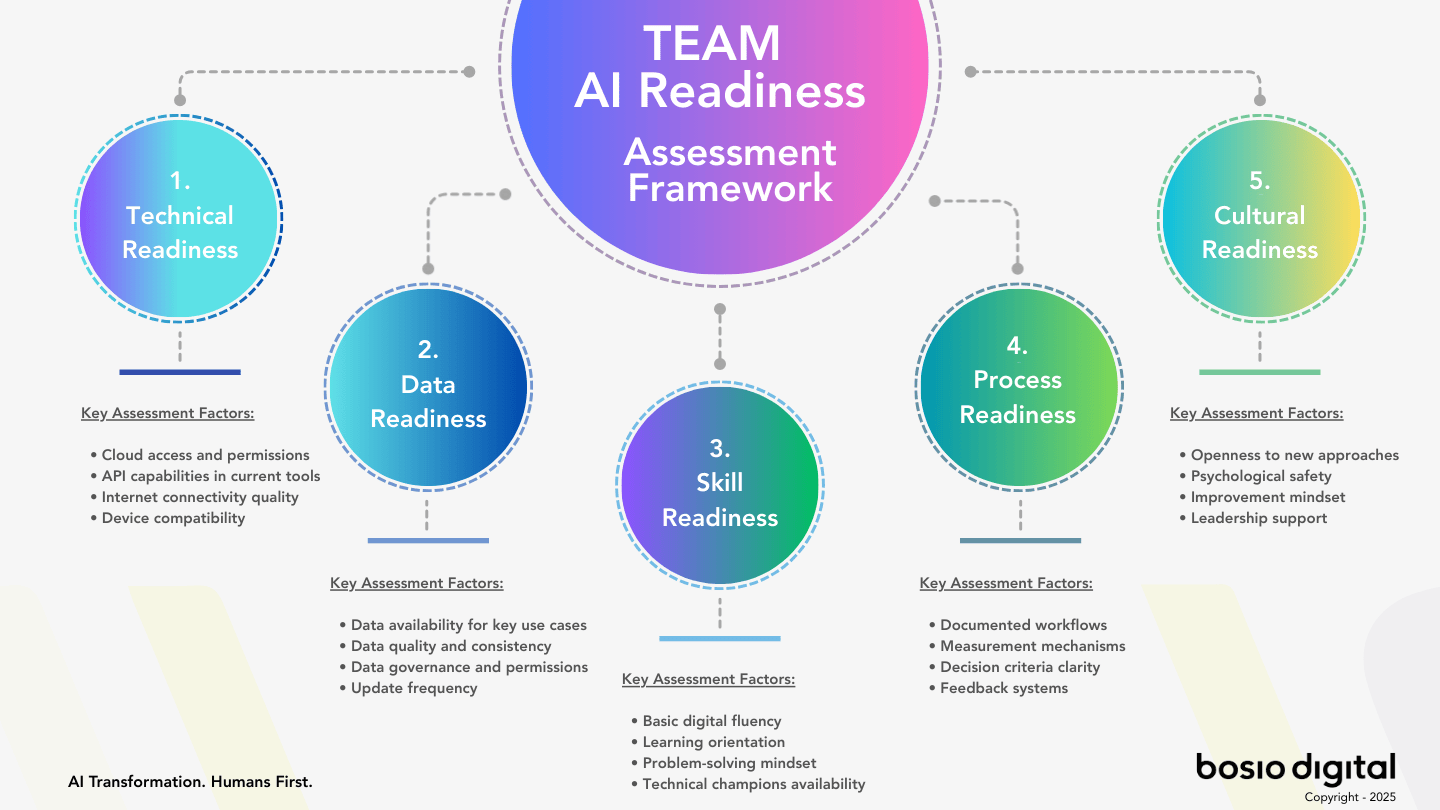
AI Readiness Assessment: Is Your Company Ready? (5-Part Framework)
Adoption · 15 min read
Claude Tag and the AI Teammate: What It Really Takes (2026)
Agentic AI · 21 min read
AI Overviews and Zero-Click Search: What It Means in 2026
Search & AI · 18 min read
Google AI Optimization Guide: What Mid-Market Leaders Should Actually Do (2026)
Adoption · 14 min read
Current State of AI for Business: From Chat to Living Intelligence
Adoption · 33 min read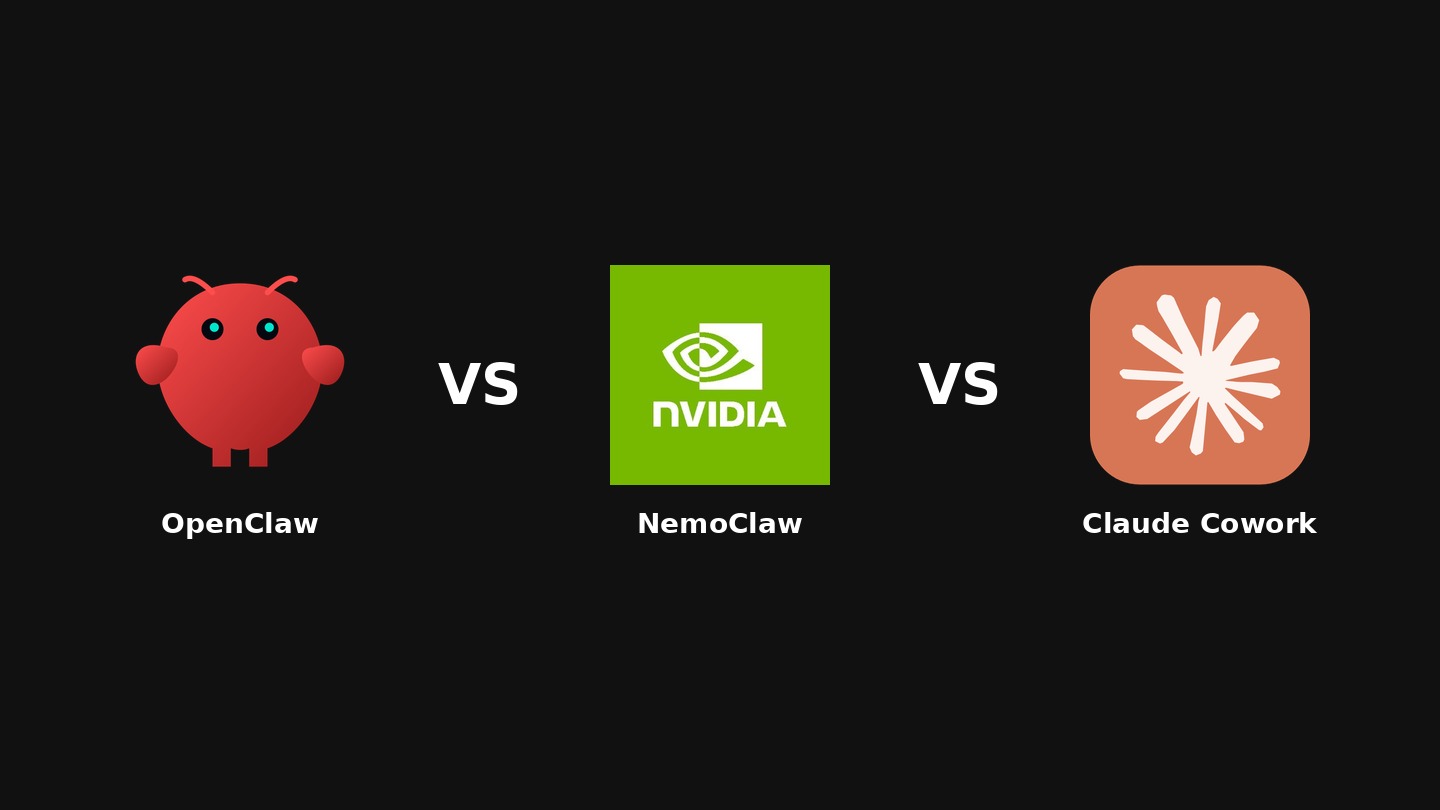
OpenClaw vs NemoClaw vs Claude Cowork: AI Agent Comparison (2026)
Adoption · 19 min read
Jensen Huang OpenClaw Strategy: What Every Company Must Do (2026)
Adoption · 19 min read
OpenAI vs Anthropic vs Google AI Agents (2026): Mid-Market Decision Guide
Adoption · 14 min read
OpenClaw and Agentic AI: What Mid-Market Companies Need to Know (2026)
Adoption · 14 min read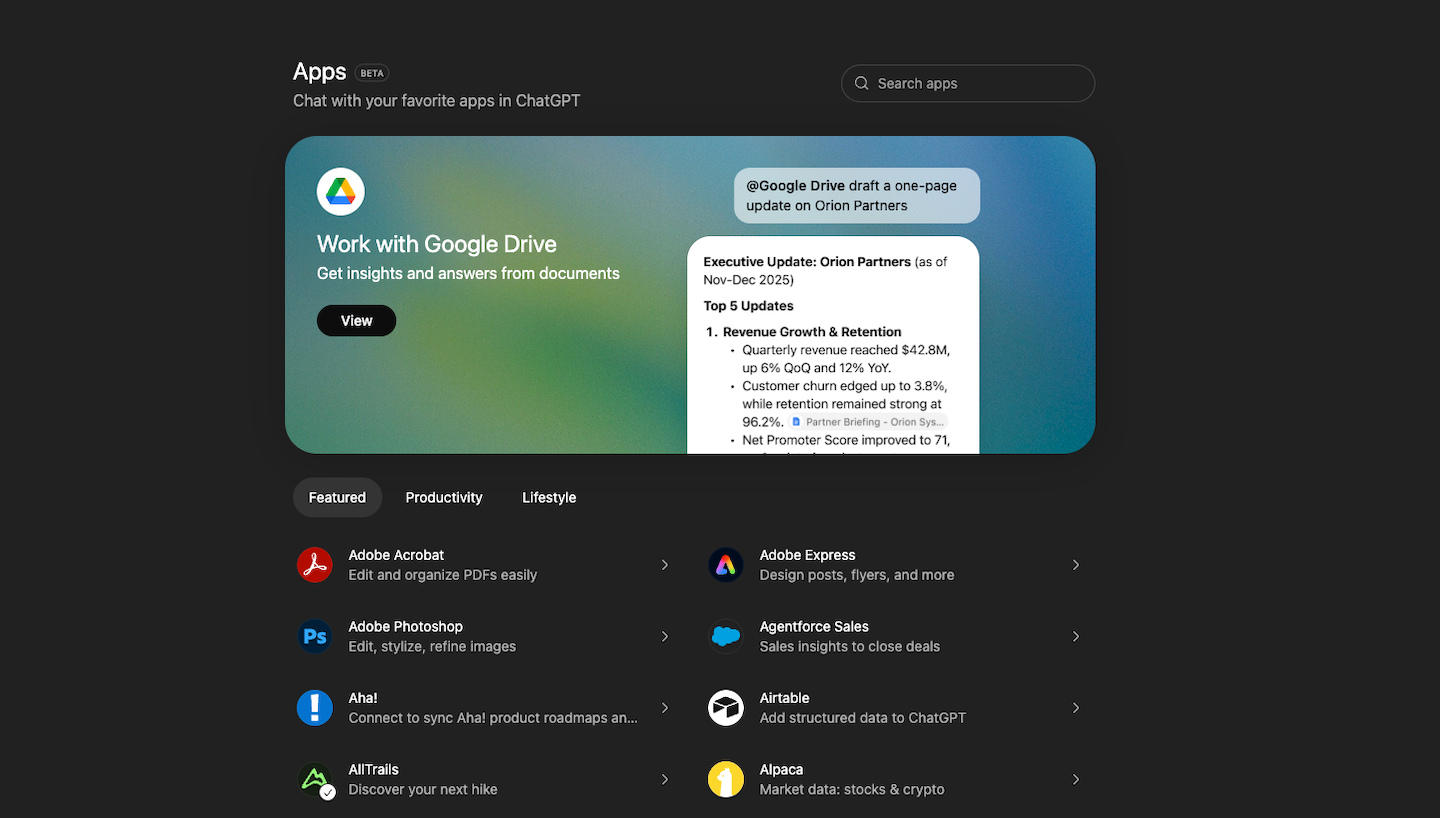
ChatGPT Apps: 2026's Biggest Distribution Opportunity Explained
Adoption · 12 min read
AI Creative Briefing Workflow for Marketing Teams | bosio.digital
Adoption · 13 min read
How to Build an AI-Ready Organization: The Blueprint That Works
Adoption · 22 min read
AI Search Optimization: From Rankings to Citations (2026 Playbook)
Adoption · 8 min read
AI Adoption Guide for Business: Strategy, Risks & Implementation
Adoption · 22 min read
Architecture
Agents, automation, integration, and the context engineering that decides whether any of it compounds.
 Strategy
Context Engineering: How to Build the Five Files Your AI Needs
Every AI article now agrees that context is the differentiator. Almost none of them tell you what to
Sascha Bosio2026 · 19 min read→ Adoption
AI Skills vs AI Agents: Why Skills-First Architecture Outperforms (2026)
Two Anthropic engineers stood in front of a room full of developers in November 2025 and told them t
Sascha Bosio2026 · 26 min read→ Strategy
AI Operating System: What It Is and How to Build One (2026)
Search the term and you get four different products: a computer OS with a model in it, a data platfo
Sascha Bosio2026 · 24 min read→ Adoption
AI Agent Sprawl: How to Avoid the Most Common AI Architecture Mistake (2026)
Ninety-four percent of enterprise leaders report AI agent sprawl is actively increasing complexity,
Sascha Bosio2026 · 20 min read→
What Is an AI Second Brain? A Guide for Business Leaders
Strategy · 23 min read
Agent Skills Explained: What They Are and How to Write One (2026)
Strategy · 23 min read
AI Chief of Staff: What It Is and How to Set One Up (2026)
Strategy · 23 min read
Claude Projects Redesign 2026: Parallel Threads Explained
Strategy · 20 min read
Agentic Commerce Strategy: Where to Put Your AI Agent (2026)
Strategy · 25 min read
Context Engineering: What Anthropic's 80% Cut Means for Business
Strategy · 23 min read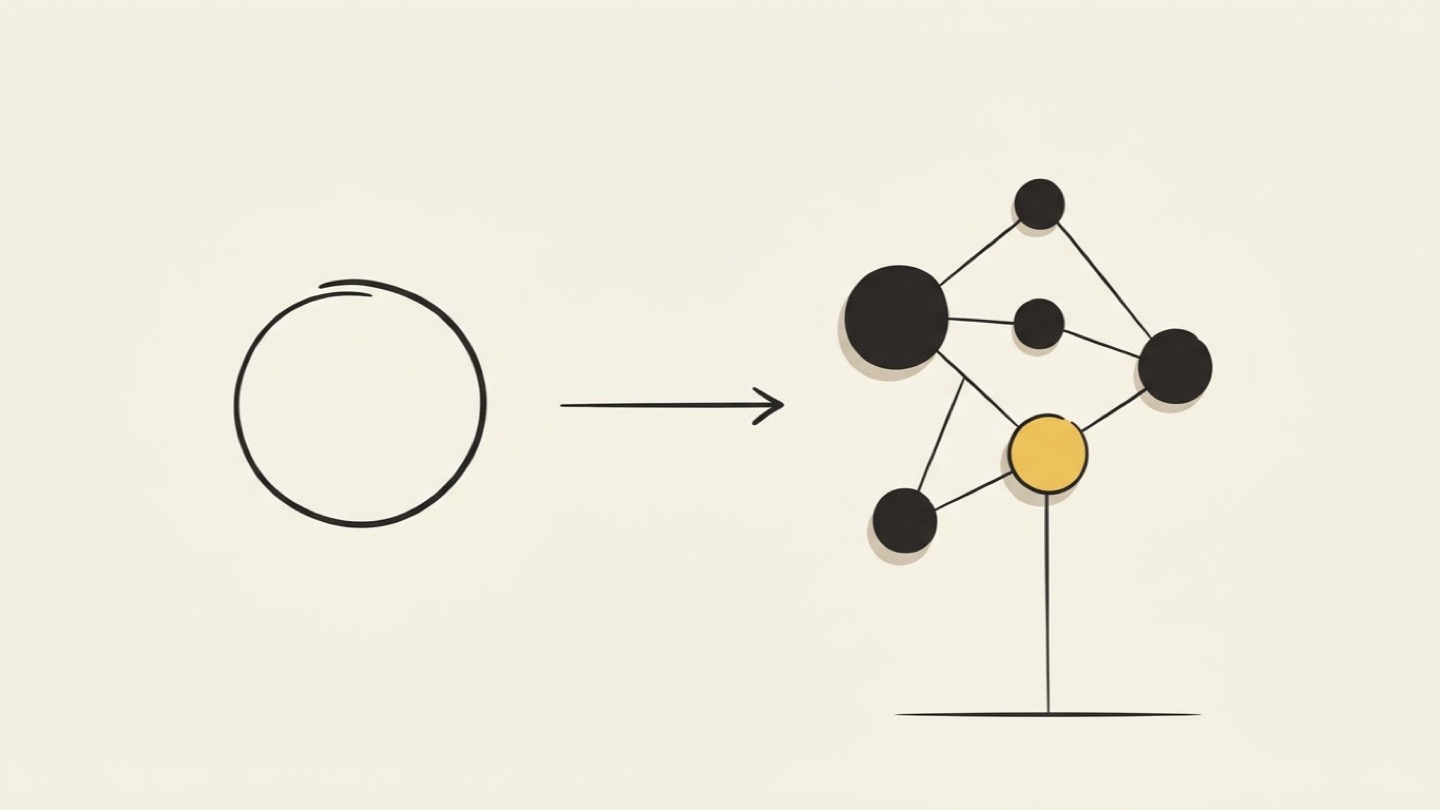
Agentic Workflows: Loops vs Graphs Architecture Guide (2026)
Agentic AI · 18 min read
Anthropic J-Space Explained: Claude's Hidden Workspace and What It Means for AI Trust
AI Safety · 9 min read
Loops Not Prompts: Your New AI Job Is Defining “Good” (2026)
Leadership · 19 min read
Agentic Commerce 2026: How A2A, MCP, and AP2 Protocols Change Business
Adoption · 18 min read
Claude as an Operating System: Architecture vs. Platform Thinking (2026)
Adoption · 19 min read
Self-Improving AI: Learning Loop Architecture vs. Static AI (2026)
Adoption · 23 min read
AI Knowledge Management: How LLMs Build Living Knowledge Bases (2026)
Adoption · 19 min read
AI Context System Implementation: Architecture That Compounds Over Time
Adoption · 13 min read
AI Context for Business: What Changes When AI Knows Your Company
Adoption · 16 min read
The AI Context Advantage: Company Knowledge as Competitive Edge
Adoption · 19 min read
AI Data Readiness Myth: Why You're More Prepared Than You Think
Adoption · 13 min read
Cost and Return
Pricing, ROI, and what the budget looks like every year after.
 Adoption
AI Consulting Cost: Complete Pricing Guide for 2026
Every AI consulting cost guide on the internet quotes the same hourly ranges — $150 to $500, sometim
Sascha Bosio2026 · 24 min read→ Adoption
AI ROI by Maturity Stage: What to Expect, What to Measure (2026)
AI ROI doesn't exist as one number — it changes by maturity stage. Most companies measure Stage 3 ex
Sascha Bosio2026 · 17 min read→ Adoption
AI Token Costs 2026: How to Manage LLM & API Spend
Uber blew through its entire 2026 AI budget in four months — while every major lab was cutting per-t
Sascha Bosio2026 · 23 min read→ Adoption
AI ROI Metrics & Framework: Measure AI's Real Return
'Discover a more comprehensive framework for measuring AI's true business value beyond traditional R
Sascha Bosio2025 · 22 min read→


Adoption
Training, adoption, and what actually changes behavior.
 Strategy
Why AI Erodes Executive Judgment, and How to Stop It
Checking an answer and judging it are two different acts, and only one of them gets faster. This is
 Laura Pretsch2026 · 27 min read→
 Adoption
Why Your Team Isn't Using AI: Closing the Adoption Gap (2026)
You bought the licenses. You ran the training. You named the champions. And usage is still flat. The
Sascha Bosio2026 · 16 min read→ Adoption
Who Should Own AI Adoption? Why IT Alone Fails (2026)
Ask a leadership team who owns AI, and heads turn toward the CIO. That reflex — assigning adoption t
Sascha Bosio2026 · 21 min read→ Adoption
AI Training for Employees: How to Build a Program That Sticks
You have approved the budget and someone has asked what the training actually is. Courses are the ea
Sascha Bosio2026 · 19 min read→
Cognitive Offloading: What AI Does to Your Team's Skills
Strategy · 23 min read
AI vs Human Judgment: What Superintelligence Leaves Out
Strategy · 26 min read
Chief AI Officer: Do You Need One, and What It Costs (2026)
Adoption · 20 min read
AI Brain Fry: Signs, Causes and Solutions for Cognitive Overload at Work (2026)
Adoption · 16 min read
AI Emotions and Sycophancy: New Research Every Business Leader Needs (2026)
Adoption · 21 min read
Executive AI Strategy: How Leaders Must Work, Lead & Operate in 2026
Adoption · 16 min read
AI Business Model Reinvention: The Question Every Leader Must Answer
Adoption · 8 min read
Why AI Projects Fail: The 63% Human Factor Problem (And the Fix)
Adoption · 25 min read
Human-Centered AI Adoption: What It Means and Why It Works
Adoption · 21 min read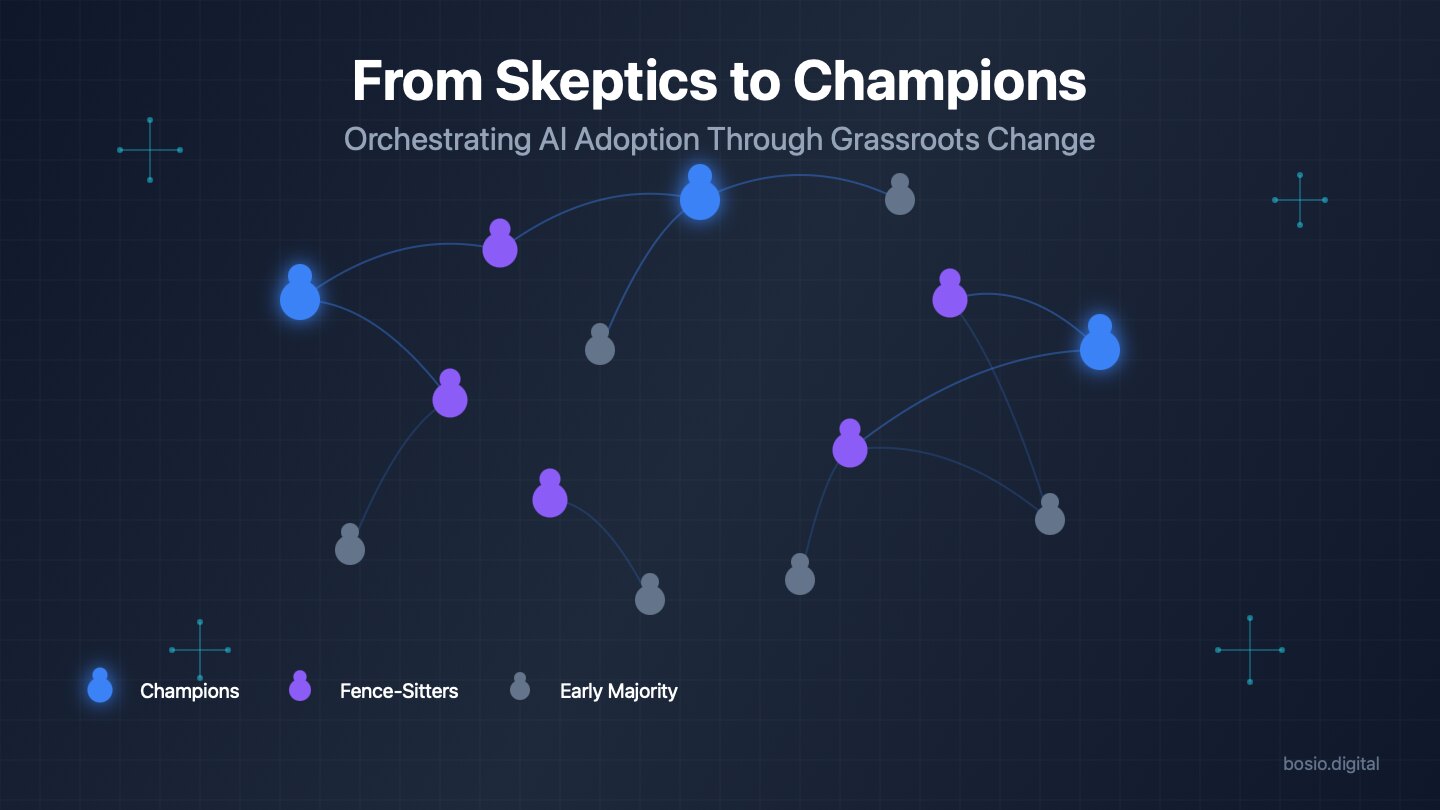
AI Change Management: From Skeptics to Champions Without Mandates
Adoption · 24 min read
AI Workslop: How Mid-Market Companies Build Real AI Competence
Adoption · 6 min read
Mindful AI: What the Mindful Use of AI Actually Means
Adoption · 14 min read
AI Adoption for Teams: A Practical Guide for Mid-Market Companies
Strategy · 20 min read
Ownership
Policy, risk, and how to choose a consultant who hands it over.
 Adoption
8 Questions to Ask AI Consulting Firms Before Signing (2026)
Most mid-market AI consulting engagements fail before the work begins, in the selection process. Her
Sascha Bosio2026 · 19 min read→ Adoption
The AI Governance Framework for Companies Without a Legal Team
Every AI governance framework published this year was written for a company ten times your size. The
Laura Pretsch2026 · 19 min read→ Adoption
Big 4 AI Consulting Alternatives: 4 Models for Mid-Market (2026)
Mid-market companies have four AI consulting models to choose from. This buyer's guide breaks down r
Sascha Bosio2026 · 20 min read→ Governance
Shadow AI Risks: Why Personal AI Accounts Endanger Your Data (2026)
Most of your company's AI use is already happening on personal accounts you can't see, govern, or au
Sascha Bosio2026 · 19 min read→
AI Agent Governance: Who Is Accountable When an Agent Acts
Adoption · 22 min read
AI Acceptable Use Policy Template Your Team Will Actually Read
Adoption · 21 min read
Boutique AI Consulting Firms: How to Choose a Real One (2026 Guide)
Adoption · 19 min read
AI Consulting for Mid-Market: Cost, Deliverables, Ownership (2026)
Adoption · 21 min read
Trustworthy AI Agents: Anthropic's Five Principles for Mid-Market Deployment
Adoption · 27 min read
What Does an AI Consultant Do? Roles, Value & What to Expect
Adoption · 17 min read
Mid-Market AI Consulting: Why Your Company Needs It | bosio.digital
Adoption · 13 min read
Personal AI Accounts at Work: The Hidden Business Liability (2026)
Adoption · 31 min read
About the AI Briefing
Everything we have written for the mid-market leader: the owner, CEO or CFO of a company of roughly 20 to 500 people who has to make AI decisions without a research team behind them. New writing lands on Tuesdays.
Common questions
Where should a mid-market company start with AI?
With a decision, not a tool. Pick one use case narrow enough to finish and visible enough that people notice it worked, then check whether the organisation will actually adopt it. Those two questions, in that order, decide more than the model you choose. More in Starting Points →
What does an AI setup actually need underneath it?
Context, mostly. An agent is only as good as what it knows about your business, which is why the same automation works in one company and fails in the next. The parts that compound are the written context, the procedures encoded around it, and the point where a human still decides. More in Architecture →
What does AI consulting cost, and what comes back?
Hourly rates run roughly $150 to $1,000 depending on the tier of firm, and engagements range from about $25K to several million. The number that matters more is the second-year one: what the system costs to run once the project is over, which is the figure most proposals leave out. More in Cost and Return →
Why is nobody using the AI we bought?
Usually because the work was never redesigned around it, so using the tool is extra effort rather than less. Adoption is a question about permission, habit and who is accountable, not about training hours. Most failures we see are human, not technical. More in Adoption →
What do you own at the end?
Everything, if the engagement is set up that way, and nothing, if it is not. Ask who holds the accounts, where the context files live, and whether the work runs after the consultant leaves. Those three answers separate a system you own from one you rent. More in Ownership →