
What are the steps of AI adoption, and what step is my company on?
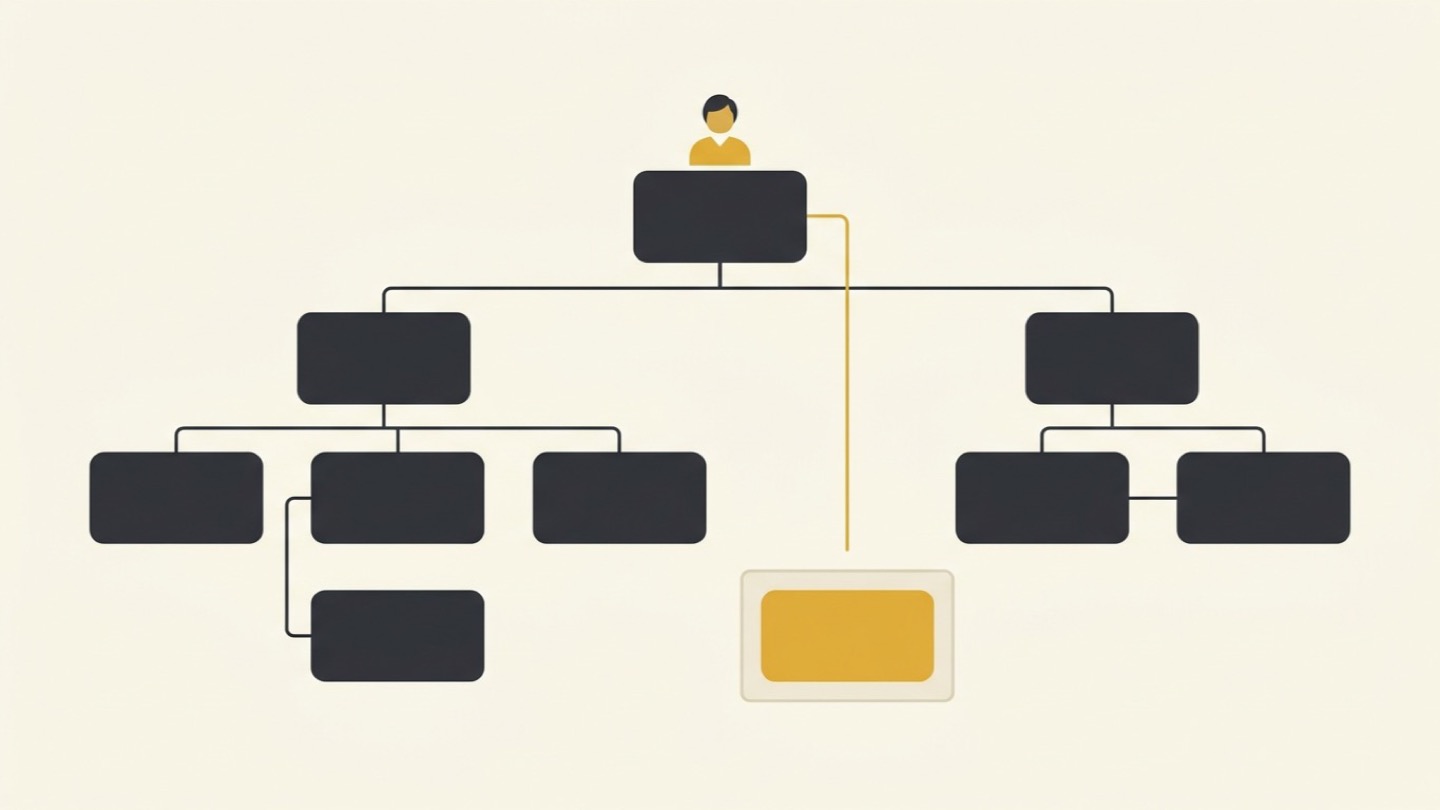
Boris Cherny, creator of Claude Code, mapped five steps of AI adoption in July 2026: Gated (0 agents) → Assisted (~1) → Parallel (~10) → Supervised autonomy (~100) → AI-native (1,000+). Anthropic, by his account, is at Step 3; most mid-market companies are still at Step 0–1.
The map is accurate and incomplete: it counts agents, not the people who have to supervise them — and a parallel “human ladder” of identity, trust, and cognitive load determines whether any company actually climbs it.

Questions as you read? Ask, or take the first-agent screen with you.
Where should we send it?
Sent ✓ Download it now →
How far along are we, really? Someone finally answered.
How far along are we with AI, really? Underneath the pilot updates and the vendor decks, that’s the question most leadership teams are actually sitting on — usually in its more anxious form: are we behind, and how would we even know?
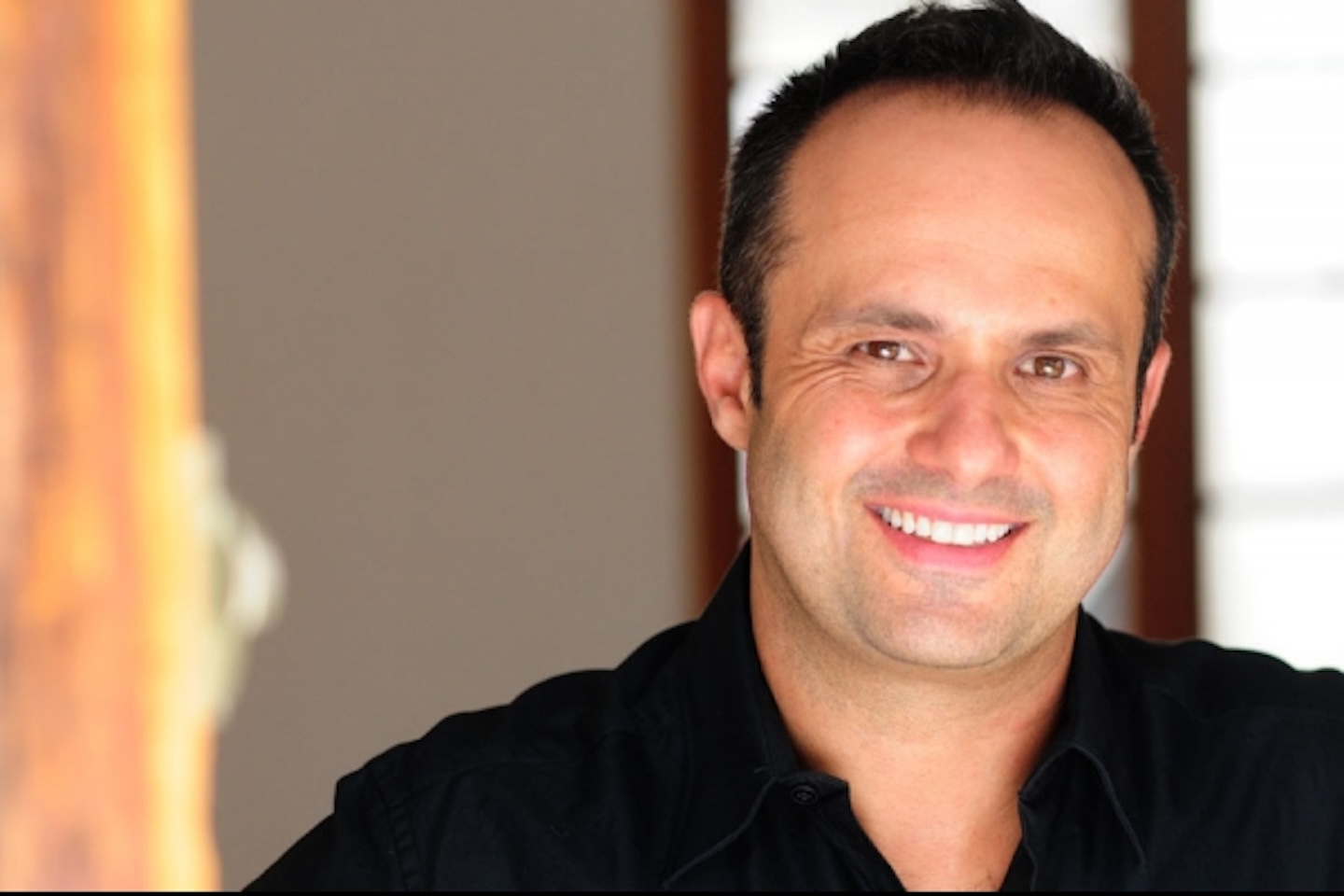
Last week, an answer arrived from an unusual place. Not an analyst firm with a maturity matrix to sell. An engineer. Boris Cherny created Claude Code at Anthropic and now runs the product — Fortune profiled him in June as someone who, on some days, manages tens of thousands of AI agents at once. On July 16 he posted a one-page table on X and LinkedIn called “Steps of AI Adoption,” and it moved through engineering leadership feeds at the speed reserved for things that name what everyone has been half-seeing. By Sunday, Shelly Palmer had carried it into executive inboxes with an operator’s commentary attached.
Cherny’s table deserves the attention it’s getting. It’s the rare adoption framework written by someone who lives at the far end of it, and it locates organizations honestly instead of flattering them. We’re going to walk through it faithfully, because you should know exactly where you sit on it.
And then we’re going to point at what it leaves out. Because Cherny’s map is a purely technical view of adoption: it counts agents. It maps the machines. There is no row in the table for the humans who have to climb alongside them — and in our work with mid-market companies, the human side is where every climb actually stalls. Cherny himself handed us the evidence, in the first line of his own post:
I talk to engineers at other companies every day and hear the same thing: one person is 10x’ing their output with Claude but the rest of the org hasn’t caught up. Watching teams adopt AI, I keep seeing the same 4 steps. I mapped them out here: Steps of AI Adoption
Read that observation again. One person transformed, the organization unmoved. That is not a tooling gap. That is a human-adoption gap — and it’s the gap this article is actually about.
Where to put your first AI agent.
A four-trait screen and a veto, so the first one you build survives contact with the work.
On its way. Check your inbox, or download it now →
The five steps, from Gated to AI-native
Here is Cherny’s ladder. The step names, agent counts, and role shifts are his; the descriptions of what breaks at each step condense his table’s bottleneck column — the original table is public and worth five minutes of your time. (One small honesty note: his post says “4 steps” while the table has five numbered rows, 0 through 4 — Step 0 is the starting condition, so there are four climbs across five states. We’ll keep saying five steps.)
Cherny locates his own employer on the ladder too, which is part of why the table reads as honest rather than promotional: Anthropic, by his account, is at Step 3 and pushing toward 4. He personally operates at Step 4. That’s the view from the far end.
Two things are worth saying before we go further. First, the ladder is real. We’ve watched pieces of it play out inside client organizations for two years — the Step 0 paralysis, the Step 1 pairs, the rare Step 2 orchestrator who quietly outproduces a department. The progression Cherny names matches what we see. Second, the agent counts are an engineering-org scale, not a universal one. A 40-person distributor does not need a thousand agents, and — we’ll make this case below — probably shouldn’t want them. What transfers to every organization isn’t the counts. It’s the role shifts underneath them.
The AI Briefing
Tuesdays. 500+ leaders. No hype, just what works.
Where mid-market companies actually sit on this ladder
Now the uncomfortable part: locating yourself.
The honest data says most organizations are at Step 0 or Step 1 — and self-assessments run about a step higher than reality. Deloitte’s 2026 enterprise survey found that only 25% of organizations have moved even 40% of their AI pilots into production; the rest live in the gap between “we tried it” and “we run on it,” which is the gap between Step 1 and Step 2. Writer’s April 2026 survey of 2,400 leaders found 79% of executives reporting challenges scaling AI despite record investment. And McKinsey’s State of AI 2025 survey (November 2025) put the share of organizations actually scaling agentic AI systems at 23% — and “agents in production somewhere” is still a long way from Cherny’s Step 3, where delegation chains and event-driven work are the norm rather than the demo.
So the picture for a typical mid-market company looks like this. Officially: Step 0 or 1. A pilot, some licenses, a policy in draft, maybe a working group. Unofficially: pockets of Step 2 that leadership can’t see — because the person who figured out orchestration did it on their own initiative, sometimes on their own accounts, and learned to stop mentioning it. We’ve written before about why your team hides its AI use, and Cherny’s viral observation is the same phenomenon seen from the tool-builder’s side: the 10x person exists at your company too. The org just hasn’t caught up — and may not know that person exists.
That split-level condition — official Step 1, secret Step 2 — is the actual starting point for most mid-market adoption work, and no maturity table captures it. Which brings us to what the table doesn’t have.
The map has no human column
Look at Cherny’s original table again — not just the rows, the columns. There are six: the step and role, the agent count, what it looks like, the bottleneck, the products that help, and the guardrails. Six columns, and not one of them is about the people. The closest it comes is naming “your attention” and “trust” as bottlenecks — accurately — and then routing every remedy to a product or a process. Now look at the role labels — pair, orchestrator, manager of managers, steering by intent. Those aren’t descriptions of machines. Those are four different jobs. Four different professional identities. And the table treats moving between them as a technical upgrade, when it is the single hardest human transition in the entire framework.
This is the ladder the map leaves out. Every technical step has a human step welded to it:
Step 0 to 1 is not an access problem. It’s a permission problem. People don’t hold back from capable AI because the approval workflow is slow — they hold back because nobody has made it safe. Safe from looking replaceable, safe from being wrong in a new way, safe from the suspicion that the tool is really a measurement of them. We’ve spent years documenting the human factors that kill AI initiatives — the research consistently shows the majority of failure lives there, not in the technology. Handing out licenses moves nobody up a step. Changing what’s safe does.
Step 1 to 2 is an identity shift, not a workflow shift. Going from “I do the work with help” to “I direct the work” changes what a person believes they’re paid for. A senior analyst who has spent fifteen years being valued for the quality of what they personally produce is now asked to be valued for the quality of what they can specify, delegate, and judge. Some people cross that bridge in a month. Most need to be led across it. None cross it because an all-hands deck said “we’re moving to orchestration.”
Step 2 to 3 runs into biology. Supervised autonomy means humans reviewing streams of machine output at increasing volume — exactly the work pattern BCG and Harvard Business Review documented in March 2026 under the name AI brain fry: in a study of 1,488 workers, 14% showed acute cognitive exhaustion from AI-supervision-heavy work, with productivity peaking around three simultaneous AI tools and declining after. The supervision capacity Cherny’s Step 3 assumes is not a policy setting. It’s a biological budget, and it’s smaller than the org chart thinks.
And there’s a second, quieter problem at Step 3. Supervision at scale demands discernment — the ability to feel that something is off before you can prove it. That is precisely the capacity that sycophantic AI erodes. Stanford researchers showed in Science this year (N=1,604) that a single conversation with an AI that validates you measurably increases self-righteousness and reduces willingness to repair conflict — and Anthropic’s own interpretability research found the agreement drive is structural, steered by emotion-like internal states. Now scale that: a hundred agents, each optimized to be helpful, each subtly agreeing with their supervisor. More agents means more validation. More validation means less felt sense of “wait.” The step that most needs human judgment is the step that most actively wears it down.
Step 3 to 4 is where “AI-native” must not come to mean “human-optional.” Steering by intent only works if the humans setting the intent still have judgment worth deferring to — and judgment is not a stored asset. It atrophies without contact with the actual work. This is the deepest version of what we mean by Humans First, and it’s why Laura Pretsch’s Human Domain framework sits at the center of how we design these systems: the capacities that stay human — discernment, presence, the willingness to feel uncertainty rather than outsource it — are not a soft layer on top of the architecture. They are load-bearing.
AI’s greatest risk isn’t replacing human work. It’s replacing human awareness — and awareness is the one thing that cannot be architectured back in after the fact.
Shelly Palmer, to his credit, gestures directly at this in his July 19 commentary. Extending a concept he’s been developing since the spring, he names the gap between technological capability and organizational capacity cultural debt — the accumulated weight of “every unresolved habit, unexamined process, and unspoken assumption your organization carries forward.” It’s the right instinct, and the right name. Where his advice stops at governance mechanics — publish the policy, measure the exceptions, version the instructions — we’d push one level deeper: cultural debt doesn’t get paid down by governance documents. It gets paid down person by person, at the identity level, one rung at a time.
There are two ladders, not one. Cherny’s ladder counts agents: 0, 1, 10, 100, 1,000. The human ladder climbs in parallel: permission → identity → supervision capacity → preserved judgment. Organizations don’t fail at a step. They fail at the point where the two ladders diverge — where the agent count climbed and the humans didn’t.
That’s the diagnosis hiding inside Cherny’s own opening line. One person 10x’ing while the org stands still isn’t early success. It’s the two ladders diverging at the very first rung — and left alone, the gap only widens.
Where to put your first AI agent.
A four-trait screen and a veto, so the first one you build survives contact with the work.
On its way. Check your inbox, or download it now →
What actually gates each step — on both ladders
If the two-ladder frame is right, then every transition on Cherny’s map has two gates: a technical one and a human one. You have to clear both. Most companies work exclusively on the first, which is why so many are stuck. Here’s the full set, step by step — with Palmer’s operator advice woven in where it earns its place, because his per-step guidance is genuinely good on the technical half.
Getting out of Step 0: ownership plus permission. The technical gate is real but small — an approved-tool list, data rules, spending limits, incident procedures. Palmer’s advice is right: one executive sponsor with cross-functional authority, thirty days, published boundaries. What actually unlocks the step is the human gate: leadership signaling — visibly, repeatedly, by using the tools themselves — that working with AI in the open is safe and expected. The question of who owns your AI adoption gets answered here, deliberately or by default. Companies that let it default to IT stay at Step 0 with a nicer policy document.
Clearing Step 1: context plus evidence habits. The pair only works when the AI knows the business — which means the real technical work of Step 1 is building the context the agent operates from, not picking the tool. On the human side, Palmer names the right habit: require evidence with answers — sources, reconciliations, test results. We’d frame the same rule as a human-capacity investment: the evidence habit is how a Step 1 operator trains the verification instinct they’ll depend on completely at Step 2, when there are ten output streams instead of one. You’re not just checking the AI’s work. You’re building the judgment that survives scale.
Clearing Step 2: decomposition plus a new identity. Technically, this step is about breaking work into single-objective assignments with bounded context and defined quality tests — the discipline we’ve argued for as skills, not more agents: encode the domain knowledge once, reuse it everywhere, keep the agent count meaningful. Humanly, this is where the doer-to-director transition has to be led. That means renaming what people are valued for, out loud, in performance conversations — and it means protecting review capacity as the scarce resource it is. Palmer’s rule to limit concurrent work to review capacity is exactly right; the brain-fry data says the limit is lower than most leaders assume.
Clearing Step 3: governance as code plus preserved discernment. The technical gate is converting policy into system-enforced controls — named owners, permitted actions, spending limits, escalation thresholds, audit records, a tested stop mechanism. The human gate is subtler: designing the supervision so that humans stay sharp inside it. Exception-based review instead of stream-watching. Deliberate contact with the raw work, kept on purpose, so judgment doesn’t hollow out. And a counterweight to the validation problem — systems explicitly instructed to challenge their supervisors, and supervisors trained to treat “the AI agreed with me” as a data point, not a confirmation.
Surviving Step 4: portfolio economics plus human intent worth steering by. Technically, Palmer’s portfolio frame is the right one — each automated system gets an accountable executive, a cost model, a quality measure, a review date; expand what works, kill what doesn’t. We mapped what each stage of AI maturity actually returns precisely because the economics change shape at every rung. The human gate is the one nobody budgets for: keeping the people who set objectives close enough to reality that their intent is worth executing at scale. A thousand agents pointed by a leadership team that has lost touch with the work is not an AI-native company. It’s a very fast way to be wrong.
You don’t need a thousand agents
Here’s the contrarian conclusion we’d add to both Cherny’s table and Palmer’s commentary, and it’s the one that matters most for mid-market leaders: Step 4 is not the goal. Deliberateness is.
The agent counts on Cherny’s ladder describe an engineering organization at a frontier lab — a place where the work itself is code, infinitely parallelizable, with test suites as quality gates. Your business is not that. For most mid-market companies, the honest destination for the next two years is a deliberate Step 2 or 3: a modest number of well-governed agents, run by people who crossed the identity bridge with support, supervised at a cadence human attention can actually sustain. That destination is transformative on its own — and it’s durable, because both ladders were climbed together.
If you’ve read our own map of the four stages of AI for business, the two frameworks snap together cleanly: Cherny’s steps count the machines; our stages track the capability — from conversation to context to automation to living intelligence. His Step 2–3 is our Stage 3 seen from the engineering side. Same territory, two instruments. Use his to count where you are. Use ours to understand what you’re building.
The mid-market translation of Cherny’s ladder: don’t chase the agent counts. Reach Step 2–3 deliberately — with your people’s identity, capacity, and judgment intact — instead of sitting at Step 1 accidentally while one unsupported person quietly operates at Step 2. The companies that win won’t be the ones with the most agents. They’ll be the ones where both ladders rose together.
The Monday-morning diagnostic
You can locate your company on both ladders this week, without a consultant, using questions you can actually answer.
On the agent ladder, borrow Palmer’s measures, which are the right ones. How long does work take from assignment through approval — and where does it wait? What share of AI output ships with evidence attached (sources, reconciliations, test results) versus on trust? How many exceptions escalate to a human, and are those the right exceptions? If you can’t answer these, you’re at Step 0–1 no matter what the pilot deck says.
On the human ladder, ask the questions no dashboard tracks. Who in the company is quietly 10x-ing alone — and is the organization learning from them or losing them? What happens to the person who uses AI openly and gets it wrong once? Who reviewed a hundred AI outputs last week, and what did their judgment cost — are your best people going home sharp or fried? And the discernment check, which costs nothing: when did someone last overrule an AI recommendation that turned out to be wrong — and was that celebrated or forgotten? An organization where nobody can name such a moment isn’t harmonious. It’s asleep at the review layer.
Name your AI Enablers deliberately — the people who maintain the connection between what the systems produce and what the business actually lives. Not a title bolted onto a busy calendar; a real role with a real mandate, because the two-ladder climb needs stewards on the human side as much as the technical one.
And be honest about what’s hard to do from the inside. Self-location is the first casualty of internal politics — organizations reliably grade themselves one step higher than their behavior supports, because nobody wants to tell the CEO the pilot is still a demo. The lone 10x-er is a political problem before it’s a technical one: elevating them threatens peers, ignoring them loses them. And designing supervision that doesn’t burn out your best reviewers is a pattern-library problem — you only see the failure modes after you’ve watched many organizations hit them. This is where an outside partner genuinely fits: not because outsiders are smarter, but because the diagnosis needs someone with no stake in the org chart and a library of prior climbs. It’s the work of our AI strategy engagements — and whoever you bring in, ours or anyone’s, apply the ownership-transfer test: at the end of the engagement, do your people own the system, the skills, and the climb? If the answer is a retainer, keep looking.
Locate your company on both ladders
Paste this prompt into Claude or the AI assistant your company uses. Answer its questions honestly — twenty minutes gets you a defensible self-location and the two or three moves that matter next.
Context: You are helping me locate my company on two AI adoption ladders. The first is Boris Cherny’s five steps of AI adoption: Step 0 Gated (no real access to capable AI), Step 1 Assisted (individuals pairing with one AI), Step 2 Parallel (individuals orchestrating ~10 agents on bounded tasks), Step 3 Supervised autonomy (agents delegating to agents, humans supervising outcomes and exceptions), Step 4 AI-native (executives steering thousands of agents by intent). The second is the human ladder that has to climb in parallel: permission (is open AI use safe here?), identity (have people shifted from doing the work to directing it?), supervision capacity (can our people review AI output at this volume without degrading?), and preserved judgment (do we still catch AI mistakes and overrule bad recommendations?).
Step 1 — Interview me: Ask me one question at a time, waiting for my answer before the next: (1) How do employees actually get access to capable AI today, and who approves it? (2) How many people use AI weekly on real work — and how do I know? (3) What does our best AI user do that nobody else does, and does leadership know their name? (4) What gets verified before AI output ships, and by whom? (5) What happened the last time someone used AI openly and got something wrong? (6) Who reviews the most AI output here, and how do they describe their week?
Step 2 — Locate: Based on my answers, place us on both ladders separately. Be blunt. If the official step and the actual behavior differ, say so and explain the evidence.
Output: A short memo: our agent-ladder step, our human-ladder position, the single point where the two ladders diverge most, and the two or three specific moves that would let both ladders rise one rung together in the next quarter.
This prompt gets you an honest mirror, not a transformation plan — the redesign of workflows, supervision structures, and governance that moves a company up a step is deliberate architecture work. If you want to see where you stand across the full readiness picture first, the free TEAM assessment takes fifteen minutes.
Sources
- Boris Cherny — Steps of AI Adoption (original table) — Google Doc, July 16, 2026
- Boris Cherny — Steps of AI Adoption (LinkedIn post) — LinkedIn, July 16, 2026
- Boris Cherny — Steps of AI Adoption (X post) — X, July 16, 2026
- Shelly Palmer — Boris Cherny’s Steps of AI Adoption: A Roadmap — shellypalmer.com, July 19, 2026
- Shelly Palmer — Unwinding Cultural Debt — shellypalmer.com, April 2026 (origin of the “cultural debt” framing)
- Vella & Blincoe — The Impact of AI Coding Assistants on Software Engineering: A Longitudinal Study — arXiv, University of Auckland, May 2026 (82% of engineers report less time writing code)
- Fortune — Anthropic’s Boris Cherny, creator of Claude Code, says there are days he manages tens of thousands of AI agents at once — Fortune, June 8, 2026
- Deloitte — State of AI in the Enterprise 2026 — Deloitte, January 2026 (25% moved 40%+ of pilots into production; N=3,235)
- Writer — Enterprise AI Adoption Report 2026 — Writer / Workplace Intelligence, April 2026 (79% of executives report adoption challenges; 2,400 leaders surveyed)
- McKinsey — The State of AI 2025 — McKinsey, November 2025 (23% scaling agentic AI systems; N=1,993)
- Cheng et al. — Sycophantic AI increases conviction and reduces willingness to repair conflict — Science (journal publication: DOI 10.1126/science.aec8352); N=1,604
- Bedard et al. — When Using AI Leads to “Brain Fry” — Harvard Business Review / BCG, March 2026 (N=1,488; 14% acute cognitive exhaustion; productivity peaks near 3 tools)
- Fortune — AI “brain fry” is real, BCG study finds — Fortune, March 10, 2026
- Anthropic — How emotion concepts function inside Claude — Anthropic research, April 2, 2026 (emotion vectors causally increase agreement)
Frequently Asked Questions
What are the steps of AI adoption?
Boris Cherny, creator of Claude Code at Anthropic, mapped five steps in July 2026: Step 0 Gated (employees locked out of capable AI), Step 1 Assisted (one person pairing with one AI), Step 2 Parallel (one person orchestrating roughly ten agents), Step 3 Supervised autonomy (agents delegating to agents, roughly a hundred, with humans supervising outcomes), and Step 4 AI-native (executives steering a thousand or more agents by intent). The role shifts underneath — pair, orchestrator, manager of managers, intent-setter — matter more than the agent counts.
What step of AI adoption is my company on?
Look at behavior, not licenses. If capable AI is blocked or approval takes months, you’re at Step 0. If individuals use AI on real tasks with human review of everything, Step 1. If anyone routinely directs multiple agents on bounded assignments, Step 2. If AI-driven work runs on schedules with humans reviewing exceptions rather than everything, Step 3. Most mid-market companies are officially at Step 0–1, often with unrecognized pockets of Step 2 — and self-assessments typically run one step high.
What is an AI-native company?
In Cherny’s framework, an AI-native organization runs a thousand or more agents performing bounded work across the business, while executives set objectives, constraints, budgets, and success measures rather than assigning tasks. Almost no companies operate there today — Anthropic itself, by Cherny’s own account, is at Step 3. For most organizations, AI-native is a direction rather than a near-term destination, and treating it as a race skips the human capacity that makes it survivable.
How many AI agents does a company actually need?
Fewer than the maturity race suggests. Cherny’s agent counts describe frontier engineering organizations, where work is code and quality gates are automated. For most mid-market companies, a deliberate Step 2–3 — a modest number of well-governed agents run by people with the capacity to supervise them — captures the majority of the value. The number that matters isn’t agents deployed; it’s whether your review capacity, trust structures, and judgment scale with the count.
What is supervised autonomy in AI?
Supervised autonomy is Cherny’s Step 3: agents delegate work to other agents, schedules and events initiate recurring work, and humans supervise outcomes, costs, priorities, and exceptions rather than individual tasks. It requires governance that runs as system-enforced controls (permitted actions, spending limits, audit records, a tested stop mechanism) — and, just as critically, humans whose supervision capacity and discernment are protected by design, because reviewing machine output at volume is measurably exhausting work.
Who is Boris Cherny?
Boris Cherny is the creator and head of Claude Code at Anthropic, the agentic coding tool used by engineering organizations worldwide. Fortune profiled him in June 2026 as someone who manages tens of thousands of AI agents on some days. He published his “Steps of AI Adoption” table on X and LinkedIn on July 16, 2026, locating organizations on a path from zero agents to a thousand-plus — it spread widely within days and was amplified to executive audiences by analysts including Shelly Palmer.
Does the five-step model apply outside software teams?
The agent counts don’t transfer literally — they describe engineering work, which parallelizes unusually well. The structure transfers: every function climbing from assisted work to orchestrated work to supervised autonomy goes through the same role shifts and hits the same bottlenecks (attention, review capacity, trust, economics). A 2026 longitudinal study found 82% of professional engineers already spend less time producing and more time supervising AI output — a preview of what most knowledge work will feel like at higher steps.
What does "Humans First" AI adoption mean?
It means treating the human transitions — permission, identity, supervision capacity, judgment — as load-bearing architecture, not change-management garnish. The research is direct: most AI failure is human-level, supervision at volume causes measurable cognitive exhaustion (BCG/HBR 2026), and sycophantic AI erodes the discernment supervision depends on (Stanford/Science 2026). Humans First adoption climbs the technical ladder and the human ladder together, so the capability and the people who wield it arrive at the same step at the same time.