
What are the best alternatives to Big 4 AI consulting for mid-market companies?
Mid-market companies have four AI consulting models to choose from: Big 4 firms ($500K–$10M+), boutique consultancies ($75K–$500K), fractional Chief AI Officers ($60K–$180K/year), and in-house capability building. According to industry benchmarks, boutique firms deliver comparable outcomes at 40–60% less cost while maintaining implementation continuity — the most common failure point in enterprise consulting.
For most mid-market companies, the most effective approach is a hybrid model that combines external expertise for strategy and momentum with internal capability building from day one.

Questions as you read? Ask, or take the twelve questions with you.
Where should we send it?
Sent ✓ Download it now →
The Mid-Market AI Consulting Problem Nobody Talks About
Mid-market companies spent an average of $600,000 on AI initiatives last year, according to Baker Tilly’s annual survey. That’s a meaningful investment for companies between $10 million and $500 million in revenue — the kind of budget that demands a clear return.
If you are still deciding whether outside help is the right move, we wrote a direct answer: why your company needs an AI consultant and what happens without one.
Yet a DDN report published in January 2026 found that 54% of organizations have delayed or canceled AI initiatives in the past two years. Not because AI doesn’t work. Because the approach — and often the consulting partner — was wrong for the company. Understanding the human factors in AI adoption is critical to avoiding this outcome.
Here’s the tension nobody in the consulting industry wants to acknowledge: enterprise AI consulting was built for Fortune 500 companies. The methodologies, timelines, pricing structures, and team sizes all assume you have dedicated innovation departments, multi-year transformation budgets, and the organizational bandwidth to manage a 20-person consulting engagement alongside running your actual business.
Mid-market companies operate in a fundamentally different reality. You need AI that works within existing workflows. You need measurable value within quarters, not years. And you need a consulting partner who can work with the data infrastructure you actually have — not the architecture they wish you had.
A Capital One survey found that 73% of enterprise data leaders identified data quality and completeness as the primary barrier to AI success, ranking it above model accuracy, computing costs, and talent shortages. For mid-market companies with leaner data teams, this challenge is even more acute.
The good news: 80% of mid-sized businesses investing in AI see operational cost reductions within their first year, according to MSBC Group research. And McKinsey’s 2025 survey found that 92% of firms plan to increase their AI budgets over the next three years.
The opportunity is real. The question is which consulting model will get you there — without burning through your budget on an approach that was never designed for your company.
This guide breaks down four models with real costs, honest pros and cons, and a practical framework for making the right choice.
How Much Does AI Consulting Actually Cost? The Real Numbers
Before diving into each model, here’s what mid-market companies can expect to spend. These ranges are based on industry benchmarks and reflect typical engagements for companies with 100 to 2,000 employees.
Cost Comparison by Consulting Model:
| Big 4 / Enterprise | Boutique Firm | Fractional CAIO | In-House Build | |
|---|---|---|---|---|
| Strategy engagement | $500K – $1M | $25K – $150K | $25K – $75K | $10K – $50K (training) |
| Full implementation | $3M – $10M+ | $75K – $500K | N/A (needs impl. team) | $150K – $250K/yr |
| Ongoing support | $500K+/yr | $5K – $25K/mo | $5K – $15K/mo | Internal cost |
| Time to first value | 6 – 12 months | 4 – 12 weeks | 30 – 90 days | 3 – 6 months |
| Typical engagement | 12 – 24 months | 3 – 6 months | Ongoing retainer | Permanent |
| Senior continuity | Partner sets direction; team rotates | Senior practitioners, hands-on | One strategic lead, ongoing | You own it |
Twelve questions to ask before you sign.
Twelve questions, the red flag behind each answer, and a grid to score two firms side by side.
On its way. Check your inbox, or download it now →
Mid-market companies can expect to invest $75,000 to $500,000 with a boutique AI consulting firm for a full strategy-through-implementation engagement — roughly 40–60% less than comparable Big 4 engagements, which typically start at $500,000 for strategy alone and scale to $3–10 million for full implementation, according to industry benchmarks. The difference isn’t just price — it’s what you get for the money and how quickly it translates into operational value. For a complete breakdown of what each model costs, what drives those numbers, and how to use them when evaluating proposals, see our AI consulting pricing guide for mid-market companies.
Now let’s look at what each model actually delivers.
The AI Briefing
Tuesdays. 500+ leaders. No hype, just what works.
Model 1: Big 4 and Enterprise Consulting Firms
Big 4 firms excel at strategy and pilot development but routinely move their senior talent to the next engagement before full implementation is complete.
Who they are: Deloitte, Accenture, McKinsey, PwC, EY, KPMG, BCG, and Bain. Also includes large technology consultancies like Capgemini, Infosys, TCS, and Cognizant.
What They Do Well
Big 4 firms bring unmatched breadth. They have thousands of consultants across every industry vertical, established partnerships with enterprise software vendors, and the institutional credibility that simplifies board-level approvals.
Their strategy work is often genuinely excellent. The frameworks are sophisticated, the research is thorough, and the deliverables are polished. If you need a comprehensive AI transformation roadmap that spans multiple business units and geographies, they can mobilize at a scale that smaller firms simply cannot.
They also bring risk mitigation for regulated industries. In healthcare, financial services, and government contracting, the Big 4 brand carries weight with auditors and regulators that smaller firms can’t replicate. For companies navigating complex compliance requirements, establishing a strong AI governance framework is essential — and the Big 4 have deep experience in this area.
Where They Fall Short for Mid-Market
The handoff problem. This is the most common and most expensive failure pattern. Big 4 firms excel at strategy and pilot development but routinely move their senior talent to the next engagement before full implementation is complete. One mid-market software company reportedly invested $2 million in an AI strategy and pilot that worked perfectly in a controlled environment — only to discover during implementation that it required completely rebuilding their data architecture, after the consulting team had already moved on.
Over-engineering. There’s a structural incentive to propose comprehensive, enterprise-wide transformations rather than targeted solutions appropriate for mid-market complexity. When one company needed AI-driven customer personalization, the recommendation from a large firm was a deep learning solution requiring integration with seven platforms and eight months of development. A specialized firm later implemented a simpler solution using existing tools in six weeks.
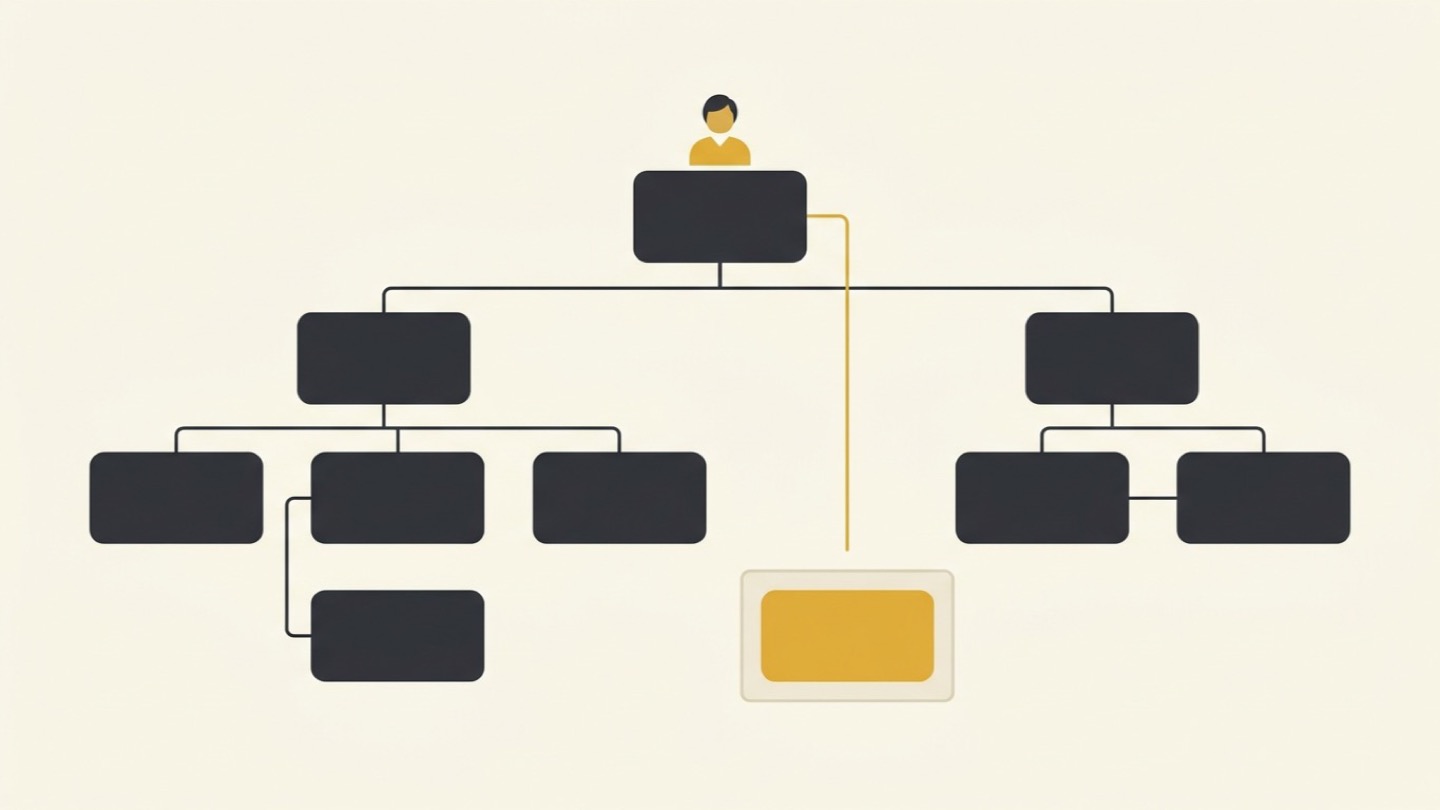
Rotating senior attention. Partners sell the engagement and set direction, then rotate off; the standing delivery team turns over across the life of the program — that’s how a firm built for dozens of concurrent enterprise engagements has to operate. For a mid-market company it means the senior judgment you bought in the pitch isn’t guaranteed to be the senior judgment in the room six months in.
Timeline misalignment. Big 4 engagements are designed for 12 to 24-month arcs. Mid-market companies that need to demonstrate AI value to their board within two quarters are working against the fundamental rhythm of how these firms operate.
When Big 4 Is the Right Choice
Companies with $500M+ revenue, dedicated IT departments, multi-year transformation budgets, complex regulatory requirements, or situations where Big 4 brand credibility is essential for stakeholder buy-in.
When It’s Not
Mid-market companies that need speed, integrated implementation support, hands-on senior expertise, and ROI within the first year.
Model 2: Boutique AI Consulting Firms
Who they are: Specialized firms typically ranging from 5 to 50 people, focused exclusively on AI strategy and implementation. They go deep on specific industries or methodologies rather than trying to serve every company in every sector.
For the buyer-side tests that separate a genuine boutique from a rebranded one, see our dedicated guide to boutique AI consulting firms. This article stays at the level of the four models and when each fits.
What They Do Well
Boutique firms solve the two structural problems that plague Big 4 mid-market engagements: they stay through implementation, and they right-size the solution for your business.
Because they’re smaller, you work directly with senior practitioners — the people who actually design, build, and deploy AI systems. This isn’t a luxury. For mid-market companies where the margin for error on a six-figure investment is slim, the difference between having a 15-year veteran architect your solution versus a third-year analyst following a methodology playbook is often the difference between adoption and abandonment.
The best boutique firms integrate strategy, change management, and implementation into a single engagement rather than treating them as separate workstreams sold at separate price points. This matters more than most companies realize at the outset. Getting your team to actually use AI is just as important as selecting the right technology — and the firms that understand this outperform the ones that don’t.
Research consistently shows that organizations including change management in their AI initiatives see dramatically higher adoption rates. Yet most consulting models treat change management as an afterthought — a training session in the final week, a communication plan drafted after the technology is already deployed. The boutique firms worth hiring build it into every phase.
Speed is another advantage. A focused engagement with a boutique firm typically delivers first value in 4 to 12 weeks — not 6 to 12 months. That’s not because they cut corners. It’s because they’re not billing for the overhead of a 20-person team, weekly steering committees, and 80-page status reports.
What to Watch For
Not all boutique firms are created equal. Some are essentially freelancers with a website and a logo. Before engaging any boutique firm, look for:
- Documented methodology. A repeatable process indicates maturity. Ad hoc approaches indicate a firm that’s figuring it out alongside you — on your budget.
- Client references at your scale. Fortune 500 logos on a website don’t prove they can operate at mid-market speed and budget. Ask for references from companies with similar revenue, team size, and industry complexity — and actually call them.
- Change management integration. If a firm positions change management as a separate add-on, they haven’t learned the lesson that kills most AI initiatives.
- Clear knowledge transfer plan. The goal is building your capability, not creating a permanent dependency.
When Boutique Is the Right Choice
Mid-market companies ($10M–$500M revenue) that want integrated strategy-through-implementation, founder-led or senior-led engagement, and measurable results within 4 to 12 weeks.
When It’s Not
Companies requiring massive multi-site deployments, 50+ consultant teams, or situations where Big 4 brand recognition is essential for regulatory or board-level credibility.
Twelve questions to ask before you sign.
Twelve questions, the red flag behind each answer, and a grid to score two firms side by side.
On its way. Check your inbox, or download it now →
Model 3: Fractional Chief AI Officer
Who they are: Experienced AI leaders who work with your company on a part-time or project basis — typically 10 to 20 hours per week — providing the strategic guidance of a C-suite executive without the $250,000+ annual cost of a full-time hire.
What the Role Actually Looks Like
A fractional Chief AI Officer provides mid-market companies with C-suite AI leadership at 50–75% less than a full-time hire, typically costing $60,000–$180,000 annually versus $250,000+ for a dedicated executive. According to Gartner’s 2025 projections, 35% of large enterprises now have a Chief AI Officer — but the fractional model makes this leadership accessible to companies that can’t justify the full-time cost.
The fractional CAIO fills three gaps that most mid-market companies struggle to address internally:
Strategic coherence. Without dedicated AI leadership, AI adoption tends to happen in disconnected pockets — marketing tries one tool, operations experiments with another, finance evaluates a third. A fractional CAIO creates a unified strategy that connects AI initiatives to business outcomes and prevents redundant spending.
Vendor-agnostic guidance. Internal teams often default to the tools they already know. Sales reps push the platforms they earn commission on. A fractional CAIO evaluates options based on what your company actually needs — not what’s easiest to sell or most familiar to implement.
Organizational authority. AI adoption requires decisions that cross departmental boundaries — data sharing policies, workflow changes, budget allocation. A leader with explicit C-suite authority can navigate these decisions faster than a committee or a consultant with no organizational standing.
The 90-Day Engagement Model
The most effective fractional CAIO engagements follow a structured 90-day arc: assess the current state in month one, identify three to five high-impact opportunities and build the roadmap in month two, begin implementation with internal teams in month three. This is typically faster than most Big 4 firms would complete their initial discovery phase.
The Pattern Recognition Advantage
Fractional leaders working across multiple companies simultaneously develop an unusually practical understanding of what works in mid-market environments. A fractional CAIO working with a manufacturing company, a professional services firm, and a healthcare organization sees patterns that a leader embedded in a single company never would — which tools deliver genuine ROI versus which are overhyped, which change management approaches stick versus which create temporary compliance, which vendors support mid-market clients well versus which treat them as afterthoughts.
What to Watch For
A fractional CAIO is a leader, not an implementation team. They set strategy, manage vendors, and drive organizational alignment — but you’ll still need people to build and deploy solutions. The best fractional leaders are transparent about this and help you assemble the right team, whether that’s internal hires, a boutique implementation partner, or a combination.
Divided attention is the legitimate risk. Someone working with four or five companies simultaneously may not be available during a critical decision moment. Establish clear expectations around response times, on-site days, and escalation protocols before signing.
When Fractional Is the Right Choice
Companies that need strategic AI leadership but aren’t ready for a full-time hire. Particularly effective for organizations with competent technical teams that lack AI-specific direction, and for companies that have already failed with a consulting engagement and need someone to diagnose why and chart a new path.
When It’s Not
Companies that need someone physically present five days a week, organizations without any internal technical capability to execute on the strategy, or situations requiring deep implementation work rather than strategic guidance.
Model 4: Building AI Capability In-House
Who they are: Your own people — trained, upskilled, and supported to identify and implement AI opportunities within their existing roles.
The Compounding Knowledge Advantage
Nobody understands your business processes, customer relationships, and organizational culture better than the people already working in them. When you invest in building internal AI capability, you create something no outside consultant can replicate: institutional knowledge that compounds over time.
Internal teams move faster on iteration. Once a workflow is deployed, the people using it daily are the fastest at identifying improvements, edge cases, and expansion opportunities. That feedback loop is worth more than any quarterly business review from a consulting firm.
The AI Champion Program Approach
The most successful internal AI programs don’t try to train everyone at once. They start by identifying AI Champions — employees who are naturally curious about technology, influential among their peers, and willing to experiment before processes are polished. For a practical AI adoption guide that walks through this process step by step, we’ve published a detailed companion resource.
A structured champion program with three tiers — executive sponsors who allocate resources and remove barriers, operational leads who manage implementation within their departments, and power users who build and optimize daily workflows — creates a self-sustaining adoption engine that keeps producing results long after any consulting engagement would have ended.
This isn’t theory. Companies that invest in structured internal champion programs consistently report that adoption spreads organically from early champions to their colleagues, driven by visible results rather than top-down mandates. When someone in procurement saves three hours a week with an AI workflow and their colleague in accounts payable sees it firsthand, adoption happens without a change management presentation.
The Reality Check
The 68% of CFOs who identify skills gaps as a barrier to AI adoption aren’t wrong. Building internal capability takes time, and the learning curve can be steep — especially if you don’t have anyone on staff who has deployed AI in a production business environment.
Without experienced guidance, internal teams often spend months evaluating tools, running inconclusive pilots, and building solutions that solve the wrong problems. The opportunity cost of a six-month false start can exceed what a focused consulting engagement would have cost.
There’s also an objectivity issue. Internal teams may be reluctant to recommend changes that affect their own workflows or challenge established processes. An outside perspective cuts through organizational politics in ways that internal champions cannot — especially early in the adoption journey when cultural resistance is highest.
When In-House Is the Right Choice
Companies with existing technical talent, a culture of experimentation, and the organizational patience to invest 6 to 12 months before seeing significant returns. Also appropriate for companies that have already completed an initial consulting engagement and need to sustain and expand what was built.
When It’s Not
Companies entering AI adoption for the first time without any internal expertise, organizations that need results within the next quarter, or companies where cultural resistance is high enough that an internal champion alone won’t have sufficient authority to drive change.
The Model Most Mid-Market Companies Actually Need
Here’s what the research and practical experience both point to: the most effective approach for mid-market companies is rarely a single model. It’s a combination.
The most effective AI consulting model for mid-market companies combines external expertise for strategy and momentum with internal capability building from day one. Companies that invest in AI Champion Programs — structured tiers of executive sponsors, operational leads, and power users — create self-sustaining adoption engines that continue producing results long after any consulting engagement ends.
The pattern that produces the fastest, most sustainable results typically follows three phases:
Phase 1: Start with external expertise to set strategy and build momentum. Whether that’s a boutique firm or a fractional CAIO, you need someone who has done this before to help you avoid the most expensive mistakes — choosing the wrong use cases, underinvesting in change management, or over-engineering the technology for your scale.
Phase 2: Invest in internal capability from day one. The goal of any good consulting engagement isn’t to create dependency. It’s to transfer knowledge and build your team’s confidence so they can identify and implement AI opportunities independently. Every workshop should leave your people more capable than they were before it. Every workflow should be documented well enough that your team can modify it without calling the consultant.
Phase 3: Maintain external advisory for strategic guidance. AI capabilities are advancing faster than any internal team can track while also doing their day jobs. A fractional CAIO, a quarterly advisory session, or a lightweight retainer keeps your strategy current as models evolve, new tools emerge, and your competitors adapt.
This hybrid approach addresses the two failure modes that kill most mid-market AI initiatives: moving too slowly because you’re trying to build everything internally without experienced guidance, and creating consultant dependency because the outside firm never transferred the knowledge to your team.
How to Evaluate Any AI Consulting Partner: 8 Questions to Ask Before Signing
Regardless of which model you choose, these questions separate partners who will deliver results from those who will deliver slide decks. We wrote a full deep-dive on each of these eight questions — including the specific follow-ups that surface the gaps most mid-market companies miss.
1. Who actually does the work?
The single most important question when evaluating an AI consulting partner is: who actually does the work? Mid-market companies consistently report better outcomes when they work directly with senior practitioners rather than receiving strategy from partners and having it delivered by a rotating team — a pattern common in enterprise-scale engagements. Ask for names, LinkedIn profiles, and specific experience of the people who will be in your office or on your calls every week.
2. What happens after the strategy deck?
If the answer is “we hand it to your team to implement” or “that’s a separate engagement at a separate price,” keep looking. Strategy without implementation support is expensive advice. The best partners include implementation in the same engagement — or at minimum, have a clear plan for who will build what was recommended and how they’ll support the transition.
3. How do you integrate change management?
This is the question that separates firms who understand why AI projects succeed from firms who understand only the technology. If change management is described as a training session in the final week, a communications plan drafted after deployment, or a separate workstream with its own budget — that’s a firm that hasn’t learned the central lesson of AI adoption. The technology is rarely the hard part.
4. Can you show me results from companies my size?
Fortune 500 case studies don’t prove a firm can operate at mid-market scale, speed, and budget. Ask specifically for references from companies with similar revenue ($10M–$500M), employee count (50–2,000), and industry. Then call those references and ask what they would do differently.
5. What does the engagement look like in month 12 compared to month 1?
The best partners have a clear transition plan — from intensive initial engagement to lighter ongoing support as your internal team builds capability. If the engagement model assumes the same level of consulting involvement (and billing) in month 12 as month 1, you’re looking at a dependency model, not a partnership.
6. How do you measure success?
Adoption rates, time saved, revenue impact, employee satisfaction, workflows deployed — the specific metrics matter less than the principle: success metrics should be defined before work begins, reported transparently throughout, and tied to business outcomes rather than consulting activity. “We delivered the roadmap” is not a success metric. “Your team automated 15 hours per week of manual reporting” is.
7. What’s your approach to knowledge transfer?
Every consulting engagement should make your company more capable of operating independently. Ask how the firm plans to transfer knowledge to your team. Ask what documentation they leave behind. Ask what your internal team will be able to do in month six that they couldn’t do in month one. If the firm doesn’t have a clear answer, they’re selling a relationship, not a capability.
8. Can I talk to a client who successfully disengaged?
This is the question most consulting firms don’t expect — and the answer reveals everything about whether they build capability or dependency. A firm that has helped clients reach the point where they no longer need outside support and is proud of that fact is a firm that understands what partnership means.
Making the Right Choice for Your Business
The AI consulting market has expanded far beyond the binary choice of “hire a Big 4 firm or figure it out yourself.” Mid-market companies now have access to specialized, cost-effective models that deliver enterprise-quality outcomes without enterprise-scale budgets or timelines.
The real decision isn’t whether to invest in AI. McKinsey’s data shows that 92% of companies are increasing their AI budgets — the ones who wait aren’t saving money, they’re losing ground. The decision is which consulting model matches where your company is right now: your budget, your timeline, your internal capabilities, and your organizational readiness for change.
Start with that honest assessment. Choose the model that fits. And choose a partner who measures their success by your team’s capability — not by the length of the engagement.
At bosio.digital, we take an integrated approach to AI consulting — strategy, change management, and implementation in a single engagement. Our Humans First methodology starts with your people and processes, then designs AI solutions around them. See how our approach works or book a discovery call.
Frequently Asked Questions
How long does an AI consulting engagement typically take?
It depends heavily on the model. Big 4 engagements typically run 12 to 24 months. Boutique firms deliver first value in 4 to 12 weeks, with full engagements lasting 3 to 6 months. Fractional CAIO arrangements often start with a 90-day strategic sprint and transition to ongoing advisory. The key factor isn’t calendar time — it’s time to first measurable value, which boutique and fractional models consistently deliver faster.
What ROI should I expect from AI consulting?
Industry data suggests a 3.7x average return on AI consulting investments, and 75% of leaders using AI report positive ROI on cost, revenue, and efficiency metrics. For mid-market companies, the most reliable early returns come from workflow automation (reducing hours spent on repetitive tasks), content and communication acceleration, and data analysis that was previously too time-consuming to perform regularly. The companies seeing the strongest returns are those that invest in adoption and change management, not just technology deployment. For a deeper dive into measuring AI’s true business value, we’ve published a comprehensive framework.
Can I start with one model and switch to another?
Absolutely — and many mid-market companies do exactly this. A common path is starting with a boutique firm or fractional CAIO for strategy and initial implementation, then transitioning to in-house capability as the internal team gains confidence. The key is choosing initial partners who explicitly support this transition rather than structuring engagements that create long-term dependency.
What's the minimum budget for meaningful AI consulting?
For a focused pilot with a boutique firm — assessing readiness, identifying high-value use cases, and implementing one or two workflows — expect to invest $25,000 to $75,000. For a fractional CAIO on a 90-day strategic sprint, $15,000 to $45,000. For a comprehensive strategy-through-implementation engagement, $75,000 to $250,000. Below $25,000, you’re likely getting advice rather than implementation support.
How do I know if my company is ready for AI consulting?
If you’re asking this question, you’re likely ready. The most common signs include: leadership curiosity about AI but uncertainty about where to start, employees already using personal AI tools without organizational guidance, competitors beginning to advertise AI capabilities, and manual processes that consume disproportionate time. An AI readiness assessment — available from most boutique firms and fractional CAIOs as a standalone engagement — can provide a structured answer in two to four weeks.
What industries benefit most from boutique AI consulting?
Mid-market companies in manufacturing, professional services, healthcare, logistics, and retail consistently report the strongest results from boutique AI consulting. These industries have well-defined processes with clear automation opportunities, enough operational complexity to benefit from customized solutions, and competitive pressure to adopt AI without the budgets for Big 4 engagements. Industry-specific expertise matters — a firm that understands your regulatory environment, workflow patterns, and competitive landscape will move faster than a generalist.
How is AI consulting different from traditional IT consulting?
IT consulting implements defined technology: the requirements are known, the system is specified, and success means on-time deployment — a CRM rollout, a cloud migration. AI consulting works on a moving target: capabilities change quarterly, the right use cases aren’t obvious upfront, and success depends on whether people actually change how they work. The failure data shows the difference — mid-market companies spent an average of $600,000 on AI initiatives last year (Baker Tilly), yet more than half of organizations delayed or canceled AI projects, and it’s usually the organizational side that breaks, not the technology. So the evaluation criteria flip: with IT consulting you’re buying delivery capacity; with AI consulting you’re buying judgment — use-case selection, change management, and adoption that outlasts the engagement. A firm that treats AI like an IT deployment will hand you working software nobody uses.