
How do you build AI context that compounds over time rather than documents that go stale?
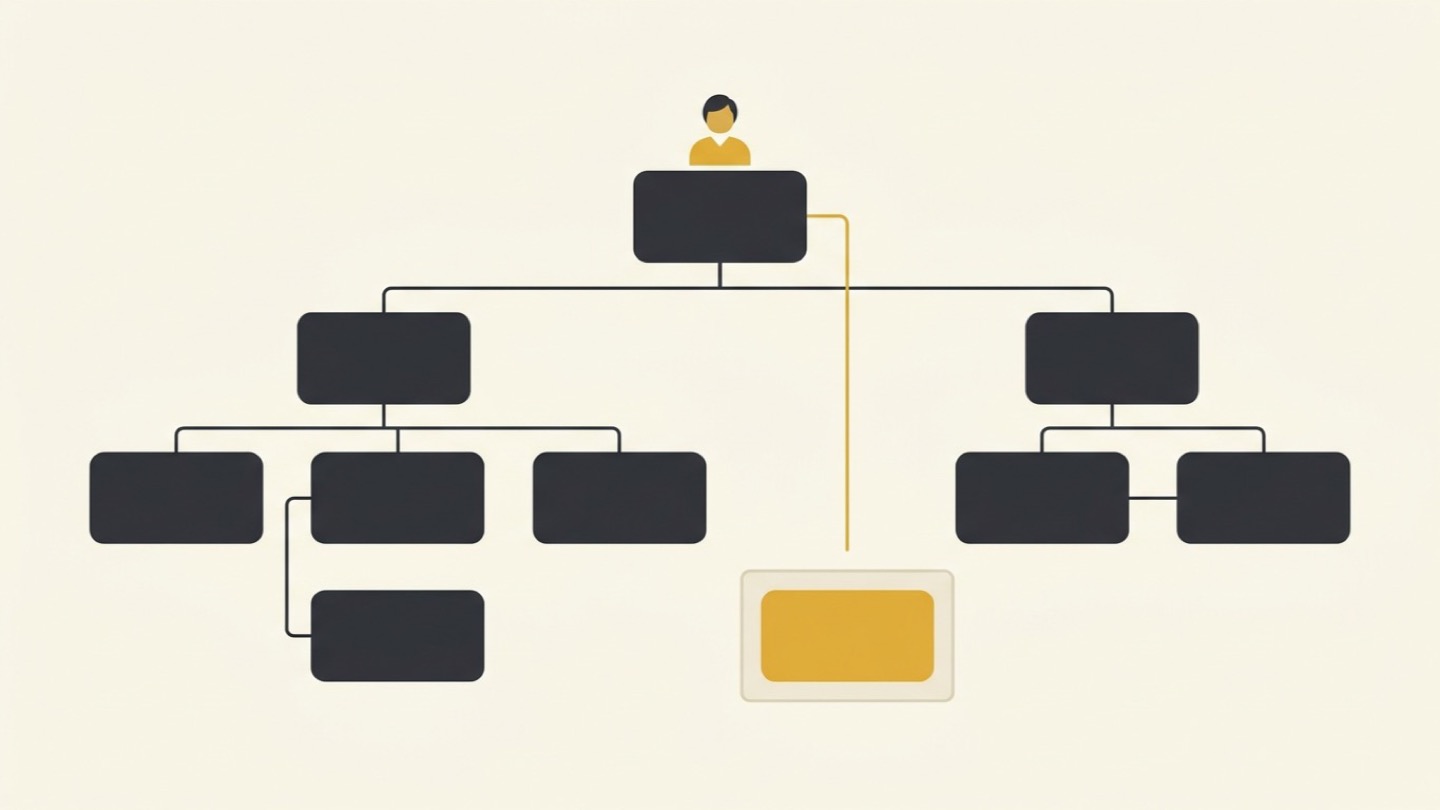
A context system that keeps getting better has three components: a layered file architecture with a single root document, a running log discipline that makes recency automatic, and two non-negotiable session rituals — one at the start, one at the end. The difference between context that compounds and context that goes stale is not the quality of the initial build. It’s whether the context was built as a document or as a system.
Organizations that build the system report that their AI’s usefulness improves measurably every quarter — because each session adds to a picture that gets more accurate over time, not less.

Questions as you read? Ask, or take the context files with you.
Where should we send it?
Sent ✓ Download it now →
Around the 90-day mark, something changes for organizations that build their AI context correctly. The output quality doesn’t plateau — it improves. Not because the model gets more capable. Because the context gets deeper. The AI knows not just what the business does, but where it currently is: which clients are in which phases, what the active priorities are, what shifted since last week. Every session adds to that picture. The compounding is real, and it shows in the work.
Getting there requires getting the architecture right. Not complicated architecture — but specific architecture. And it requires one discipline that most teams underestimate until they see what happens when they maintain it consistently.
Most implementations don’t reach this point. They start well — a business context document gets built, the first sessions are genuinely better, the AI feels like it actually knows what it’s working on. Then the document gets stale. The running log, if it exists at all, goes quiet after a few weeks. Three months in, the AI is working from a picture of the business that no longer exists, and nobody immediately knows why the output has started to feel slightly off.
The case for building company knowledge as an AI asset is well-established. The mechanism — app-level versus OS-level, the running log as the update layer — is documented. What this piece covers is what the working system actually looks like: the architecture that makes maintenance sustainable, the discipline that makes recency automatic, and the patterns that separate context that compounds from context that goes stale.
Why Most Context Investments Stop Compounding
Context decay is insidious because the AI doesn’t know what it doesn’t know. It works with what it has. If your context file says your primary client engagement is in strategy phase but they moved to implementation two months ago, the AI generates strategically-framed output for an operationally-focused situation. It doesn’t flag the mismatch. It doesn’t know one exists.
Teams that experience this usually don’t diagnose it correctly. The AI’s output starts to feel slightly off — a little generic, a little not-quite-right for where things actually are. The assumption is that this is an AI limitation. It isn’t. It’s a maintenance failure.
Context drift is the first failure mode. The second is sprawl. Organizations that build context documents without a clear hierarchy end up with a different problem: nobody can navigate the context, including the AI. There’s a company overview, a values document, three project briefs from different quarters, notes from a strategy offsite, and a running log last updated six weeks ago. No one knows which document takes precedence when they conflict. The AI tries to integrate contradictory information and produces output that’s diplomatically vague about the things that actually matter.
The third failure mode is the abandoned running log — the most common of the three. The running log is the most valuable element of a persistent context system and the one that requires consistent discipline to maintain. It’s also the one that most easily falls off when teams get busy. When it goes silent, the AI’s picture of the business freezes at whatever state it last captured. The static context documents tell it what was generally true when they were written. Without the running log, it has no window into what’s actually happening now.
All three failure modes have the same root cause: the context was built as a project, not a system. Projects end. Systems don’t.
The five context files.
Fill-in templates for what your AI should know, and the page that says where each one loads.
On its way. Check your inbox, or download it now →
The Architecture That Keeps Getting Better
The context systems that work long-term share a structural pattern. It’s not complicated, but it’s specific — and the specificity is what makes the difference between a documentation effort and something that actually compounds.
A single root document. Not a set of documents with equal authority, but one file the AI reads first in every session. This document establishes the frame: who you are, what you’re building, what matters right now, and where to look for more. It’s short — 500 to 800 words — and it points to supporting documents rather than trying to contain everything. When something fundamental shifts in the business, you update one file. The rest of the context flows from it.
The root document also establishes the priority order. When other documents conflict, the root tells the AI what to trust. This matters more than it sounds: as context files multiply over months, the AI needs to know which truth is current.
Domain-specific files below the root. Separate documents for the areas that need their own depth — clients, active projects, team and roles, brand voice and communication norms, service design, operations. These files update when the domain changes, not on a fixed schedule. A client file updates when the client engagement shifts. A voice file updates when a new pattern emerges. These documents are designed to be durable, not dynamic. They hold the context that’s true over months, not days.
The mistake organizations make here is scope creep. A client file that’s 4,000 words is serving the human who wrote it, not the AI reading it. Write for the AI: structured, specific, current. Every sentence should be information the AI can act on. If it reads like a corporate backgrounder, trim it. The AI needs operational truth, not polished narrative.
The running log as the update layer. This is the only document that changes every session. Everything else in the architecture updates when it needs to. The running log updates always — because what’s happening right now is always changing. It’s the AI’s window into the present tense.
The running log works because it offloads the burden of recency from the static documents. You don’t need to continuously update your business context file to capture that your Q3 priorities have shifted — you capture it in the running log. The static documents hold durable truth. The running log holds the current delta. The AI reads both and arrives in the conversation genuinely current rather than merely informed.
The AI Briefing
Tuesdays. 500+ leaders. No hype, just what works.
The Discipline Is the System
Architecture solves the structure problem. Discipline solves the recency problem. And here’s what we’ve found in building and maintaining this kind of system for our own work: the organizations that sustain strong AI context aren’t doing anything heroic. They’ve made two specific moments unavoidable, and let everything else follow from there.
The session opener. Before starting any significant AI-assisted work, load the root document and the running log. Not all the context files — just these two. The root establishes the frame. The running log brings the AI current. It takes thirty seconds. The AI arrives in the conversation with actual context rather than the generic version of your organization.
Most teams skip this because it feels like overhead. The payoff isn’t visible in any single session. It accumulates. The team that has been doing this consistently for six months has an AI that knows them in a way that’s hard to describe until you’ve experienced it — it knows what decisions have been made, what’s been tried, what the open questions are, what matters right now. That knowledge compounds. The team that didn’t do it consistently has an AI that’s capable, well-briefed on general background, and operating without institutional memory. The output is fine. It’s never quite right.
The session closer. Five minutes, end of every significant session. What happened. What was decided. What changed. What needs to carry forward. Not comprehensive minutes — a working summary for the next session’s AI to read and get current from.
The key is treating this as a closing ritual rather than an optional task. Optional tasks get skipped when you’re busy. Closing rituals don’t — they’re how you know the session is actually finished. We’ve found it useful to think of the running log update as the last thing the AI does before the session ends, not the first thing you do the next time you need it. That framing shift — from “I’ll catch up the AI later” to “let’s close the loop now” — is what makes it happen reliably.
What belongs in a running log update:
- Recent decisions and their rationale — not just what was decided, but why, because the why matters when you revisit the decision later
- Active items and current state — a one-line status for anything with ongoing momentum
- What changed — specifically the things that shifted since the last update, because change is often more informative than current state
- What’s unresolved — the AI should know what’s still in motion so it holds those things lightly rather than treating them as settled
- What carries forward — the two or three things that most need to be in the room next session
A good running log update is 100 to 200 words. Tight, specific, current. If it starts to feel like documentation work, you’re writing too much. The test: if the AI reads it and is genuinely current in thirty seconds, it’s working.
The five context files.
Fill-in templates for what your AI should know, and the page that says where each one loads.
On its way. Check your inbox, or download it now →
What We’ve Built — and What It Looks Like Now
We run bosio.digital on this architecture. Our AI reads a root document that establishes the frame of the business before every significant session — who we are, what’s active, what matters right now, and where the domain files live. The running document gets loaded alongside it. It captures where active projects stand, what decisions have been made recently, what’s shifted. The domain files — clients, services, brand voice, methodology — update when the domains change.
At this point, the AI arrives in most sessions knowing which engagements are active, what recent decisions have shaped our positioning, what the open questions are for the week, and what voice and tone apply to the work in front of us. We don’t brief it from scratch. We update it on what’s new — which is usually a short conversation, not a long one.
The contrast with where we started is instructive. Early in building this system, sessions would begin with 5 to 10 minutes of context-setting: explaining the client, the engagement history, the constraints that mattered, the tone that applied here. That overhead is now handled before the session starts. The recovered time across a week isn’t small. More importantly, the quality of what the AI contributes changes when it arrives informed rather than being informed. It can engage with the actual question rather than building the foundation before it can help with the question.
What we’ve seen hold across the organizations we work with: the architecture matters less than the discipline, and the discipline is easier to maintain than it sounds. The session opener and closer are both short. The compounding is real. The difference between six weeks of consistent use and six weeks of sporadic use is visible in the output — not dramatically, but unmistakably.
The Patterns That Separate Compounding from Decay
After building this architecture for our own business and working with organizations implementing it for theirs, a few patterns consistently separate the systems that compound from the ones that drift.
Specificity beats comprehensiveness. The context documents that generate the best AI output are not the most complete ones. They’re the most specific. A client file that captures “what matters for this relationship right now, including the sensitive things” is more valuable than a thorough summary that avoids operational reality. Write the things the AI actually needs to know, including the things you’d only tell a trusted colleague. The AI works better with honest and partial than with polished and incomplete.
Recency beats accuracy. A running log updated yesterday with imperfect information is more valuable than a business context document written six months ago with every detail exactly right. The AI needs to know where things are now. A current but incomplete picture outperforms a perfect but outdated one almost every time. This counterintuitive truth is what makes the closing ritual so important: an imperfect update, done consistently, is the system.
One person owns maintenance. Context systems that survive are almost always maintained by one person. Not a team responsibility, not a rotating task. Shared responsibility for context maintenance tends toward collective neglect. Designate someone — ideally a senior person who uses AI heavily and has visibility across the business — as the keeper of the architecture. They decide what goes where, they do the running log updates, they flag when domain files need revision. This doesn’t mean others can’t contribute, but it means someone is accountable when the system starts to drift.
Small is durable. The most common maintenance failure we see is context systems that started lean and grew without discipline. A 10,000-word business context document is a documentation project that will eventually stop being maintained. A 600-word root document that points to well-structured domain files is a system that scales. When in doubt, cut. The AI works better with current and specific than with comprehensive and stale. The goal isn’t completeness. It’s usefulness.
The closing ritual is the system. Everything else — the architecture, the domain files, the root document — supports the running log. The running log supports the closing ritual. Teams that make the five-minute session update non-negotiable see their context compound measurably. Teams that treat it as optional see another good intention deprioritized when things get busy. This one habit is the linchpin. Everything else is infrastructure that serves it.
The Work That Makes Everything Else Work Better
Building persistent AI context is unglamorous work. Nobody calls it a transformation initiative. There’s no launch event, no executive announcement, no vendor demo. It’s writing, and maintaining, and updating — and doing those things consistently enough that the compounding has time to show up.
But it’s also the work that makes every other AI investment perform better. Every proposal you write with AI assistance, every client analysis, every strategy session — they get better when the AI knows where you actually are. Not because the AI is more capable. Because it’s operating on truth rather than on the generic version of your organization that it has to construct from scratch when you don’t give it anything better.
The organizations we’ve seen move from “AI is an interesting tool” to “AI is how we actually work” share one thing: they did this work. They built the knowledge base. They started the running log. They made the closing ritual a ritual. They held the architecture together when it would have been easier to let it drift.
The compounding is real. It starts small and becomes structural — the kind of organizational advantage that’s hard to see from the outside because it lives in how work actually gets done, not in any particular product or announcement. The window for building this advantage is open now, while most organizations are still treating AI as a capability question rather than a context question.
If you’re at the point where you want to build this architecture properly — the file structure, the root document, the domain files that actually hold up, the discipline layer that makes the running log stick — that’s a significant part of the work we do with clients at bosio.digital. The conversation starts here.
The implementation is within reach. The question is whether you build the system or the document.
Sources
- The State of AI — McKinsey & Company
- AI Doesn’t Reduce Work — It Intensifies It — Harvard Business Review
- What It Takes to Make AI Work in the Enterprise — Gartner
- State of Teams Report — Atlassian
- Looking Ahead: AI and Work 2026 — MIT Sloan Management Review
- Work Trend Index Annual Report — Microsoft
- The Context Advantage: Why Company Knowledge Is Your AI Superpower — bosio.digital
- Your AI Doesn’t Know Your Business. Here’s What Changes When It Does. — bosio.digital
- The 63% Problem: Why AI Fails at the Human Level — bosio.digital
Frequently Asked Questions
How long should a business context document be?
The root document — the one the AI reads first in every session — should be 500 to 800 words. Dense with specifics, light on aspiration. Think of it as the briefing you’d give a brilliant new colleague before their first client meeting: everything they’d need to understand the business at a strategic level, nothing they could look up themselves. Domain-specific files (clients, projects, brand voice) can be longer, but they should be written for AI: structured, specific, operational. If any single context file exceeds 1,500 words, audit it for content that doesn’t directly inform how the AI should act.
What's the biggest mistake teams make when building AI context?
Building documents instead of a system. The document gets built once, it’s technically accurate when written, and then life moves on. Three months later the document exists but the business it describes has changed. The second most common mistake is over-indexing on the static context and under-investing in the running log. Most teams can write a good business context document. The discipline of updating the running log at the end of every significant session is what separates systems that compound from ones that become archaeological artifacts.
How often should context documents be updated?
The running log: every significant session. This is the non-negotiable. The root document and domain files: when the underlying reality changes, not on a fixed schedule. A client file updates when the client engagement shifts. A brand voice file updates when a new pattern emerges. The root document updates when something fundamental about the business changes — new strategic priority, new service, significant client or team change. The test for whether a document needs updating isn’t “when was this last edited” — it’s “does this still accurately describe what’s true right now.”
Can AI context documents be shared across tools — Claude, ChatGPT, others?
Yes. The documents themselves are tool-agnostic — they’re plain text files structured for AI readability. Most major AI tools support loading context through custom instructions, system prompts, or file uploads at the start of a session. The architecture described in this article works with any tool that allows you to include context before the conversation begins. Your context investment lives in your documents, not inside any particular AI. This means you’re not locked in, and the discipline of maintaining the context transfers even if your tool of choice changes.
How do we handle sensitive business information in context files?
The context documents that work best contain the operational truth of the business — including the things that are sensitive. Client relationships, competitive dynamics, internal decisions, pricing philosophy. The AI needs real information to give useful output. The practical approach: treat context files with the same care you’d give any sensitive internal document. They live where your other confidential files live. Don’t include credentials, API keys, or financial specifics that don’t affect how the AI should work with you. For genuinely sensitive client matters, a separate project brief that’s loaded only for relevant sessions — rather than included in the general business context — is a reasonable boundary to maintain.
What does a good running log update actually look like?
Short, structured, current. A good update captures five things: what was worked on, what was decided, what changed from the previous session’s assumptions, what’s still unresolved, and what needs to be in the room next time. It should take five minutes to write and thirty seconds for the AI to read. It’s not a journal entry or a meeting transcript — it’s a working handoff from today’s session to tomorrow’s. If you’re writing more than 200 words, you’re likely including history that belongs in a domain file rather than in the active update. The running log is about the present tense: what’s true right now that wasn’t true last time.