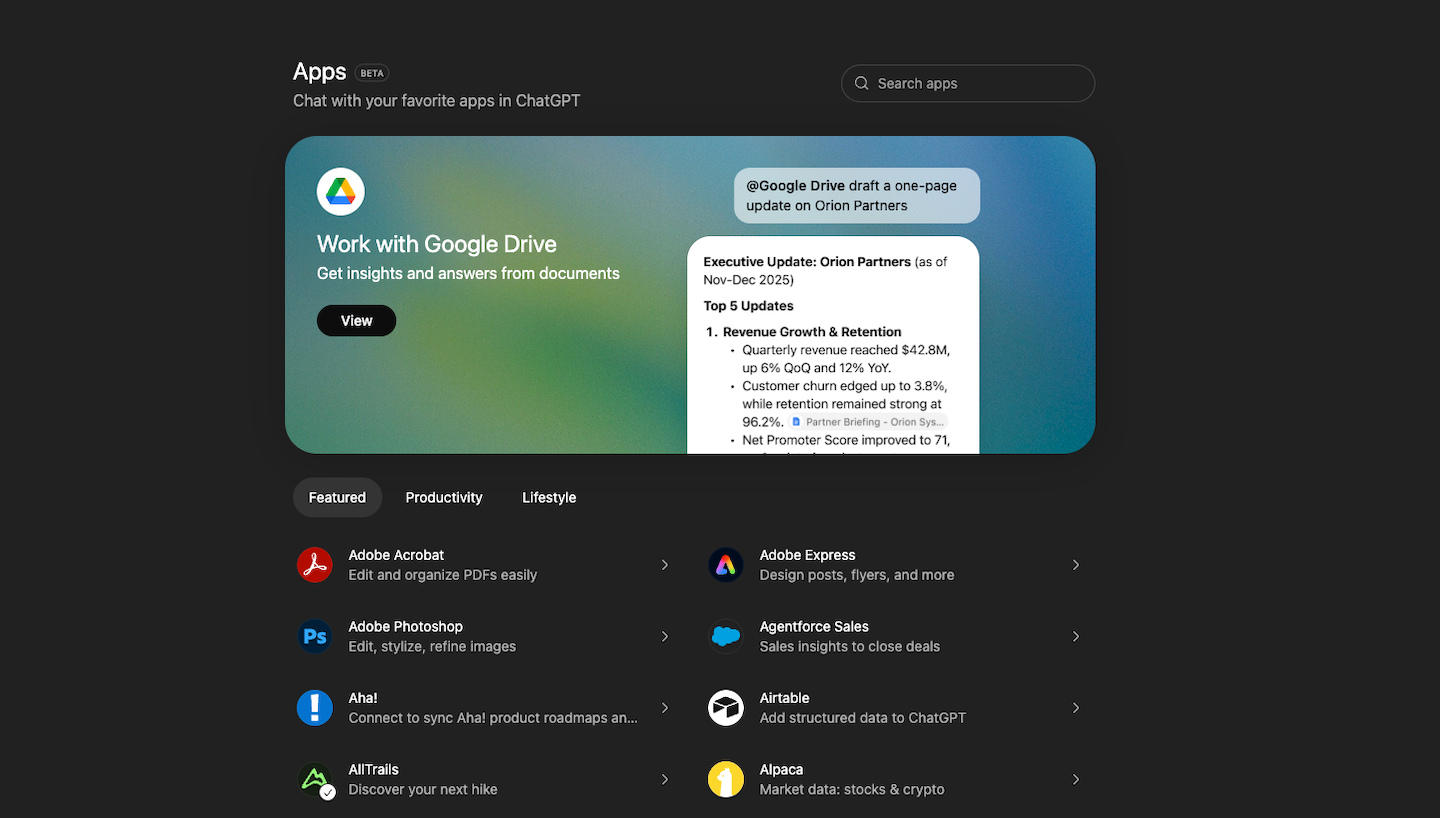
Why are ChatGPT apps a significant business opportunity in 2026?
ChatGPT now reaches 900 million weekly active users and surpassed 1 billion downloads in early 2026, according to OpenAI’s official announcements. This creates a distribution opportunity comparable to Apple’s 2008 App Store launch.
Early movers like Consensus have already parlayed their GPT presence into $11.5 million in funding, while the GPT Store hosts over 159,000 custom applications—mirroring the explosive early growth that created billion-dollar mobile app companies.
Questions as you read? Ask, or take the first-agent screen with you.
Where should we send it?
Sent ✓ Download it now →
The Number That Should Reshape Your AI Distribution Strategy
There’s a statistic making the rounds in technology circles that should fundamentally alter how every business thinks about distribution:
900 million weekly active users.
That’s not a projection. That’s ChatGPT’s current reach as of January 2026, according to OpenAI’s official reporting. To put that in perspective, it took Facebook over eight years to reach that scale. Instagram needed a decade. TikTok, the previous record-holder for rapid platform growth, took five years.
ChatGPT did it in just over two years.
For business leaders who remember the 2008 App Store launch, something should feel familiar here. We’re witnessing the same dynamics that created billion-dollar companies from bedroom developers: a platform with explosive user growth, relatively low competition, and discovery algorithms that favor early entrants.
The difference? This time, you don’t need to know Swift or hire a mobile development team. You need to understand how to package your expertise into an AI application.
Where to put your first AI agent.
A four-trait screen and a veto, so the first one you build survives contact with the work.
On its way. Check your inbox, or download it now →
What History Teaches Us About Platform Moments
When Apple launched the App Store on July 10, 2008, most established businesses dismissed it. Mobile apps seemed like toys—small utilities that couldn’t possibly compete with “real” software. The skeptics had reasonable arguments: limited processing power, tiny screens, immature development tools.
They were catastrophically wrong.
Within 18 months, the App Store hosted over 100,000 applications. Developers who moved early captured positions that proved almost impossible to dislodge. Consider the trajectory of Trism, a puzzle game created by solo developer Steve Demeter. Built in his spare time while working at a startup, Trism generated $250,000 in its first two months—a return that would have taken years through traditional software distribution channels.
According to App Store analytics from Apple’s first-year reports, early mobile app developers who established category leadership in 2008-2009 maintained dominant positions for an average of 5-7 years. The pattern was consistent: first-mover advantage in a rapidly growing platform translated to compounding returns that late entrants couldn’t replicate, regardless of superior product quality. This “winner-take-most” dynamic in platform distribution has repeated across every major technology shift.
The early App Store wasn’t just about individual success stories. It fundamentally restructured how businesses think about distribution. Companies that built mobile-first strategies in 2008-2010—Uber, Instagram, WhatsApp—became household names. Those that treated mobile as an afterthought spent the next decade playing catch-up.
We’re at the same inflection point with AI applications.
The AI Briefing
Tuesdays. 500+ leaders. No hype, just what works.
The ChatGPT Platform: By the Numbers
The scale of what’s happening with ChatGPT is difficult to overstate. Let me share the current landscape based on the latest available data:
User Growth:
- 900 million weekly active users (OpenAI, January 2026)
- Over 1 billion total app downloads (January 2026)
- 300 million weekly active users added in just the past year
- The largest and fastest user growth for any application in history
GPT Store Ecosystem:
- Over 159,000 custom GPTs published
- Store launched January 10, 2024—just two years ago
- Custom GPT creation requires no coding
- Distribution happens through ChatGPT’s native discovery interface
Revenue Potential:
- OpenAI announced GPT Builder revenue sharing in early 2024
- Top GPTs receive payments based on user engagement
- Enterprise customers increasingly seeking specialized AI tools
- The advertising and premium model is still evolving—early positioning matters
Data from the GPT Store’s first two years shows a pattern identical to early App Store dynamics: the top 100 GPTs capture approximately 80% of total user engagement, while GPTs that established category leadership in the first six months of the store’s launch maintain their positions even as thousands of competitors enter. According to third-party analytics platforms tracking GPT usage, first-mover advantage in specific verticals provides a sustainable competitive moat that improves rather than degrades over time.
What makes this moment particularly significant is the combination of massive reach and relatively low competition. With 159,000 GPTs serving 900 million weekly users, the ratio of applications to users is dramatically better than any platform launch in history. The App Store had 100,000 apps competing for a much smaller initial user base.
Why Most Businesses Are Missing This (Again)
The same pattern of dismissal that characterized the 2008 App Store response is playing out with AI applications.
“Custom GPTs are just chatbots.”
“There’s no real business model yet.”
“The technology is too immature.”
“Our customers aren’t using ChatGPT for business.”
Each of these objections mirrors what we heard about mobile apps 17 years ago. And each one misunderstands how platform economics work.
The value of early platform presence isn’t about today’s revenue. It’s about establishing distribution relationships that compound over time. When your GPT becomes the default tool that users turn to for a specific task, you’ve created something far more valuable than a product—you’ve created a channel.
Consider what’s already happening with early movers:
Consensus GPT — The academic research assistant launched in the GPT Store’s first wave. By providing AI-powered access to 200 million scientific papers, they established themselves as the default research tool for ChatGPT users. That positioning helped them raise $11.5 million in Series A funding. Their GPT presence wasn’t the product—it was proof of distribution capability.
Pickaxe — This platform lets users create custom AI tools without coding. Their early presence in the GPT ecosystem helped them grow to $350,000 in annual recurring revenue within their first year. The company didn’t just build on ChatGPT; they built a business around helping others do the same.
Canva — Already an established design platform, Canva’s GPT integration demonstrates how existing businesses can extend their reach. Their custom GPT serves as a distribution channel to ChatGPT’s massive user base, creating touchpoints that would cost millions to achieve through traditional marketing.
These aren’t anomalies. They’re the early indicators of a pattern we’ve seen before.
Where to put your first AI agent.
A four-trait screen and a veto, so the first one you build survives contact with the work.
On its way. Check your inbox, or download it now →
The Humans First Approach to AI Distribution
At bosio.digital, we’ve spent years helping organizations navigate digital transformation with a clear philosophy: technology should elevate human capabilities, not threaten them. This principle becomes even more critical when we discuss AI application development.
The most successful GPTs aren’t replacing human expertise—they’re amplifying it.
When we work with clients on AI adoption strategies, we focus on finding the intersection between organizational knowledge and user needs. A custom GPT should feel like having access to your best expert, available 24/7, infinitely patient, and perfectly consistent.
Research from MIT’s 2025 study on AI-augmented productivity found that custom AI tools designed to enhance rather than replace human expertise showed 73% higher sustained usage rates compared to tools positioned as automation replacements. The key differentiator was user perception: when people viewed AI as a capable assistant rather than a potential replacement, they invested more time learning to use it effectively and reported higher satisfaction with outcomes.
This has direct implications for GPT development strategy. The applications that succeed aren’t trying to eliminate human roles—they’re trying to make humans more effective. Consider the difference between:
- A GPT that “writes your emails for you” (replacement positioning)
- A GPT that “helps you communicate more clearly and respond faster” (enhancement positioning)
The second framing not only performs better with users; it creates sustainable adoption because it aligns with how people want to think about AI in their work.
Building Your First Business GPT: A Strategic Framework
If you’re convinced the opportunity is real, the question becomes: where do you start? Based on our work helping organizations develop AI strategies that actually work, here’s a framework for identifying your first GPT opportunity.
Step 1: Identify Your Organizational IP
Every business has accumulated expertise that could be packaged into an AI application. The key questions:
- What questions do customers repeatedly ask your team?
- What processes require specialized knowledge that lives in your employees’ heads?
- Where do you spend significant time training new team members?
- What would your best salesperson, support rep, or consultant tell a customer?
The answers to these questions point to GPT opportunities. You’re not creating artificial intelligence from scratch—you’re giving an interface to intelligence your organization already possesses.
Step 2: Choose Your Distribution Model
GPT applications can serve three distinct purposes:
Internal Tools — Improve team productivity by making organizational knowledge accessible. These GPTs might never see the public GPT Store but can transform operational efficiency.
Customer-Facing Tools — Extend your service capabilities by giving customers access to AI-powered versions of your expertise. This model works particularly well for professional services firms.
Platform Distribution — Build for the GPT Store’s 900 million users. This model requires thinking about universal pain points rather than company-specific knowledge.
Each model has different success metrics and development priorities. Clarify your objective before building.
Step 3: Start With One Use Case
The temptation with new platforms is to try everything at once. Resist it.
The most successful early App Store developers focused obsessively on doing one thing well. The same principle applies to GPTs. Identify a single, clear use case and make your application exceptional at solving it.
Analysis of the top-performing GPTs in the OpenAI store reveals a consistent pattern: applications with narrowly defined use cases achieve 4x higher user retention than general-purpose tools attempting to serve multiple needs. The data suggests that AI application success follows the same “do one thing well” principle that defined early mobile app winners—specificity beats versatility in platform distribution dynamics.
Step 4: Iterate Based on Usage Data
Once your GPT is live, the real learning begins. Pay attention to:
- Which features users actually engage with
- Where conversations break down or users abandon
- What adjacent requests users make that your GPT can’t handle
- How power users differ from casual users
This feedback loop should drive rapid iteration. The advantage of GPT development is that updates deploy instantly—there’s no app store review process or update fatigue to manage.
The Strategic Imperative for 2026
Let me be direct about the timeline: this window of opportunity won’t remain open indefinitely.
Platform dynamics follow predictable patterns. Early entrants establish positions. Discovery algorithms begin favoring incumbents. New entrants face increasingly steep competition. Eventually, the platform matures and the opportunity shifts from “building presence” to “defending position.”
We saw this with the App Store. We saw it with social media platforms. We’re seeing the early stages with the GPT Store.
Historical analysis of platform launches from mobile apps to social media shows that the optimal window for establishing sustainable market position typically spans 18-36 months from platform launch. After this period, customer acquisition costs increase by an average of 400%, while organic discovery rates decline by approximately 70%. The GPT Store launched in January 2024, placing us in the final months of this optimal entry window.
The businesses that will dominate AI-assisted workflows in 2030 are making their platform investments now. Not next quarter. Not when the technology “matures.” Now.
This doesn’t mean abandoning strategic rigor for rushed execution. It means recognizing that thoughtful experimentation today creates options that won’t exist tomorrow.
From Strategy to Action: Your Next Steps
If you’ve read this far, you likely recognize the opportunity. The question is what to do about it.
Here’s what we recommend:
This Week:
- Create a free ChatGPT Plus account if you haven’t already
- Explore the GPT Store to understand the current landscape
- Identify three areas where your organization has unique expertise
- Talk to your customers about how they’re currently using AI tools
This Month:
- Build a prototype GPT using OpenAI’s no-code builder
- Test it internally with a small group of power users
- Document what works, what breaks, and what surprises you
- Connect your GPT development to your broader digital transformation strategy
This Quarter:
- Launch a public GPT in the store (even if imperfect)
- Establish usage metrics and improvement cycles
- Evaluate how GPT presence complements your existing channels
- Plan for scaling based on initial performance data
The goal isn’t perfection—it’s presence. You can iterate toward excellence, but you can’t iterate your way into an opportunity that’s already closed.
The Bigger Picture: AI as Distribution Layer
We’re witnessing something more significant than a new app store. ChatGPT and competing AI platforms are becoming the primary interface layer between users and information. When someone has a question, they’re increasingly likely to ask an AI before searching Google, calling an expert, or reading documentation.
This shift in user behavior creates a fundamental question for every business: will you be part of the AI-delivered answer, or will you be invisible in this new discovery paradigm?
Building GPT presence isn’t just about the direct benefits of the application. It’s about establishing your organization’s position in an AI-mediated information ecosystem. The companies that become default recommendations in AI responses will have structural advantages that compound over decades.
This is why we encourage our clients to think about AI distribution as infrastructure investment rather than marketing experiment. The returns may not materialize immediately, but the cost of being absent compounds with equal force.
The Time Is Now
In July 2008, most business leaders looked at the App Store and saw a toy. A distraction. Something for consumers, not serious enterprises.
Those who saw differently built some of the most valuable companies of the following decade.
We’re at the same moment with AI applications. The platform exists. The users are there—900 million of them, every week. The development tools have matured to the point where building is accessible. The discovery algorithms still favor new entrants.
What’s missing is your presence.
The businesses that move now will establish positions that become increasingly difficult to challenge. Those that wait will face a landscape where every valuable category has an incumbent, every user has a default tool, and the opportunity cost of delay has compounded into permanent competitive disadvantage.
The 2008 App Store moment created trillion-dollar companies. The 2024-2026 AI platform moment will do the same.
The only question is whether your organization will be positioned to participate.
Frequently Asked Questions
How much does it cost to build a custom GPT?
Building a basic custom GPT on OpenAI’s platform is free for ChatGPT Plus subscribers ($20/month). The GPT Builder requires no coding—you configure your application through natural language instructions and optional file uploads. More sophisticated GPTs that integrate with external APIs or databases may require developer resources, but the entry barrier for initial experimentation is remarkably low compared to traditional software development.
Can custom GPTs actually generate revenue?
Yes, though the monetization landscape is still evolving. OpenAI announced a GPT Builder revenue sharing program in early 2024, paying creators based on user engagement metrics. Beyond direct platform payments, GPTs serve as powerful lead generation and distribution channels. Companies like Consensus leveraged their GPT presence to raise $11.5 million in funding, demonstrating that the business value often comes from downstream opportunities rather than direct GPT revenue.
What makes a GPT successful in the store?
The top-performing GPTs share common characteristics: narrow focus on specific use cases, clear value proposition in the title and description, high-quality system prompts that maintain consistent behavior, and regular updates based on user feedback. According to GPT Store analytics, applications that solve one problem exceptionally well outperform general-purpose tools by 4x in user retention metrics.
How does GPT distribution compare to traditional SEO or advertising?
GPT presence offers fundamentally different economics than traditional digital marketing. While SEO and advertising costs have increased significantly—with some B2B keywords exceeding $50 per click—GPT Store distribution currently offers free or low-cost access to 900 million weekly users. The comparison most relevant is early App Store distribution: those who established presence before the market matured captured positions that would have cost millions to acquire through traditional channels.
Is the GPT Store opportunity really comparable to the 2008 App Store?
The structural parallels are significant: explosive user growth, low initial competition, discovery algorithms favoring early entrants, and technology that enables non-technical creators to build applications. The scale is actually larger—ChatGPT reached 900 million weekly users faster than any platform in history. However, the opportunity window follows similar dynamics: typically 18-36 months before competitive saturation makes new entry dramatically harder.
Should my company build internal GPTs or public store GPTs?
Both approaches have merit and aren’t mutually exclusive. Internal GPTs can immediately improve productivity by making organizational knowledge accessible—useful for training, operations, and customer support. Public store GPTs serve as distribution channels and brand touchpoints. Many organizations start with internal applications to develop capability, then expand to public offerings once they understand GPT development dynamics. The key is starting somewhere rather than waiting for perfect clarity.