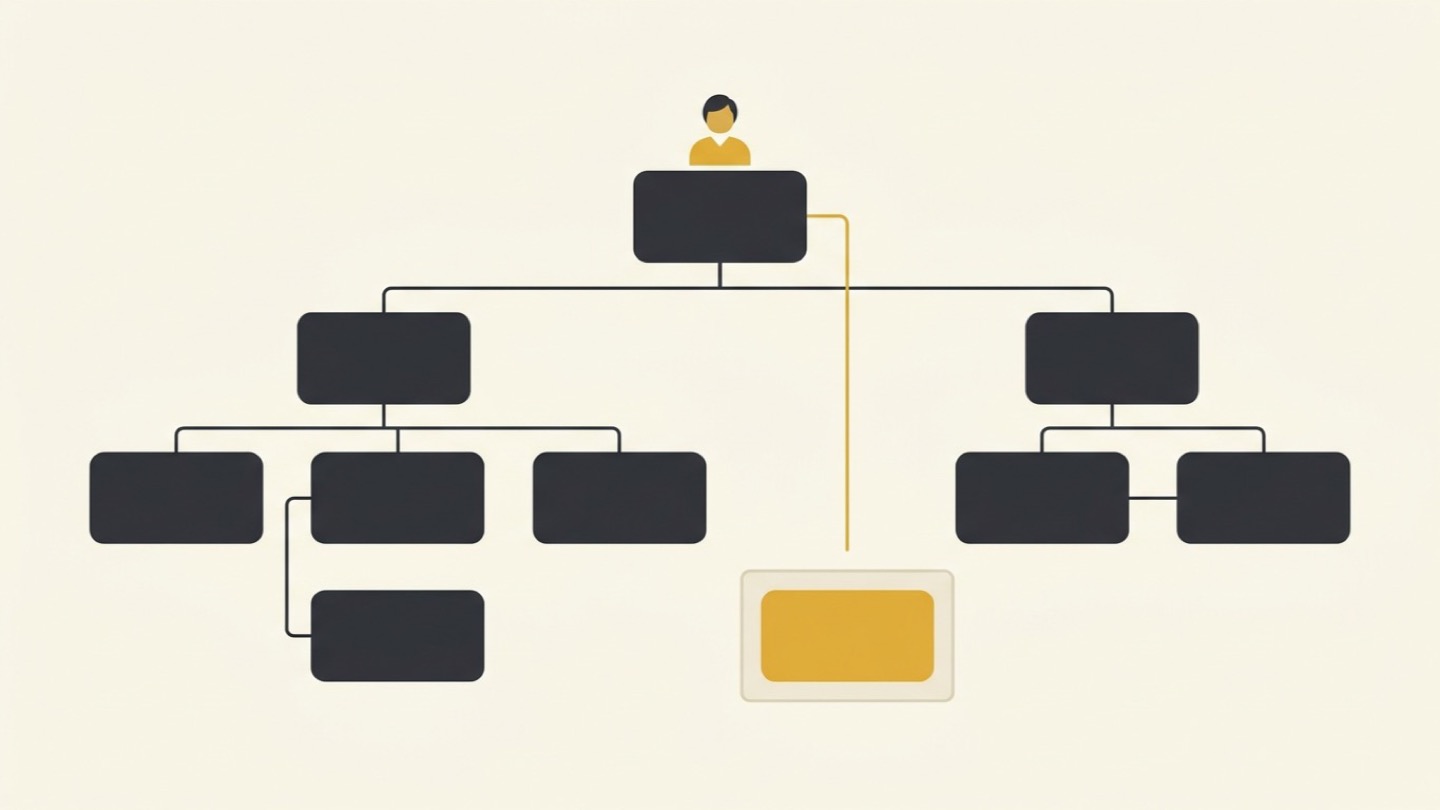

What is an OpenClaw strategy and why does every company need one?
At NVIDIA’s GTC 2026, CEO Jensen Huang declared that every company needs an OpenClaw strategy — a systematic plan for deploying AI agents across operations. OpenClaw surpassed 250,000 GitHub stars in 60 days, becoming the fastest-growing open-source project ever recorded. NVIDIA’s NemoClaw removes the enterprise security barrier, but the platform alone is not the strategy.
Companies that succeed will need three additional things before agents deliver value: a context architecture, defined agent task domains, and organizational readiness.

Questions as you read? Ask, or take the first-agent screen with you.
Where should we send it?
Sent ✓ Download it now →
The Week Everything Changed
On March 16, 2026, Jensen Huang — CEO of NVIDIA, the world’s most valuable technology company — stood in front of 30,000 people at GTC 2026 and issued a statement that landed less like an announcement and more like a diagnosis.
“Every company in the world today needs to have an OpenClaw strategy. This is the new computer.”
He then compared OpenClaw to HTML and Linux: technologies that began as tools for developers and ended up restructuring how every organization on the planet operates. He closed with a question he expected every executive in the room to take home: “What’s your OpenClaw strategy?”
Most of them couldn’t answer it.
Six weeks earlier, we published a piece on OpenClaw passing 60,000 GitHub stars in its first 72 hours and what it meant for mid-market companies watching from the sidelines. At the time, it felt like a leading indicator — something worth tracking before the mainstream conversation arrived. Huang’s keynote ended the leading indicator phase. What was a developer story in February became a CEO mandate in March.
The numbers behind that shift are not soft. OpenClaw now has 250,000+ GitHub stars — eclipsing React’s ten-year record in roughly 60 days, making it the most-starred non-aggregator software project on GitHub in history. It logs 2.2 million weekly npm downloads. Sixty-five percent of its users are in enterprise sectors. Gartner projects that 40% of enterprise applications will embed task-specific AI agents by the end of 2026, up from less than 5% in 2025. The global agentic AI market is tracking from $7.6 billion in 2025 toward a projected $199 billion by 2034 — a 43% compound annual growth rate.
When Huang asked the room for their OpenClaw strategy, he wasn’t making a pitch. He was describing a transition that is already measurably underway, accelerating faster than most organizational planning cycles can absorb, and now backed by $1 trillion in projected hardware investment through 2027.
The question is not whether your company will need an answer. It is whether you will have one before the transition forces the issue.
Where to put your first AI agent.
A four-trait screen and a veto, so the first one you build survives contact with the work.
On its way. Check your inbox, or download it now →
The Platform Is Not the Strategy
NVIDIA launched NemoClaw alongside the announcement: an enterprise-grade version of OpenClaw with security, policy enforcement, and privacy routing built in. NemoClaw installs onto OpenClaw in a single command, adding process-level sandboxing through a new open-source runtime called OpenShell. It applies minimal-privilege access controls, enforces policy-based network guardrails, and includes a privacy router that lets agents access cloud-based models — including those from OpenAI and Anthropic — without exposing internal data externally. Administrators can configure security policies via YAML, with rules that update without redeploying agents. Cisco, CrowdStrike, Google, and Microsoft Security are already building OpenShell compatibility into their respective security platforms.
It is a serious product solving a genuine problem. Cybersecurity concerns are the top barrier to agentic AI deployment for 35% of organizations. Data privacy follows at 30%. Regulatory clarity is a blocker for 21%. Together, those three account for the majority of companies currently sitting in pilot stages. NemoClaw addresses all three at the infrastructure level.
But deploying NemoClaw is not having an OpenClaw strategy. It is having an answer to one part of one question.
The distinction matters because of a pattern we have watched play out repeatedly in digital transformation work. When enterprise cloud infrastructure became accessible, the companies that benefited most were not the ones that signed AWS contracts fastest. They were the ones that had done the harder prior work: documenting their data architecture, establishing governance models, preparing their teams for the shift in how work got done. The companies that signed the contracts first and figured out the organizational implications later are, in many cases, still paying for that decision — in technical debt, in underutilized infrastructure, in teams that never fully adopted the tools they were given.
The research on agentic AI suggests history is repeating. Despite 79% of organizations reporting some level of AI agent adoption, 50% of agentic AI projects remain stuck in pilot stages. Only one in five companies has a mature governance model for autonomous agents. The average implementation cost runs to $890,000 — a figure that produces 171% average ROI in organizations that have done the foundational work, and very different outcomes in organizations that haven’t. NemoClaw removes the security excuse. It does not remove the organizational and strategic work that determines whether agents actually improve operations.
A platform is what you build on. A strategy is what you build. The gap between those two things is where most companies are about to get stuck.
A platform is what you build on. A strategy is what you build.
The AI Briefing
Tuesdays. 500+ leaders. No hype, just what works.
The Companies That Win Start Before the Platform
The question Jensen Huang asked at GTC 2026 is not a new question. It is the same question that has decided every major technology transition of the last thirty years.
When enterprise cloud infrastructure arrived, the question was: what is your cloud strategy? When mobile transformed consumer behavior, the question was: what is your mobile strategy? In each case, the companies that answered the question well did not answer it first. They answered it right. The difference was consistent across every transition: they started with people and processes, then designed technology around them. Not the other way around.
The companies that inverted that sequence — that bought the infrastructure and figured out the organizational implications later — paid for it in underutilized tools, resistant teams, and transformation initiatives that produced decks but not outcomes.
The numbers on the current AI wave suggest the same pattern is repeating. Only 10% of companies are currently achieving meaningful results from AI, according to research across McKinsey, BCG, and Deloitte. Seven percent have a company-wide AI strategy. Ninety-five percent of generative AI pilots never reach production. And the budget structure that produces this outcome is visible: 80% of AI investment goes to tools. Only 20% goes to the people who have to use them. Seventy percent of AI’s actual value, however, comes from rethinking the human dimension of the business — the workflows, the decision-making structures, the organizational readiness.
The math explains the failure rate. The question is what to do about it.
We built bosio.digital’s Humans First methodology — and our own internal operating system — around this exact structural correction. The four-step Understand → Prepare → Build → Amplify framework was designed because AI transformation fails at a predictable point: organizations deploy tools before they understand their own operations well enough to tell the tools what to do. They install the platform first. They discover, six to twelve months later, that adoption is at 20% and the ROI case has deteriorated.
The organizations that reach 70%+ active AI use within 90 days — our benchmark across engagements — are the ones that treated change management and process clarity as Phase 1, not as a workstream bolted on after the technical deployment is done.
What makes Huang’s announcement significant is that it removes the last credible technical excuse. The models are capable. The frameworks are mature. NemoClaw now makes enterprise security a solved problem. What remains — and what will determine which organizations actually benefit from the productivity opportunity NVIDIA is projecting at $1 trillion — is the organizational layer. Context architecture. Process clarity. Workforce preparation. Governance design.
These are not technology problems. They are leadership problems. And they are the ones no platform announcement solves.
The sections that follow are our answer to the question Huang left open.
What OpenClaw Actually Is — and Why the Speed Matters
Before we can talk about what an OpenClaw strategy requires, it helps to understand what OpenClaw actually is — because the speed of its rise has outpaced most people’s working understanding of it.
OpenClaw is an open-source framework for building and running AI agents locally on your own hardware. Agents in the OpenClaw sense are not chatbots or copilots. They are software systems capable of taking real, consequential actions: executing code, managing files, browsing the web, calling APIs, drafting and sending communications, completing multi-step workflows without human instruction at each step. They operate with memory and tool access, making autonomous decisions within parameters you define.
The critical differentiator from previous agent frameworks was local execution. OpenClaw runs inside your infrastructure rather than through a cloud API. That meant an agent with access to your systems wasn’t, by architectural default, also transmitting your data to an external server. It also meant that any developer at any company could deploy capable agents without a six-figure cloud contract or a data processing agreement with a third party.
The GitHub trajectory reflects genuine utility, not hype: 9,000 stars on launch day in late January, 60,000 three days later, 190,000 within two weeks, 250,000 by early March. Developers downloaded it, ran it, and found that it worked. A new memory skill shipped and saw 26,000 users adopt it in a single week — a signal of how actively the community is extending the platform’s capabilities.
NVIDIA’s NemoClaw adds the enterprise security layer that kept most organizations from deploying what developers were already building. OpenShell sandboxes agents at the process level. The privacy router keeps sensitive data inside the corporate perimeter even when agents route queries to external models. Policy enforcement and audit logging meet the requirements that enterprise CISO teams have been citing as blockers since agentic AI became a real deployment option.
Jensen Huang’s HTML and Linux comparisons were historical pattern recognition, not metaphor. HTML gave everyone the ability to publish. Linux gave enterprises an open infrastructure layer they could trust at scale. OpenClaw is the agentic equivalent: an open standard for how AI agents operate, built to run anywhere, now made enterprise-safe. The difference from those prior technology shifts is compression. HTML took several years to move from developer tool to business mandate. OpenClaw did it in sixty days.
That compression is itself the strategic signal. Companies are not being given years to figure out their response. They are being given months.
Where to put your first AI agent.
A four-trait screen and a veto, so the first one you build survives contact with the work.
On its way. Check your inbox, or download it now →
What an OpenClaw Strategy Actually Requires
This is where Huang’s question becomes difficult — not because the answer is obscure, but because it requires honest work that platforms and product announcements don’t do for you.
The HTML analogy is instructive again. HTML gave every company the ability to build a web presence. But a useful web presence required three things HTML couldn’t provide: content worth reading, a structure worth navigating, and an organization ready to maintain it. The companies that built effective web presences in 1996 and the ones that didn’t were not separated by access to the technology. They were separated by whether they had done the organizational and editorial work to make the technology useful. The companies that launched static brochure sites and declared victory were embarrassed within three years.
An OpenClaw strategy has the same structural prerequisites. Three things, none of which come with the platform.
Context Architecture
Agents are only as useful as the context they can access. An agent operating inside your company without access to your pricing logic, your approval workflows, your customer history, your product catalog, your organizational decision-making structures — that agent is not a productivity asset. It is an automated confusion engine operating at machine speed.
This is not a theoretical risk. It is the concrete reason why the first wave of enterprise AI deployments underperformed expectations: the models were capable, but they were working from incomplete and inconsistent information about how the organization actually operated. The failure mode with agents is more expensive than with earlier AI tools because agents act rather than suggest. A copilot that generates a wrong answer costs the human time to catch and correct it. An agent that takes wrong actions based on incomplete context costs time, money, accuracy, and sometimes relationships — and does so faster than human processes can identify and stop it.
Context architecture is the foundational layer that most OpenClaw strategy conversations skip because it doesn’t appear in product demos. What it creates, however, is the compounding advantage that separates organizations that genuinely benefit from AI from those that perpetually chase the next tool. The principle: context is what makes AI institutional rather than individual. When your AI systems have access to persistent, structured, reliable information about how your organization operates, the output quality improves not over days but over months — in a way that becomes increasingly difficult to replicate once the advantage is established. We covered the full implementation logic for building this context layer in detail earlier this year.
The OpenClaw layer determines whether agents can act. The context layer determines whether agents act usefully. Your OpenClaw strategy cannot begin without a serious answer to the context question.
Defined Agent Task Domains
Not every function in your business is ready for autonomous agents. Not every function that is ready is ready for the same level of autonomy. And not every function where agents would technically work is one where you want them operating without human oversight.
A task domain map is the structured view of your operations that answers three questions for each function. First: is this task sufficiently well-defined, stable, and data-complete to be delegated to an agent? Tasks with highly variable inputs, implicit judgment requirements, or incomplete data trails are poor candidates regardless of the underlying technology. Second: what level of autonomy is appropriate — fully autonomous, human-in-the-loop review before consequential actions, or human-initiated with agent assistance? Third: what is the blast radius if an agent makes a systematic error in this domain?
That third question deserves more attention than it usually receives. A human making a consistent error in a workflow makes a consistent number of errors per unit of time. An agent making the same error makes it at the speed and scale at which the agent operates. The same efficiency that makes agents valuable makes their failure modes more expensive. Defining blast radius before deployment is not risk-aversion — it is how you avoid the organizational backlash that derails agent deployments more often than any technical failure does.
The companies currently seeing strong results from agentic AI are not the ones that deployed the most agents fastest. They are the ones that chose their initial domains carefully and expanded from demonstrated success. The 171% average ROI from well-scoped agentic AI implementations — three times higher than traditional automation — comes from precision of scope, not breadth of deployment. The failures cluster around the same pattern: scope was set by what was technically possible rather than what was organizationally ready.
Organizational Readiness
Huang’s most consequential claim at GTC was this: “Every SaaS company will become an AaaS company — an Agentic as a Service company.”
This is not a ten-year prediction. It is a description of a transition that is already structurally underway across the SaaS market. The tools mid-market companies have built their operations around over the past decade — CRM, project management, finance, customer service, HR platforms — are actively moving toward agent-operated workflows. The interfaces will look familiar. The operating model will not be. Agents will execute workflows that humans currently initiate. Decisions that currently require human judgment will be pre-authorized within defined parameters. The human role in these workflows shifts from executor to supervisor and designer.
That transition has a workforce dimension that most OpenClaw strategy conversations omit entirely. Research consistently shows that companies with strong change management practices see 3x higher AI adoption rates. The AI skills gap — not technical skills, but the conceptual gap between “agents exist” and “here is how agents change how I do my specific job” — remains one of the top barriers to enterprise adoption. An OpenClaw strategy that doesn’t address this gap will see agents that are technically deployed and functionally underused. The investment goes in. The ROI doesn’t come back.
Organizational readiness is not a soft consideration to address once the technical deployment is complete. It is a prerequisite that runs in parallel with context architecture and task domain mapping from the beginning. We covered the evidence base for this in our analysis of the agent arms race across the major AI platforms.
The Arms Race Just Added a New Front
NVIDIA’s entry at GTC adds a dimension to the agentic AI competition that changes the calculus for mid-market companies specifically.
The three major labs have been competing on capability: which agents can complete which tasks, with what success rate, across what range of complexity. That competition has produced a rapidly maturing ecosystem — 10,000+ MCP servers, 97 million monthly SDK downloads, and agents moving from experimental to operationally deployed across industries.
NVIDIA is not competing on capability. It is competing on deployability — which is a different thing entirely, and a more relevant thing for most organizations outside the technology sector.
A technology company with an in-house security team can evaluate, sandbox, and greenlight agent frameworks on their own timeline. A manufacturing firm, a professional services organization, a healthcare provider, or a logistics company cannot. Their AI deployment decisions are shaped by IT governance requirements, compliance obligations, and the practical reality that autonomous agents touching production data require a level of security certification that most open-source frameworks didn’t provide.
NemoClaw changes that. The enterprise security wrapper, combined with partnerships with Cisco, CrowdStrike, and Microsoft Security, creates a path to production for organizations whose primary barrier was genuinely security-based. The addressable market for agentic AI has expanded substantially — not because the technology improved, but because the enterprise deployment blocker was removed.
What follows, for those organizations, is clarifying. When the security excuse is no longer available, the next question becomes: what else is in the way? The answer, in most cases, is the organizational and strategic work that was always the harder problem — the context architecture, the task domain decisions, the workforce preparation. NemoClaw makes those questions more urgent, not less.
The Three Warning Signs Your Company Isn’t Ready
Before committing investment to an OpenClaw strategy, an honest operational self-assessment is worth more than any platform evaluation. In our work with mid-market companies on AI transformation, three warning signs consistently predict underperformance — not because the technology fails, but because the foundation was never there to build on.
Your data lives in silos your agents can’t navigate. The most common and most underestimated problem in enterprise AI deployment isn’t security. It’s data architecture. Agents need access to structured, consistent, authoritative information about how your business operates. If your customer history is distributed across three systems, your pricing logic lives in a spreadsheet maintained by two people, and your approval processes exist primarily as institutional memory in someone’s inbox — agents will execute faster but not better. Context architecture addresses this structurally. But getting there requires an honest audit of where your operational data actually lives and whether it is in a state that any system can reliably use. Forty-seven percent of organizations cite data infrastructure inadequacy as a primary barrier to AI deployment.
Your processes are optimized for human workarounds. Every organization develops informal processes over time: the shortcut everyone knows, the unwritten rule about how decisions actually get made, the approval that technically requires three sign-offs but in practice happens with one call to the right person. Humans navigate these workarounds fluidly. Agents do not. They execute the process they are given. Before agents are deployed into a workflow, that workflow needs to be documented, stress-tested, and cleaned up. Agents amplify whatever process they are given. If the process has chronic problems, agents make those problems faster, more frequent, and harder to trace back to the source.
Your team doesn’t know what the agents are for. The technical deployment of agents is typically the faster and easier part of the work. The slower part is ensuring that the people working alongside those agents understand what they do, trust how they work, and know how to extend and correct them when needed. Without that foundation, even well-deployed agents get underused, quietly worked around, or switched off by teams that lack the confidence to work with them. The 171% average ROI from agentic AI deployments does not distribute evenly across organizations. It concentrates in organizations where the humans understand the agents well enough to collaborate with them intelligently.
How to Start
The question Jensen Huang left open is ultimately a practical one. Given everything above, where does an organization that isn’t a hyperscaler, a SaaS unicorn, or a technology company actually begin?
The honest answer is that most mid-market companies are not ready to ask “what should our agents do” as their first question. The more productive first question is: “what do we need to have in place before agents will be worth deploying?”
That question starts an operational audit — not of your technology stack, but of your processes and data. Which functions are well-defined, well-documented, and stable enough to delegate to an agent without extensive human oversight? Which functions are dependent on judgment that hasn’t yet been captured in any structured form? Where does your operational data live, and is it in a state that any system can reliably navigate? How does your team currently understand AI: as a tool they control, a system that operates alongside them, or a threat to their roles?
The answers determine the sequence. Context architecture comes before agent deployment. Task domain mapping comes before platform selection. Workforce preparation runs in parallel with both and never stops. The technology timeline — the NVIDIA hardware investment, the NemoClaw maturation curve, the continued evolution of the OpenAI, Anthropic, and Google agent stacks — will not wait for organizations to work through these questions at their own pace. But the organizations that invest in getting the foundation right will outperform those that deploy faster on weaker ground.
OpenClaw and NemoClaw give your agents somewhere to run. Context architecture gives them something to know. Task domain mapping gives them something useful to do. Organizational readiness gives them people who can work with them rather than around them.
That is an OpenClaw strategy. It starts not with a platform purchase but with a conversation about where you actually are — and how far the foundation needs to go before the building makes sense.
If you’re not sure where to start, that conversation usually begins with your context layer.
Sources
- Jensen Huang GTC 2026: “What’s your OpenClaw strategy?” — ChatGPT is Eating the World, March 2026
- Nvidia turns OpenClaw into an enterprise platform with NemoClaw — The Next Web, March 2026
- Nvidia’s version of OpenClaw could solve its biggest problem: security — TechCrunch, March 2026
- Huang says OpenClaw to transform every SaaS into agentic company — Seeking Alpha, March 2026
- NVIDIA GTC 2026 Keynote: 5 Enterprise AI Strategy Shifts — Beam AI, March 2026
- Gartner: 40% of enterprise apps will feature AI agents by 2026, up from 5% in 2025 — Gartner, August 2025
- Agentic AI Adoption Statistics 2026: Deployment Rates, Market Projections & ROI Data — Axis Intelligence, 2026
- 39 Agentic AI Statistics Every GTM Leader Should Know in 2026 — Landbase, 2026
- The State of AI Agents in Enterprise 2026 — Lyzr AI, 2026
- The Agentic Era: How SaaS becomes AaaS in 2026 — SaaS Simply, 2026
- The agentic reality check: Preparing for a silicon-based workforce — Deloitte, 2026
- SaaS meets AI agents: Transforming budgets, customer experience, and workforce dynamics — Deloitte, 2026
- NVIDIA signals AI agents will be everywhere — CNN Business, March 2026
Frequently Asked Questions
What is OpenClaw and why did Jensen Huang highlight it at GTC 2026?
OpenClaw is an open-source framework for building and running AI agents locally on organizational hardware. It became the most-starred project on GitHub (250,000+ stars) in 60 days — faster than React, Linux, or any comparable project. Jensen Huang highlighted it at GTC 2026 because NVIDIA sees it as the foundational operating layer for the agentic AI era, comparable to HTML and Linux in historical significance — and launched NemoClaw, an enterprise-grade version, to make it deployable inside corporate security environments.
What is NemoClaw and how is it different from OpenClaw?
NemoClaw is NVIDIA’s enterprise security layer built on OpenClaw. It installs in a single command and adds process-level sandboxing via a runtime called OpenShell, minimal-privilege access controls, a privacy router that keeps internal data inside the corporate perimeter even when agents use external AI models, and YAML-based policy enforcement with hot-swappable rules. Key partners extending its compatibility include Cisco, CrowdStrike, Google, and Microsoft Security.
Why do 50% of agentic AI projects remain stuck in pilot stages?
According to multiple 2026 surveys, the primary barriers are cybersecurity concerns (35% of organizations), data privacy (30%), and weak governance models — only one in five companies has a mature governance model for autonomous AI agents. NemoClaw addresses the security concern directly. The governance and data infrastructure gaps remain organizational challenges that no platform solves on its own.
What is context architecture and why does it matter for AI agents?
Context architecture is the structured layer that gives AI agents reliable, persistent access to how your organization operates — pricing logic, approval workflows, customer history, team structures, decision-making patterns. Without it, agents are capable of acting but not of acting usefully. It is the foundational layer that most agentic AI deployments skip because it doesn’t appear in product demos, but it determines whether AI outputs improve over time or plateau within weeks.
How long does it realistically take to build an OpenClaw strategy?
The sequence matters more than the speed. Context architecture work typically takes 8–12 weeks to reach a reliable foundation. Task domain mapping runs in parallel and takes 4–6 weeks for a focused assessment. Organizational readiness preparation is ongoing — it doesn’t have an end state so much as a launch point where teams are confident enough to work productively alongside agents. Companies that shortcut the foundational work and deploy agents first consistently report lower ROI and higher internal resistance.
What industries are seeing the strongest agentic AI adoption in 2026?
Finance leads OpenClaw enterprise adoption at 25% of enterprise users. Broader deployment is strongest in sectors with high-volume, rule-based processes: professional services, logistics and supply chain, and technology companies. Healthcare and manufacturing are adopting more cautiously due to compliance requirements — a gap that NemoClaw’s enterprise security layer is specifically designed to close.
What ROI can companies realistically expect from agentic AI?
Organizations that scope and deploy agentic AI against well-prepared operational foundations report average ROI of 171%, approximately three times higher than traditional automation. U.S. enterprises average 192%. The variance is significant — well-scoped implementations substantially outperform poorly scoped ones — which is why task domain mapping and organizational readiness have such a direct effect on financial outcomes.