
How much does AI consulting cost in 2026?
AI consulting in 2026 runs $150–$1,000+ per hour and roughly $25,000 to $5 million+ per engagement, depending on firm tier and scope. The headline ranges look stable relative to 2022, but the work behind them has shifted: AI has compressed the junior-analyst layer that used to sit under each senior consultant, so a given rate now buys a leaner human team working alongside an AI stack.
Those productivity gains have mostly stayed with the firms so far rather than showing up as lower rates — which makes matching the right tier of firm to your actual problem, and knowing which costs sit outside the quote, the difference between a defensible AI budget and an expensive surprise.

Questions as you read? Ask, or take the worksheet with you.
Where should we send it?
Sent ✓ Download it now →
Every AI consulting cost guide on the internet quotes the same hourly ranges — $150 to $500, sometimes $1,000 for top-tier strategy work — and then proceeds as if nothing has changed since 2022. Something has.
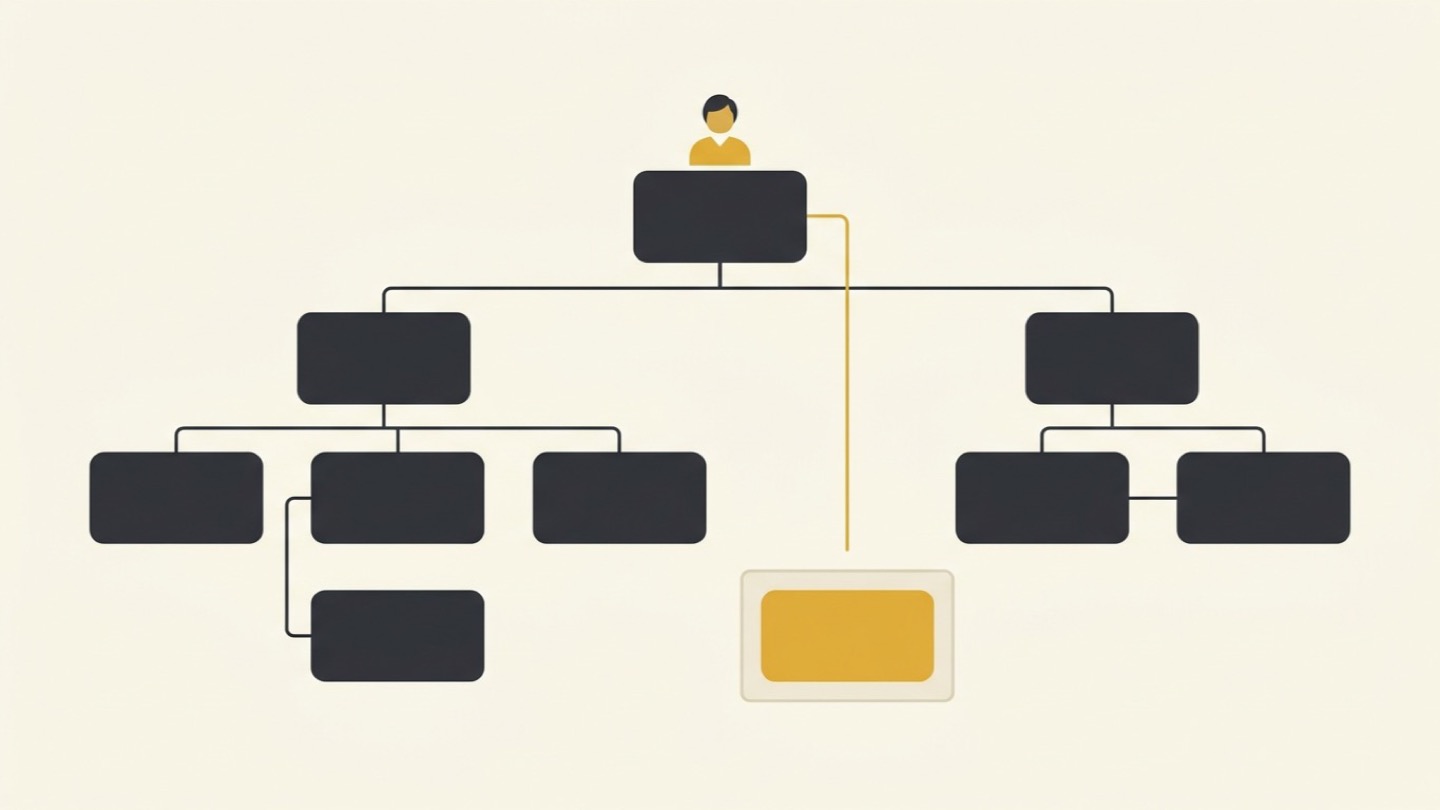
The labor model underneath those rates has been quietly restructured. The big firms have frozen entry-level salaries and cut graduate intake hard, and the classic consulting pyramid — senior partner at the top, eight junior analysts at the base writing the deck — is collapsing into something shorter and AI-assisted. The work that used to take a team of six now takes two people with the right stack.
But the rates clients pay have not moved in step. So far, the productivity gains of AI-assisted consulting have mostly stayed with the firms rather than being passed through as lower rates — the numbers behind that shift are later in this guide. That is the central thing buyers need to understand before reading any rate table, including this one: not as a criticism of the firms, but as context for matching the right tier to the work.
This is the comprehensive buyer’s guide. Hourly rates by firm tier, project pricing by scope, retainer structures, value-based pricing, hidden costs, and a framework for matching the tier of firm to the problem you actually have. The numbers are below. The lens to read them with is simple: AI has changed what a consulting hour costs to produce, the market rate has not moved much yet, and the mix of people and machines behind any given rate is not what it was in 2022. That is what changes which tier is the right fit for your work.
AI Consulting Cost at a Glance
Before the detailed tables, the fastest way to read this market is by situation, not by firm name. Find the row that sounds like your problem, and the tier that usually fits — with the rate band and typical engagement cost — is on the right.
| Your situation | Tier that usually fits | Hourly range (USD) | Typical engagement |
|---|---|---|---|
| Board-level strategy, or global multi-business-unit transformation | MBB / Big 4 | $400–$1,000+ | $500K–$5M+ |
| Regulated, audit-adjacent, or multi-country compliance work | Big 4 | $400–$800 | $250K–$1M+ |
| Large-scale platform integration (SAP, Salesforce, Oracle, Microsoft) | Mid-tier | $400–$700 | $150K–$1M |
| Mid-market strategy and build, senior-led, with ownership transfer | Boutique AI | $350–$650 | $35K–$400K |
| A narrow advisory question or a single discrete build | Independent | $150–$350 | Scoped, hourly |
The one-page AI budget worksheet.
What each tier of engagement buys, what the AI costs to run, and what to ask before you sign.
On its way. Check your inbox, or download it now →
No tier is the “right” one in the abstract — each is the right fit for a different shape of problem. The rest of this guide unpacks what sits behind each of these numbers, and how to tell which situation is genuinely yours.
AI Consulting Hourly Rates by Firm Tier
Hourly rates are the most-quoted and least-useful number in AI consulting. They tell you the price of an hour without telling you what kind of hour you are buying. A $400/hr Big 4 hour is structurally different from a $400/hr boutique hour — the first is partner oversight of analyst execution, the second is the partner doing the execution. Both can be the right choice. They are not the same thing.
The 2026 landscape, with what each tier actually delivers, looks like this:
| Firm Tier | Hourly Rate (USD) | Typical Use Case |
|---|---|---|
| MBB (McKinsey, BCG, Bain) | $500–$1,000+ | Board-level AI strategy, board-presentable validation, complex multi-business-unit transformation |
| Big 4 (Deloitte, PwC, EY, KPMG) | $400–$800 | Regulated industries, audit-adjacent work, multi-country compliance, large-scale implementation |
| Mid-tier (Accenture, IBM Consulting, Capgemini) | $400–$700 | Large-scale technical implementation, platform integration, system-of-record transformation |
| Boutique AI (specialist, 2–30 people) | $350–$650 | Mid-market AI strategy and implementation, senior-led delivery, ownership-transfer engagements |
| Independent consultant | $150–$350 | Narrow technical scope, single-use-case build, advisory by the hour |
MBB ($500–$1,000+/hr)
The McKinsey, BCG, and Bain rate is paying for one specific thing: board-presentable judgment from a firm whose name itself is part of the deliverable. For genuinely strategic AI questions at the largest enterprises — should we acquire, should we exit, how do we restructure across business units when AI compresses the org chart — the rate can be defensible. For execution work, it is almost never the right tool. The hour you are buying at $750 is partner attention; the partner is not building the system.
Big 4 ($400–$800/hr)
The Big 4 rate is paying for two things historically: deep bench depth and regulatory credibility. In 2026, the bench depth is shrinking — KPMG UK’s 29% graduate cut is not a one-year event, it is a structural reshape — which means the rate is increasingly buying senior practitioner time plus an AI-assisted execution layer. For multi-country regulatory work, audit-adjacent AI deployment, and large-scale implementation where the firm’s name on the invoice is itself a risk mitigant, the rate still makes sense. For pure AI strategy without a regulatory dimension, the math gets harder.
Mid-tier ($400–$700/hr)
Accenture, IBM Consulting, Capgemini and similar firms sit in the implementation-heavy middle. They are typically the right choice when the AI work is large-scale technical integration into existing platforms — Microsoft, Salesforce, SAP, Oracle — and the value of the firm is its certified implementation bench and its vendor partnerships. The rate is paying for execution capacity at scale more than for strategic judgment.
Boutique AI ($350–$650/hr)
Specialist boutique AI consulting firms — typically 2 to 30 people, focused exclusively on AI strategy and implementation — have become the structural fit for the mid-market in 2026. The rate is paying for senior-led delivery (the people who sell the work are the people who do it), narrower but deeper expertise, and faster cycle times. The trade-off is bench depth: a boutique cannot field a 40-person team in three countries. For most mid-market AI transformation, that is a feature, not a bug. The deeper buyer-side framework for evaluating boutique firms sits in how to choose a boutique AI consulting firm.
Independent consultant ($150–$350/hr)
An independent AI consultant is buying you exactly one person’s expertise and exactly one person’s time. For narrow, well-scoped technical work — a specific build, a specific advisory engagement, a discrete second opinion — independents can be excellent value. The risk is scope creep against a single point of failure: when the work requires more than one person’s hours, or more than one person’s skill set, the independent model breaks down quickly.
The AI Briefing
Tuesdays. 500+ leaders. No hype, just what works.
AI Consulting Project-Based Pricing by Scope
Most AI consulting work is not bought by the hour. It is scoped as a project, with a fixed fee for a defined deliverable. That is the more useful frame for budgeting, because it forces the firm to commit to a scope and an outcome rather than open-ended billable hours. The ranges below cover the most common engagement shapes.
| Project Type | Typical Range (USD) | Typical Duration |
|---|---|---|
| Strategy sprint / readiness assessment | $25,000–$75,000 | 2–6 weeks |
| Proof of concept (POC) | $50,000–$250,000 | 6–16 weeks |
| Single use-case build | $50,000–$500,000 | 3–9 months |
| Mid-market AI program | $35,000–$150,000 | 3–6 months |
| Enterprise AI transformation | $500,000–$5,000,000+ | 9–24 months |
Strategy sprint / readiness assessment ($25K–$75K)
The entry point for most engagements — often run as a focused two-to-six-week strategy sprint. It maps the organization’s readiness across the dimensions that determine whether AI will land: technology, data, skills, process, and culture. The lighter end of the range is a structured assessment with a facilitated debrief and a prioritized shortlist. The fuller end adds stakeholder interviews, a data audit, a vendor landscape, and a sequenced roadmap. Either way, it is almost always worth it relative to the cost of starting implementation without one. (There is also a free, self-serve first pass — the TEAM readiness assessment — worth running before you commit to a paid sprint.)
Proof of concept ($50K–$250K)
The POC is meant to test whether a specific AI use case works in your environment before committing to production scale. It is also the engagement type most commonly misused. The structural mistake is treating the POC as a procurement exercise — picking a vendor, deploying their tool, measuring its output — rather than as a learning exercise about your own organizational readiness. A good POC produces both a working artifact and a clear-eyed read on whether the broader rollout is ready to happen. A bad POC produces a successful demo and a stalled program.
Single use-case build ($50K–$500K)
A single AI use case taken from concept to production deployment in one workstream — typically a customer service automation, a sales enablement layer, a document intelligence pipeline, or a similarly bounded application. The pricing range is wide because the work itself is wide; a clean greenfield build with good data is at the low end, and an integration into legacy systems with messy data is at the high end. The cost differential is almost entirely the data work, not the AI work.
Mid-market AI program ($35K–$150K)
A full strategic AI program scoped for the mid-market — typically a multi-phase engagement that includes diagnostic, architecture design, and the first production implementation, with ownership transferred to the internal team at the end. This is the engagement shape most mid-market companies actually need — the one a full Big 4 program will often overscope and a single independent contractor will often underscope. We cover its operational form in detail in the guide to AI consulting for mid-market companies.
Enterprise AI transformation ($500K–$5M+)
Multi-year, multi-business-unit transformation programs that touch governance, infrastructure, multiple high-value use cases, and the operating model itself. Realistically the domain of Big 4 and MBB. For most companies under 5,000 employees, this is overengineering — a program of this size is usually a sign that the buyer scoped the work to the firm rather than the firm scoping itself to the work.
Monthly Retainer Pricing for AI Consulting
Retainers — monthly recurring fees in exchange for a defined level of access and ongoing work — have become more common in AI consulting as the work has shifted from one-time implementations toward continuous capability building. The shape of a sensible retainer depends entirely on whether the firm is acting as a strategic advisor, an embedded operating partner, or a managed-services provider.
| Retainer Tier | Monthly Range (USD) | What It Typically Covers |
|---|---|---|
| Essential / advisory | $2,000–$5,000 | Monthly office hours, ad hoc strategic input, light review of internal work |
| Standard | $5,000–$15,000 | Defined weekly engagement, embedded review cycles, project oversight |
| Comprehensive | $15,000–$50,000 | Embedded operating partner, active build work, fractional AI leadership |
| Managed AI services | $10,000–$100,000+ | Operating an AI stack on the client’s behalf, SLAs, ongoing model and data ops |
Retainers make sense when the work is genuinely ongoing — AI strategy is iterative, the model landscape changes monthly, and an embedded advisor pays for themselves in mistakes avoided. Retainers make less sense when the underlying work is actually a finite project being repackaged as a recurring fee. The diagnostic question to ask: at the end of twelve months of this retainer, what specifically do we own that we did not own before? If the answer is “ongoing access to the firm,” that is not a retainer worth paying. If the answer is “a working operating model and the institutional capability to keep extending it,” it can be.
The other failure mode is the retainer that quietly becomes a substitute for ownership transfer. The firm stays on indefinitely because the internal team never quite gets equipped to run the system. That is not a retainer; it is a dependency in disguise. The cleanest retainers have an explicit off-ramp written into them — the conditions under which the engagement ends, not just the conditions under which it renews.
Value-Based AI Consulting Pricing
Value-based pricing — where the firm is paid as a function of the business outcome it delivers, rather than the hours it bills — has become a more common talking point in AI consulting precisely because the productivity case for AI is the easiest one to frame as a measurable outcome. In practice, true value-based pricing is rare. What gets sold under that label is often a flat fee with a small performance kicker layered on top.
When value-based pricing works, it works because three conditions are met. The outcome is measurable in a way both sides agree on before the work starts. The firm has direct, structural influence over whether the outcome lands — not just consulting at the side of the work. And the firm is willing to share the downside, not just the upside; the rate goes down meaningfully if the value does not materialize.
The structural problem is that most AI consulting firms do not meet the third condition. BCG’s October 2024 research, surveying 1,000+ executives across 59 countries, found that 74% of companies struggle to achieve and scale value from their AI initiatives — and BCG attributes 70% of those challenges to people, processes, and governance rather than the technology itself. If 74% of AI work is failing to scale value, a firm offering “value-based pricing” is implicitly betting that you will be in the 26%. Most are unwilling to take the loss when you are not.
A real value-based engagement looks like this: a defined baseline metric (cost, cycle time, revenue) measured before the work starts, a defined target shift, a defined measurement window after the work ends, and a fee schedule that genuinely moves with the result — including downward. Anything softer than that is a flat fee with marketing on top. Ask for the downside scenarios in writing. If the firm cannot show you the downside math, the pricing model is not actually value-based.
The one-page AI budget worksheet.
What each tier of engagement buys, what the AI costs to run, and what to ask before you sign.
On its way. Check your inbox, or download it now →
What a Consulting Rate Actually Buys in 2026
A consulting rate used to blend one senior partner with a large junior team. In 2026 the same rate blends fewer juniors and a growing AI stack — the mix behind the number has changed.
This is the section the rate tables above cannot capture on their own. The rates look stable. The work behind them is not.
For five decades, consulting prices have been justified by the pyramid model — a senior partner at the top, expensive on a unit basis but spread across a team of associates and analysts whose junior labor was where the real work happened. The rate you paid blended the partner and the team. When you bought a $400/hr Big 4 engagement in 2020, you were buying roughly one partner overseeing eight associates, and the team was doing the deck, the analysis, the modeling, the synthesis. The pyramid was the value proposition.
The pyramid is unwinding. The Irish Times reported in December 2025 that the Big 4 in the UK have cut graduate hiring sharply — KPMG by 29%, Deloitte by 18%, EY by 11%, PwC by 6% — and that MBB has held base consultant salaries flat for three years running. Harvard Business Review formalized the underlying shift in September 2025, arguing that AI is restructuring consulting firms themselves, not just their tooling. PwC’s global chair Mohamed Kande has been publicly clear that the industry needs “a different set of people” — fewer juniors writing decks, more senior practitioners doing AI-assisted work that once required a team of six.
What replaces the missing junior bench is not nothing. It is an AI stack — increasingly sophisticated context layers, document automation, analytical assistants, synthesis tools — operating beneath each remaining senior consultant. The unit economics have shifted accordingly: one senior practitioner with a strong AI stack can now produce in days what a team of six produced in weeks. That is the productivity story. The pricing story is the other half: so far, that productivity has mostly not shown up as lower rates.
The Consulting Quest analysis in November 2025 names it directly: “Day rates and project fees look suspiciously similar to what it was before generative AI entered the picture.” Helene Laffitte, the firm’s CEO, frames this as a question of value sharing — whether the gains of AI in consulting accrue to the consulting firms or to their clients. So far, the answer is the firms.
The buyer implication is concrete. The same headline rate now buys a different blend — a smaller, more senior human team alongside a larger automated layer. That is not a reason to distrust the number. It is a reason to ask what a given rate is actually staffing on your engagement, and whether that staffing matches what your problem needs.
One consequence is that Big 4 and senior boutique rates now sit closer together than the old tiering suggested. The boutique was always senior-led — that was its differentiator — and the Big 4 is becoming more senior-led too. What still separates them is real: the Big 4 carries global bench depth, brand assurance, and a compliance apparatus a small firm cannot match, and those are exactly what some engagements need. On most mid-market AI work, where that apparatus is not the deliverable, a leaner senior team is often the closer fit. Neither is “right” in the abstract — the spread reflects genuinely different structures, and the buyer’s job is to match the structure to the work.
Hidden Costs Buyers Underestimate
The line-item quote is rarely the actual cost. The most consistent failure mode in AI consulting budgets — the one that turns a $200K engagement into a $350K engagement six months in — is failing to plan for the work that sits outside the consulting firm’s scope but is necessary for the consulting firm’s work to land. A useful rule of thumb is to add 20% to 40% on top of the consulting fee itself for these costs.
Change management and adoption
The single largest hidden cost. BCG’s “Where’s the Value in AI?” research finds that 70% of the challenges in scaling AI value are organizational — people, processes, and governance — and only 30% are about the algorithms and data. A consulting engagement that delivers a working AI system into an organization that has not been prepared to operate it will fail, and the failure will look like a technology failure even though the root cause was upstream. If the consulting scope does not explicitly include adoption and change work — AI champion or AI Enabler programs, role redesign, capability building inside the team — that work still has to happen. It will either be inside the engagement, inside an additional engagement, or inside an internal cost the company underestimates.
Platform and infrastructure
The AI itself has a license cost, the infrastructure has an operating cost, and the integrations have an implementation cost. Realistic budgeting assumes platform and infrastructure spend on the order of 10% to 30% on top of the consulting fee for the first year of any meaningful AI build. And within that line, watch the usage side specifically: token and license costs behave nothing like seat-based software — agentic workloads can consume a thousand times the tokens of simple chat, and companies as large as Uber have burned through annual AI budgets in months. We’ve broken down how to control that line — model orchestration, caching, caps, and seat audits — in our guide to managing AI token and license costs. Either way, the spend continues after the consulting engagement ends — it is an ongoing operating line, not a one-time project cost.
Internal team time
Every AI consulting engagement consumes meaningful internal time — leadership in steering sessions, subject matter experts in discovery, data and IT teams in integration work, end users in pilots and training. This is rarely modeled as a cost in the engagement, but it is a real one. A mid-sized program will pull 200–500 hours of internal time across roles, and at fully loaded internal rates that is six figures of cost the engagement does not invoice you for. The companies that succeed with AI plan for it explicitly.
Governance and risk
Deloitte’s 2026 State of AI in the Enterprise found that only 21% of companies have mature governance for agentic AI, even as the technology accelerates into production. The cost of building that governance — policy, oversight, monitoring, controls — is real and frequently outside the consulting scope. Skipping it does not save the cost; it defers it, usually in the form of an incident or a regulatory friction that costs more than building the governance would have.
The 20-40% rule
A defensible AI consulting budget assumes the consulting fee is approximately 60% to 80% of the total program cost. The remaining 20% to 40% is platform spend, internal time, governance, and the change work that always seems to need more than the original quote planned for. Budgets built on the consulting fee alone overrun. Budgets built on the consulting fee plus the 20-40% surrounding cost typically land.
How to Budget for AI Consulting Defensibly
A defensible AI consulting budget is not one that minimizes the cost. It is one that survives the contact with reality. Six rules, in order of importance:
1. Budget for the program, not the project. The consulting fee is the most visible cost, but it is almost never the largest one once the change work, platform spend, internal time, and governance are accounted for. Build the budget as a program total — consulting + platform + change + governance — and then back into the consulting line. The companies that overrun their AI consulting budgets are not the ones that underestimated the consulting fee. They are the ones that ignored everything around it.
2. Right-size to the actual problem. Many AI consulting budget mistakes are scoping mistakes — buying a $1M Big 4 program for a $150K boutique-scale problem, or buying a $50K independent engagement for a problem that genuinely needs a six-month structured program. The honest question is what problem you actually have, not which firm tier you want to be the kind of company that hires. Our guide to AI consulting beyond the Big 4 covers when each alternative is the right fit.
3. Lock the scope in writing before lock the fee. The fee is a function of the scope. A firm that wants to lock the fee before locking the scope is preserving optionality for itself at your expense — the scope will drift to fit the fee, and the work that mattered will get squeezed out at the end. The good engagements lock the scope first and then negotiate the fee. The bad ones lock the fee and then negotiate the scope down to fit it.
4. Demand named senior delivery in the contract. Especially after the pyramid collapse, “senior involvement” without named people is a vague promise. A defensible budget identifies the specific named consultants who will deliver the work, what they will personally be responsible for, and what the substitution rules are if they roll off. This is the single highest-impact change a buyer can make to AI consulting contracts in 2026. We’ve covered the broader set of vetting questions in the questions to ask an AI consulting firm before signing.
5. Build ownership transfer into the deliverable list. The most expensive AI consulting engagement is the one that ends with you owning nothing — a slide deck, a relationship, and no internal capability to operate what was built. A defensible budget lists, deliverable by deliverable, what you will own when the engagement ends: documented architecture, working systems running on your accounts, trained internal owners, decision criteria your team can apply, a written off-ramp.
6. Reserve 20% to 40% on top of the consulting fee. The hidden-costs section above is not a warning to ignore. Reserve for change work, platform spend, internal time, and governance. The reserves you do not need become the next year’s program budget. The reserves you do not have become the overrun.
Matching the Tier to Your Situation
Matching the tier to your situation
The hardest decision in AI consulting buying is the tier choice. The spread between a $1M Big 4 program and a $150K boutique program is real, but the right number is a function of the problem, not the price. A decision framework, in plain language:
Big 4 and MBB are the right fit when: the work is multi-country with heavy regulatory exposure (banking, pharma, defense); the engagement is audit-adjacent and the firm’s name on the report is part of the risk control; or the work is at genuine enterprise scale with thousands of users across multiple business units and requires the bench depth a smaller firm cannot field. In these scenarios the rate is buying capability that smaller firms structurally cannot provide — the bench, the brand, and the global footprint are the deliverable.
A boutique AI firm is the right fit when: the company is mid-market (50–5,000 employees) and the engagement is strategic but bounded; the work needs senior-led delivery and faster cycle time more than scale; or the desired outcome is ownership transfer — an operating capability inside the team — rather than ongoing dependency. Here the boutique’s senior-led structure and speed are the advantage, and the mid-market is the cleanest case for it in 2026.
An independent consultant is the right fit when: the work is genuinely a single person’s job — a specific advisory engagement, a discrete second opinion, a narrow build — and the engagement is short enough that the single-point-of-failure risk is acceptable. Independents are excellent for what they are good at, and structurally limited beyond it.
If You’re Evaluating a Specific Path
This article is the broad guide. For specific buyer journeys, three deeper articles cover the next step:
If you’re in the mid-market specifically — meaning a company between 50 and 5,000 employees, where the math against a Big 4 firm rarely makes sense and the math against an independent consultant rarely makes enough sense — the right-sized engagement has its own shape. What a senior-led mid-market program runs, and where the structural cost differences come from, is covered in the mid-market program section above; its operational form is mapped in the guide to AI consulting for mid-market companies.
If you’re evaluating Big 4 alternatives — particularly if you’ve received a Big 4 quote and are trying to figure out what the equivalent work looks like outside the pyramid — the structural alternatives, including specialist boutiques, mid-tier firms, and AI-first agencies, are mapped in our guide to AI consulting beyond the Big 4. The article covers what each alternative is structurally better at, and what they are structurally worse at, than the Big 4 default.
If you’re considering boutique specifically — including whether a firm calling itself “boutique” actually is one — the five tests that separate the real boutique firms from the rebranded sales decks are in how to choose a boutique AI consulting firm. The shorthand has stopped working in 2026, and the article rebuilds the test for what boutique should actually mean now.
And if the fit is already clear and you’d rather scope it directly, our AI consulting services lay out how we run these engagements for mid-market companies — senior-led, built for ownership transfer, and priced in the ranges above.
Sources
- Top consultancies freeze starting salaries as AI threatens pyramid model — Irish Times, December 2025 (KPMG UK -29% graduate hiring, Deloitte UK -18%, EY -11%, PwC -6%; MBB salaries frozen three years)
- AI Is Changing the Structure of Consulting Firms — Harvard Business Review, September 2025 (PwC’s Mohamed Kande on “a different set of people”; pyramid restructuring)
- AI Impact on Consulting Economics: Value Sharing — Consulting Quest, November 2025 (Helene Laffitte on day rates remaining stable post-generative AI)
- Where’s the Value in AI? — BCG, October 2024 (74% of companies struggle to scale AI value; 70% of challenges are organizational, not technical)
- Are You Generating Value From AI? The Widening Gap — BCG, September 2025 (AI leaders deliver 3.6x TSR / 1.6x EBIT margin growth; 60% of laggards report no material gains)
- State of AI in the Enterprise 2026 — Deloitte, 2026 (25% have moved 40%+ of pilots to production; only 21% have mature governance for agentic AI; N=3,235 executives, 24 countries)
- The State of AI in 2025 — McKinsey QuantumBlack (88% of companies deploy AI; only 6% qualify as “AI high performers”)
- The Root Causes of Failure for Artificial Intelligence Projects — RAND Corporation (more than 80% of AI projects fail; roughly twice the failure rate of conventional IT)
- Gartner: Worldwide AI Spending Will Total $2.5 Trillion in 2026 — Gartner, January 2026 (total AI spending $2.5T; AI services $589B)
Frequently Asked Questions
How much does AI consulting cost in 2026?
AI consulting in 2026 ranges from $150 to $1,000+ per hour, and from roughly $25,000 to $5 million+ per engagement, depending on the firm tier and the scope. A strategy sprint or readiness assessment runs $25,000 to $75,000. A proof of concept runs $50,000 to $250,000. A mid-market AI program runs $35,000 to $150,000. An enterprise AI transformation typically starts at $500,000 and frequently exceeds $1 million. The wide spread is a function of the firm tier — MBB and Big 4 at the top, boutique firms and independents below them — and the scope of the work being bought.
What's the hourly rate for an AI consultant?
Hourly rates for AI consultants in 2026 range from about $150 to over $1,000. Independent consultants run $150 to $350. Specialist boutique AI firms run $350 to $650. Mid-tier firms (Accenture, IBM Consulting, Capgemini) run $400 to $700. Big 4 firms (Deloitte, PwC, EY, KPMG) run $400 to $800. MBB (McKinsey, BCG, Bain) runs $500 to over $1,000. The right rate depends on whether you are buying judgment, execution, or capacity — the same hour does fundamentally different work at each tier.
What does Big 4 AI consulting cost vs. boutique?
On AI work, Big 4 partners bill roughly $400 to $800 per hour, and a full end-to-end Big 4 program typically starts around $500,000 and can pass $1 million. The equivalent scope at a senior-led boutique firm usually runs $150,000 to $400,000, at $350 to $650 per hour. The difference is mostly structural: the Big 4 carries global bench depth, brand assurance, and a compliance apparatus a boutique does not — which is exactly what some engagements need. In 2026, with both tiers becoming more senior-led, Big 4 and boutique hourly rates sit closer together than they used to; on most mid-market AI work, where enterprise bench depth is not the deliverable, a leaner senior team is often the closer fit.
How much does an AI consulting project typically cost?
A typical AI consulting project costs between $25,000 and $500,000, depending on scope. A strategy sprint or readiness assessment runs $25,000 to $75,000. A proof of concept runs $50,000 to $250,000. A single use-case build typically runs $50,000 to $500,000. A multi-phase mid-market program with implementation and ownership transfer typically runs $35,000 to $150,000 at a boutique firm. Enterprise transformations start at $500,000 and run into millions. The biggest variable is not the AI work itself — it is the data and integration work surrounding it, which is where most cost overruns happen.
What's a fair retainer for AI consulting?
A fair AI consulting retainer in 2026 typically runs between $2,000 and $50,000 per month, depending on the level of engagement. An advisory retainer with monthly office hours runs $2,000 to $5,000. A standard retainer with embedded weekly engagement and project oversight runs $5,000 to $15,000. A comprehensive retainer with a fractional AI leadership role and active build work runs $15,000 to $50,000. Managed AI services — where the firm operates an AI stack on your behalf — can run from $10,000 to over $100,000 per month. The right number depends on whether the firm is genuinely doing ongoing work or repackaging a finite engagement as a recurring fee.
How does value-based AI consulting pricing work?
Value-based AI consulting pricing ties the firm’s fee to a measurable business outcome — typically cost reduction, cycle time improvement, or revenue lift — rather than to hours billed. In practice, true value-based pricing is rare because it requires three conditions: a metric both sides agree on before the work starts, direct structural influence by the firm over the outcome, and genuine willingness from the firm to share the downside if the value does not materialize. Most “value-based” pricing in the market is a flat fee with a small performance kicker rather than real risk sharing. If the firm cannot show you the downside scenarios in writing, the pricing is not actually value-based.
Why are AI consulting rates not dropping despite AI productivity?
AI has compressed the junior-analyst labor that traditionally sat under each senior consultant — Big 4 firms have cut graduate hiring sharply (KPMG UK by 29%, Deloitte UK by 18%) and MBB has held base consultant salaries flat since 2022 — but client-facing rates have not moved in step. As Helene Laffitte, CEO of Consulting Quest, observed in a November 2025 analysis: “Day rates and project fees look suspiciously similar to what it was before generative AI entered the picture.” So far, those productivity gains have mostly stayed with the firms rather than showing up as lower rates. The practical takeaway for buyers is not that rates are unfair, but that the same rate now staffs a different mix of people and AI — worth asking about when you compare quotes.
What hidden costs should I budget for in AI consulting?
A defensible AI consulting budget reserves an additional 20% to 40% on top of the consulting fee itself for hidden costs. The largest of these are change management and adoption work (because 70% of AI scaling challenges are organizational, per BCG); platform and infrastructure spend (typically 10% to 30% on top of the consulting fee for the first year); internal team time (200–500 hours across roles for a mid-sized program); and governance and risk work (Deloitte found that only 21% of companies have mature governance for agentic AI in 2026). The consulting line is rarely the total cost — it is usually 60% to 80% of it.
How much does enterprise AI consulting cost?
Enterprise AI consulting engagements — multi-year, multi-business-unit transformation programs — typically run from $500,000 at the entry point to $5 million or more for full transformation work. The Big 4 and MBB dominate this tier, and the work usually includes governance, infrastructure, multiple high-value use cases, and operating model redesign. For most companies under 5,000 employees, enterprise-scale pricing is overengineering — a program of that size is usually a sign that the buyer scoped the work to the firm rather than the firm scoping itself to the work. For mid-market companies, the right total program cost is more typically in the $100,000 to $500,000 range.
Is AI consulting worth the cost for mid-market companies?
For most mid-market companies, AI consulting is worth the cost when the engagement is right-sized and structured for ownership transfer. BCG’s research finds that AI leaders generate 3.6x the TSR and 1.6x the EBIT margin growth of their peers, while 60% of companies in the laggard cohort report no material gains. The gap is rarely about whether companies hired consultants — it is about whether the consulting work produced an operating capability inside the company or a slide deck on a shared drive. A $150,000 mid-market program that transfers ownership of a working AI operating layer typically pays back inside a year. A $50,000 engagement that produces strategy without implementation typically does not. The defensible question is not whether AI consulting is worth the cost in general; it is whether this specific engagement, at this specific scope, has been structured to produce ownership.